

This post is brought to you by….NEUROVOLT
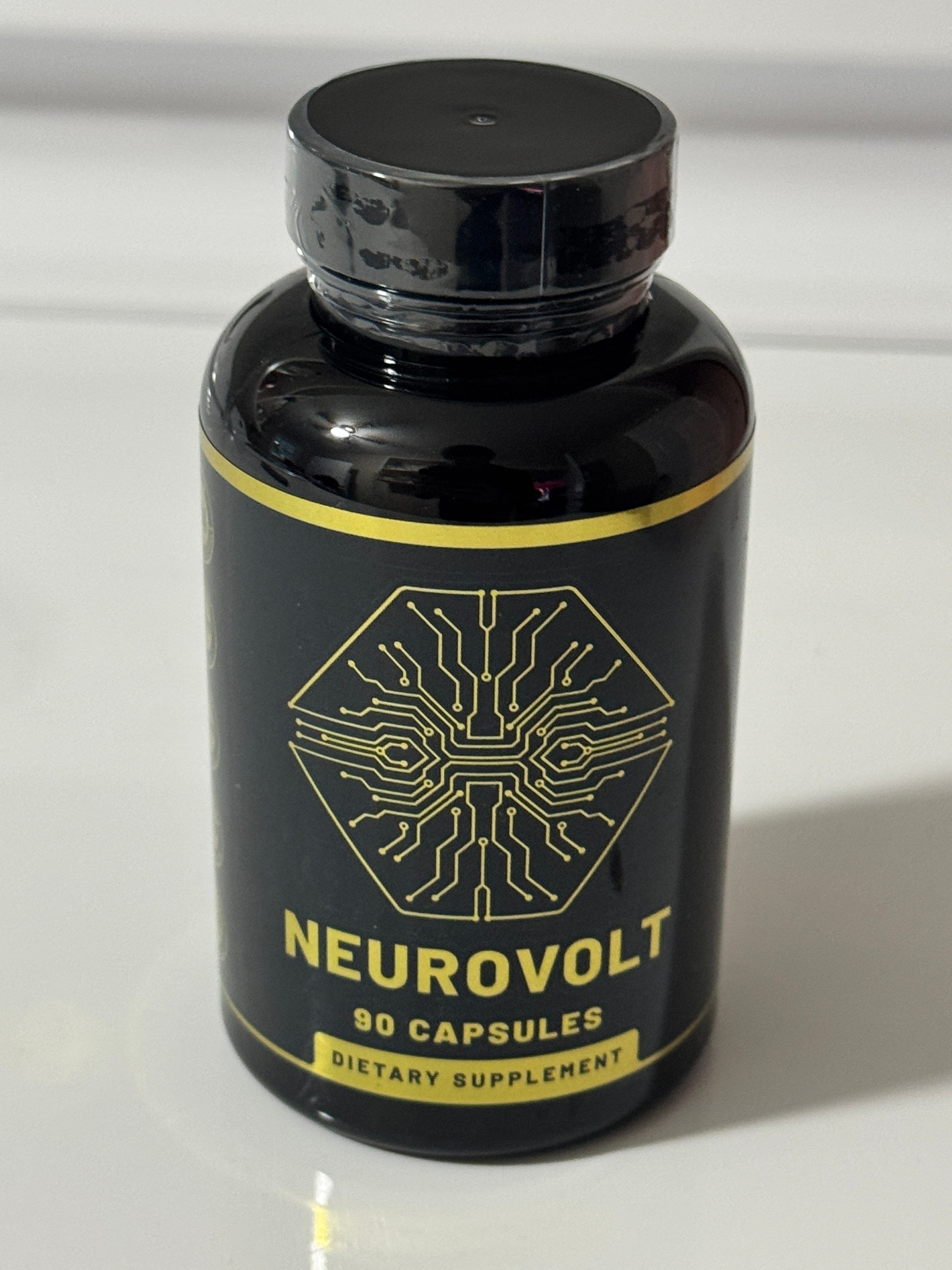
Neurovolt was designed for the founders, the builders, and the operators who look at a grueling 14-hour workday and treat it like heavy manual labor for the mind. When you are deep in the trenches of high-leverage decision-making, deep writing, or industrial problem-solving, your brain needs raw bioenergetic fuel to replenish its baseline neurotransmitters.
With clinical doses of L-Tyrosine, Alpha GPC, and Rhodiola, Neurovolt provides clean, non-stimulant cognitive stamina with zero proprietary blends and zero afternoon crash.
Perform at peak cognitive power every day.
I grew up near a golf course.

It was inside of a Retirement Community. AKA, a place where old people lived.
My childhood was firmly middle class. My entire hometown was a middle class bedroom community. It had arisen around the Retirement community over the years.
I only had the vaguest idea of there being a class divide with exercise and recreational activities. What I did know about Golf is that it seemed to be for older people, and according to my dad, only rich people played Golf.
The only person I knew growing up who played was my step grandfather. He came from a dirt poor Irish-American family and grew up in New England.
He was the most successful of his many siblings. Had no college education, but made it big in advertising, real estate, owned a fair amount of stock.
Somewhere along the way, he took up golfing. His mentor was Jack Kent Cooke. He worked for him in the 1970s. I dont know the details, but at some point he was told that if he wanted to become Rich, he should learn to play.
He and my grandmother lived in Los Angeles, in what was a very rich gated community with a golf course.
Myself, I never learned.
My father eventually became a doctor in his late 40s. A white collar profession. At no point did he ever entertain the idea of playing golf, although he knew many physicians that did. My father is hispanic, Golf to him was always a sport for older, rich white men. He never had any level of interest in it.
I was 20 when I became a personal trainer. I started training clients in Silicon Valley. Later I worked in Hollywood. There was a year I moved to Florida and worked in a very affluent, country club community.
Those clients all played golf and tennis. Some of them did Triathlons.
Lifting weights and bodybuilding I learned were coded as lower class, working class.
Talking about class can be a provocative conversation. Americans on the surface dont like to subscribe to entrenched social classes, but theres also no question they exist. And that certain beliefs and behaviors are generally shared.
In ancient times, the ability to exercise at all and be in great physical health was a luxury afforded by Patricians, Aristocrats, and Nobles.
The wealthy don’t need to sacrifice their body to make a living. A working man does.
Lower classes and slaves did not have access to gyms.
Over some many centuries, and especially post industrialization and greater food abundance, the division of recreational and exercising became less concentrated, but also more specific.
Some activities aligned with aristocratic sensibilities. Others did not.
The practice of resistance training became more rooted in working-class culture. Lifting weights is a simulation of manual labor, moving heavy iron and sheer physical effort.
In contrast, sports like golf and tennis became coded as upper-class leisure pursuits. These activities historically required access to expensive, private country clubs, specialized gear, and significant amounts of leisure time.
They act as networking arenas for the wealthy, a club with a high barrier to entry.
I trained A LOT of clients who thought of lifting weights as dumb, brutish, but necessary
The men who said “I dont want to get TOO BIG” tended to skew upper class. I found this hilarious, but I realized over time there were a dramatic difference in our social views on exercise.
I grew up enamored with strength and power and physicality.
They had grown up in social setting where that kind of outward display was considered vulgar.
Their upbringings were a world where everyone used their minds to make money.
Some people say a man is made out of mud
A poor man's made out of muscle and blood
Muscle and blood and skin and bones
A mind that's weak and a back that's strong
They preferred endurance sports, activities that required equipment and outfits and exclusivity.
Golf, Tennis, Badminton, Sailing, Rowing. You could could include equestrian sports as well.
The preference for these activities was not just their expense or exclusivity, there was a phenotypic, moral dynamic as well.
These types of sports were long duration, requiring pain tolerance to chronic discomfort, competition with another individual, and maintaining a zone of focus.
I am not the first person to notice this
Social survey research going back decades has documented the class difference in attitude towards exercise.
How the Other Half Lifts: What Your Workout Says About Your Social Class
I read this article years ago, when I was about 5 years into my personal training career. The author, a self identified white collar urban liberal, described his experience of spending a lifetime in endurance sports, taking up lifting, enjoying being bigger, but finding it incongruent with the norms of his social class, and in the end defaulting back to aerobic sports.
If you want to deep dive on the subject, the “foundational theorists” are French sociologists Pierre Bourdieu and Thorstein Veblen. Their research documented that exercise habits, sport preferences, and even the ideal body are expressive of class position.
But they were FRENCH!
Sure, but speaking generally, the patterns they observed are consistent both in France, Europe, and in America.
Higher income adults have more time to exercise, and are drawn towards forms of exercise that signal conspicuous leisure. Different activities have distinct class connotation; golfing, yoga, pilates, triathlons and cycling, these all cluster among the college-educated and professionally employed.
Strength sports and team athletics draw more from working-class backgrounds.
Per Bourdieu’s observation, class shapes not just whether you exercise, but how and why.
There are crossovers and exceptions to all of this, I would emphasize these are GENERAL patterns.
I also have observed these social patterns changing.
As Boomers are getting older and passing away, there is a major shift amongst Gen X and Millennials and Gen Z of fitness culture becoming more egalitarian and practiced by all social classes. The old stereotypes are dissipating, especially amongst the newly wealthy. People like Andrew Huberman have done a great deal of heavy lifting (pun intended) that everyone should lift weights as they age.
Even combat sports like BJJ have attracted an affluent, white collar crowd.
On a personal level, my message to everyone is the same.
Lift weights, do cardio. Whether this aligns with social expectations of your particular tribe, thats for you to care or not care about.
Hahaha I've noticed tons of pickleball places everywhere nowadays. And yeah, it has the same vibe.
I kind of want to get into it...
I had this conversation with a friend of mine. He disagreed lifting is lower class coded because his upscale nj suburb is full of jacked lawyers and doctors. I pointed out most of them probably come from blue collar families