

An article devoted solely to the Trapezius? Really?
Yes.
The Trapezius is a misunderstood muscle, and while its always involved practically all back exercises, you should learn how it works in isolation before integrating it.
Upper back tightness, neck pain, and poor shoulder health are common issues people experience. The strength and function of the trapezius play a role in all of these.
Trapezius 101, What Muscle are we actually talking about?
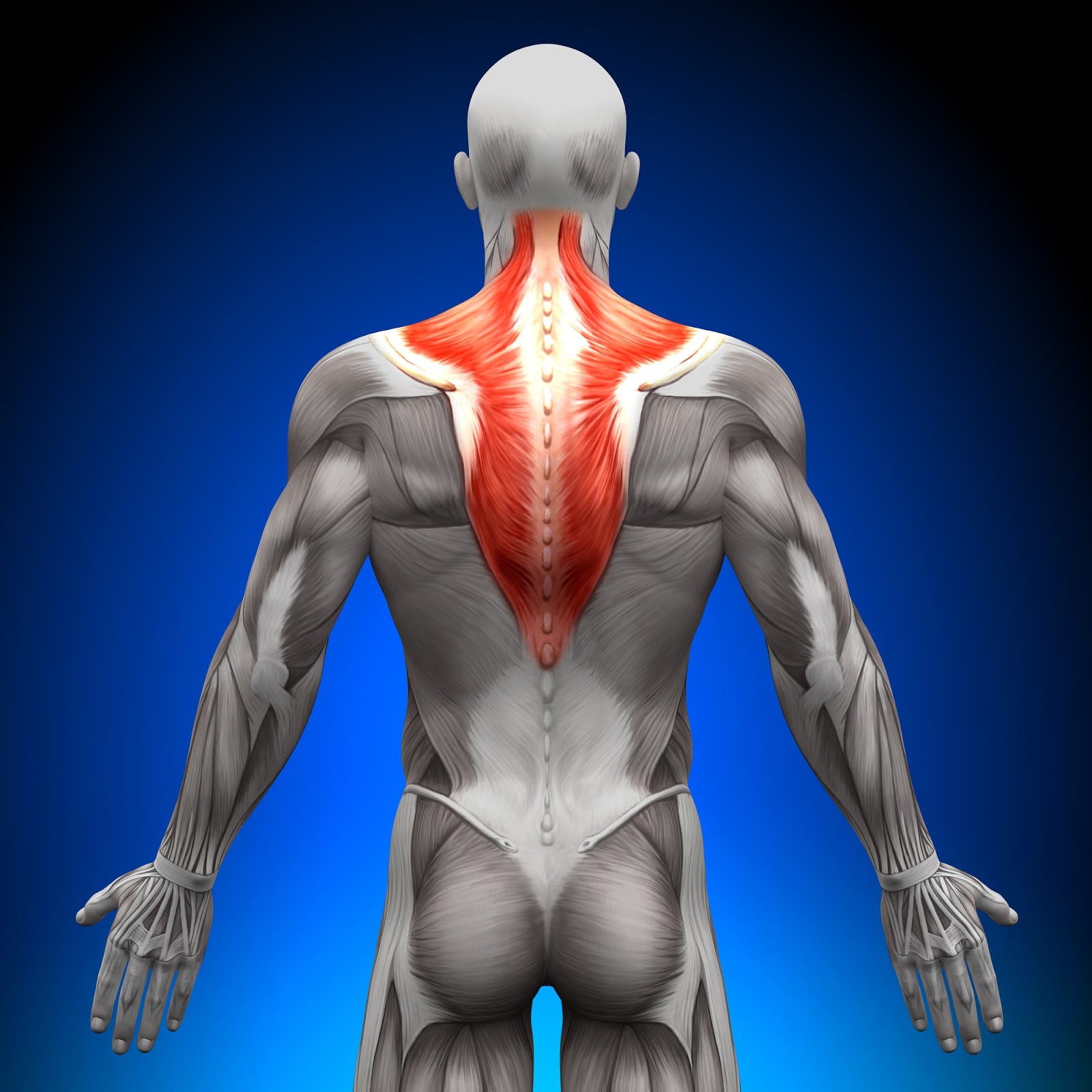
The trapezius starts the base of the skull, attaches to the clavicles and tops of the shoulder blades, and then runs down the middle of the back, ending right at vertebra T12.
Contrary to popular belief, the trap is more than just the upper portion on the sides of the neck.
The Trapezius is a large muscle, with a broad range of functions.
Lateral flexion and rotation of the skull. If you have tight upper traps, your neck rotation and movement can be inhibited.
Stabilization, elevation, and depression of the clavicles. Clavicular movement is integral to ALL pressing, throwing, overhead, pulling movements.
Stabilization and extension of the thoracic spine. Again, your upper back strength and trap strength are one in the same
Retraction, depression, elevation, and rotation of the scapula (shoulder blades). Scapular function depends on trapezius strength
A Lot of “Bad Posture” is attributable to WEAK Trapezius
I cover this at length in my posture program, but the short version is as follow:
If your ENTIRE BODY is physically weak and lacks muscles, especially the posterior chain (back of the body), it is not surprising that gravity pulls you down and you find your resting posture is poor.
While posture can be argued about, I consider it axiomatic that being strong and muscular contributes to people standing more upright, being less fatigued from daily activity, and generally having better “shape” to their standing position and movement.
The trapezius is one muscle that plays a role in posture, as it directly covers and moves the thoracic spine.
Good Posture Requires “Good” Traps
Lets recap,
-The Traps help to keep your neck straight
-The Traps help to keep your shoulder blades moving
-The Traps help to keep your shoulders stable
-The Traps keep your spine extended
-The Traps contribute to the function of the posterior deltoids
-The Traps maintain your overall upper body posture
-The Traps connect with the function of the rhomboids and the lats
What the Glutes are to the lower body posterior chain, the traps are to the upper body posterior chain. If you have weak traps, EVERYTHING gets negatively affected in its function
If you are going to fully train the traps, then by default you are going to be training the entire body to be stronger.
And also by default, the stronger and more supple you get your trap muscles, the better your posture should be.
You can use all the postural cues you want to remind yourself to stand up straighter, but fundamentally they won’t make a long term difference unless you strengthen your body. You can temporarily straighten yourself out, but these reminders are not permanent solutions.
What is permanent is muscle. If you want your posture to be aligned straight, you NEED to have the muscle to support this alignment.
Anataomy
Upper Trapezius Anatomy and Function
The upper traps originate on the back of the skull at the occipital bone, and attach along the cervical spine and the outer clavicle.
. The upper traps work by:
Shrugging the shoulders upwards. Think shrugs.
Extending the neck backwards. Think neck extensions.
Assist in rotating the shoulder upwards past 90 degrees. Think overhead plate raises and snatches
Along with the upper traps, shrugs will also have a residual growth effect on the medial and posterior deltoids.
Middle Trapezius Anatomy and Function
The middle traps originate from C7 down to T3, and they attach to the top of the scapula and to the Acromion in the shoulder.
The middle traps work by
Squeezing the scapula together. Think any kind of pronated pronated grip horizontal row
Stabilizing and holding the scapula in place. Think deadlifts, rack pulls
Elevating the scapula. Think upright rows and high pulls
The Lower traps attach from T4 down to the T12, and they attach to the medial edge of the spine of the scapula.
Lower Trapezius Anatomy and Function
The lower traps work by
Pulling the shoulder blades together. Think horizontal rows with a neutral grip
Elevating the shoulder blades. Think shrugs and overhead lifts
Upward and rotation and depression of the scapula. Shrugs and farmers walks work this function, but also overhead plate raises, cables raises, Prone trap raises, snatches, power cleans.
If We Add All This Up, We Only Have have TWO Exercise Types We MUST Perform
Anatomy is critical to know, but it can become very pedantic as well if you over-analyze. Based on what you have learned so far though, we can conclude Two Basic Strategies for Trapezius Development
We Need to Perform Shrugs and loaded carries in our training (Upper and Middle traps)
We need to Perform Pronated Grip Rows in our training (Middle and Lower traps)
Optionally, we can do some kind of overhead exercise as well
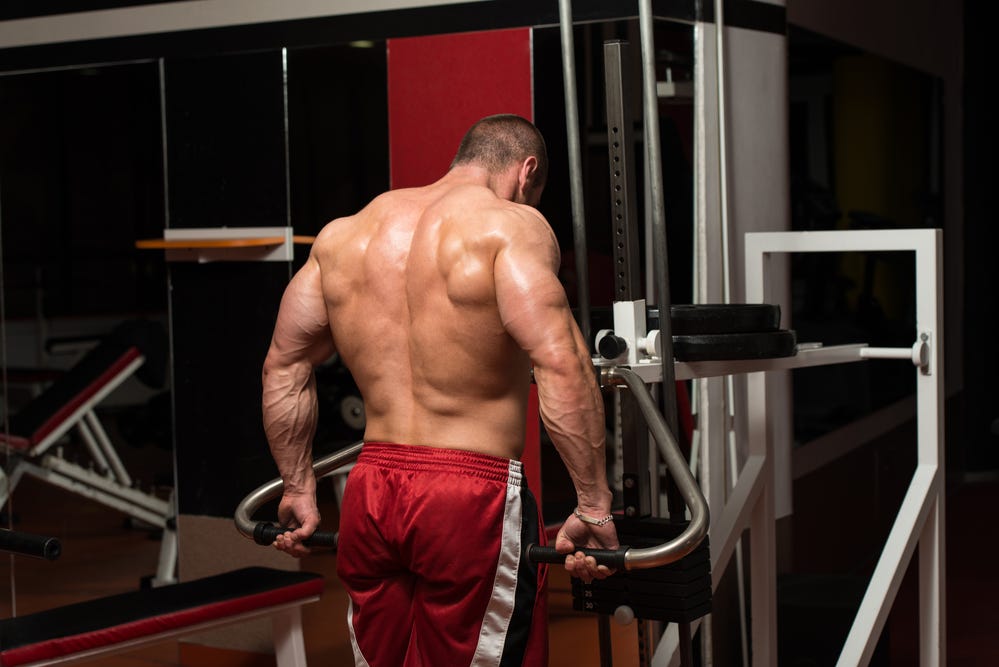
The Top 3 Most Common Mistakes in Training The Traps And Upper Back
In following this program, I want you to perform all the exercises with proper technique, and I have attached videos to illustrate the various exercises.
That said, I have found over the years that BAD technical cues are often more responsible for poorly done reps than a person’s natural movement intuition.
Basically meaning that people quite often WILL do exercises correctly if its properly demonstrated to them, BUT if a person is told bad coaching cues, they end up messing up the movement because they dont know better.
These are the three most common coaching cues that lead to incorrect exercise execution
1. Raise your Shoulders When Doing Shrugs
THIS cue is wrong?
It is in fact.
The upper traps do not raise the shoulder in the way people think. They raise the CLAVICLES. Thats where the muscles attaches.
It matters because everyone doing shrugs trying to get their traps to grow, you’ve been cueing the wrong anatomical area.
When doing shrugs, DON’T focus on raising the shoulders at all.
Instead, raise the CLAVICLES as high as you can.
What this does...
Everyone has seen the bros in the gym that do shrugs with barely a ¼ inch range of motion whose traps don’t grow. Yet they grab the hundies every time and look as though they are having a grand mal seizure from a cattleprod.
That tiny bit of elevating isn’t working the traps.
What happens very often during shrugs is people raise their shoulder maybe an inch or two, but they DON’T ever get legitimate trap engagement.
And they also SLOUCH when doing shrugs, and end up jutting their head forward. This reinforces bad posture.
By raising the clavicles, not only will you massively increase trap engagement, you’ll be reinforcing good posture as well.
The next time you do shrugs, TRY IT. Watch yourself in the mirror and get your clavicles as high as you can on every rep. I guarantee you will feel a difference.
2. Do NOT “Lock Your shoulder blades down”
This cue has REALLY taken over fitness, and unfortunately its TERRIBLE.
Why?
Simple, your shoulder blades are SUPPOSED TO MOVE.
Why It Matters
Trying to restrict shoulder blades movement during an exercise leads to completely unnatural pressing and pull mechanics. Its impossible to get ANY kind of complete muscular contraction when you are trying to keep your shoulder blades from moving
If you follow this cue, you are going to do EVERY kind of rowing exercise incorrectly, and not just rows, but pressing exercises as well (especially chest pressing). Over time, you’re going to end up with aggravated shoulders joints and back muscles that don’t fully contract.
What you should be doing
Allow the shoulder blades to MOVE. Let them naturally spread apart, and pull together.
3. Keep your back straight/flat during Rows
The problem with this cue is that most people don’t know what a “straight” spine is.
A better cue would be to keep your spine NEUTRAL, in the same position it would be if you were standing, with its natural S-curve (or J-curve if you’re getting really specific)
What very often happens though is that people interpret this to mean their back should have no arch in it, and they “flatten” their spine out and round it too much from top to bottom.
Basically they hunch over. I’ve seen this happen on both seated rows, chest supported rows, t-bar rows, a person gets told to keep their back straight, and in flattening out their back, they inhibit full muscle engagement.
What Should Be Doing
Maintain a neutral spine and NECK, and ALLOW the shoulder blades to move naturally
The Top 15 Trapezius Exercises
Now that we covered the function of the traps, let’s get into the exercises.
To make this simple, I have divided this into Upper Traps, and Middle/Lower Traps.
For complete trap development, you’ll ideally want a shrug exercise, plus a wide grip rowing exercise.
To note, these exercise are not arranged “best to worst” but rather “most obvious” to “least obvious” in terms of practical usage. All of them have their place and can be very effective, but the best usage of any of them will depend on the program.
Upper Trap Dominant Exercises
1. Meadows Shrugs-Meadows shrugs are my favorite shrug. You grip DBs with a neutral to slightly pronated grip, you shrug up, getting your clavicles as high as you can, you hold for about 3 seconds, you lower down. You want your traps to BURN. Do not use a half inch range of motion, roll your shoulders back and forth, or use momentum. 2-4 sets of 8-15 reps
2. Cable Shrugs-Cable shrugs are an uncommon movement, and people don’t tend to assume cables can be used for heavy work. With shrugs though, cables work phenomenally well, as you can perfectly angle the cables for maximum tension on the traps, and with using the whole cable stack, you’re using very high loads. I suggest 2-4 sets in the 10-20 rep range.
3. Snatch Grip Barbell Shrugs- A fantastic exercise that gets overlooked. You cannot use as heavy weights a normal barbell shrug, but you get get superior placement of tension on the traps, while using lighter (and safe loads). Snatch grip shrugs are self correcting in that it becomes very obvious if you are cheating the movement. You are FORCED to do them properly. I suggest 2-3 sets of 10-15 reps
4. Farmers Walks-Also known as loaded carries. Grab a pair of Heavy DBs, get a strong grip, and WALK. These will build your yoke, grip, and forearms as well. Farmers walks are best done HEAVY. You need to grab the heaviest dumbbells you can hold onto and walk with them. These are best done for time, in 3-4 sets of 10-30 seconds.
5. Rack Pulls-Rack Pulls do add significant muscle to the body, but they come with a tradeoff; they get cheated like crazy. If you are going to do them, do them strict, and don’t turn them into them into a slanging and banging movement of bouncing the bar off the safety rails and having your shoulder position all fucked up. I suggest 3-5 sets, in the 5-10 rep range. Don’t do low reps with rack pulls, its pure ego lifting.
Middle and Lower Trap Exercises
6-10. Wide Grip Pronated Row-A row with a wide overhand grip (palm facing down). There is no perfect piece of equipment. You could use a T-bar row, you could use a barbell, you could use the cable seated row, you have choices. Find a version that works for you and get stronger in the 6-12 rep range.
Here are examples
-Machine pronated row
-Tbar Row (my favorite)
Explosive Upper Trap Movements
11. Snatch Grip High Pulls-This is one of my favorite power movement for traps, and one you will be doing frequently throughout this program. The snatch grip high pull develops the entirety of the traps, and it requires less motor coordination than a power clean. Try 3-5 sets of 3-5 reps
12. Power Cleans-Power cleans are a great exercise, and build muscle top to bottom on the posterior chain. Bill Starr recommended them over the deadlift for building explosive power and hip strength in athletes. The one downside to power cleans is the coordination and mobility demands. In 10 years I have a trained only a handful of people who have the mobility to be able to catch the bar properly. Everyone else was better off doing the snatch grip high pull. If you can do them though, they are definitely worth including in your program. 3-5 sets of 5 reps are best.
13. Hang Cleans-Basically power cleans, but done from the hang. I know many coaches that love to use these for athletes of all types, and they are a great movement, but again, you run into the problem of the mobility demands and most general population people not having the flexibility for them. This is not to dismiss improving mobility and flexibility, but understanding that in a programming and training context, it may be many weeks before you’re finally able to do them, and that time might be better spent on easier movement. Bu if you can do them though, they are worth including in your program. 3-5 sets of 5 reps are best.
14. 1-Arm DB Snatches-An overlooked exercise that builds immense total body power while also shoring up any strength asymmetries you may have. This exercise is excellent for power endurance conditioning as well. I suggest 3-5 sets of 5-6 reps per side.