

My entire career has been built on making health and fitness simple to understand and clear on how to obtain.
One concept Ive hinged all my programming on is the concept and application of KPIs
KPIs=Key Performance Indicators
The idea of setting benchmark goals and tying them to progress is not new. But it comes with some challenges, such
Almost no one will ever hit all of them at once. Every time standards get shared, some people say they are too low, others say they are too high, and many ask for alternatives.
Second, we do not all start from the same place. Talents and strengths are not evenly distributed. A gifted runner will laugh at a 6:30 mile as a “standard,” while someone else who has struggled with cardio would see that as monumental. A man with juggernaut dimensions may crush the barbell lifts, but ask him to do weighted pull‑ups and run for 30 minutes and he falls apart.
And then there are the true athletic specimens. Those people already know who they are.
No matter what standards you share, someone will have a problem with it.
I aim for the middle 80% of the distribution curve
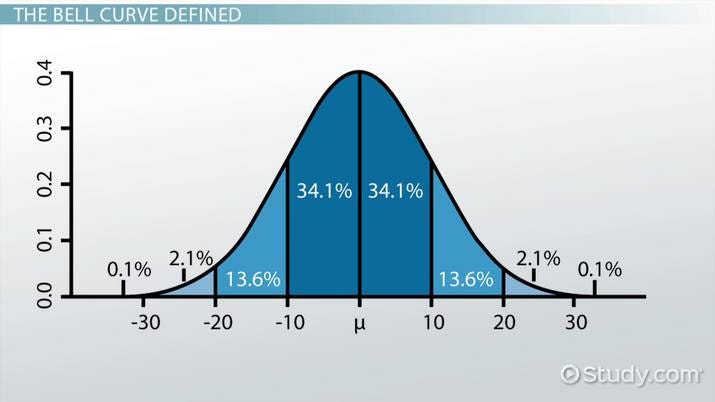
I dont care about genetic outliers, at either end. My focus is in creating useful standards that are aspirational and reasonably attainable.
Why You Need KPIs
Key performance indicator (KPI) exercises tell you that your training is working. KPIs are the specific, measurable lifts and outputs that reflect whether the underlying program is actually driving adaptation.
Most people workout and have zero clarity on what exercises are high effect and worth doing. Exercises are NOT created equal.
Instead, you must identify the key set of productive exercises that correspond with the physique and performance outcomes you care about. When your performance on those KPIs improves over time, you know that your training is working, its that simple.
Your training is successful if:
Your KPI lifts are progressing.
Your KPI conditioning metrics are improving.
Your body composition is trending toward your target.
Everything else is noise. Not every exercise will be a KPI. Not everything you do will be perfectly efficient. But so long as the core is there, your training is productive.
How to Think About Performance Standards
Train your strengths first. What you are naturally good at should become elite. What you are not good at should at least become competent. The goal is balance between qualities, not perfection in all of them.
What if Im not naturally good at anything?
Then dont worry about it, and get as strong and conditioned as you are able. You’ve only got one body, and its in your best interest to take care of it.
You can divide training into two big domains:
Strength
Conditioning
Your particular balance between those two will be unique to you, your genetics, your training history, and your goals.
Domain 1: Strength and Hypertrophy
The stronger you are, the more muscular you will tend to be, provided nutrition and recovery are adequate. Building muscle and building strength are not mutually exclusive; in practice, they reinforce each other.
Strength is developed through:
Pushing and pressing
Pulling
Squatting
Hinging
This can be done with both compound and isolation exercises, but your main drivers will be the big compound lifts.
Strength Categories
Pushing and Pressing
Chest and shoulder pressing
Get strong at both, or prioritize one based on leverage and joint tolerance
Push for elite strength where it is most achievable, and accommodate your genetics
Squatting
Back squat, front squat, or split squat variations
Find what works for your structure and commit to it
Hinging
Deadlift variations: straight bar, Romanian deadlift, stiff‑leg, or trap bar
Pulling
Chin‑ups/pull‑ups and/or rows
Choose a KPI movement for both a vertical pull and a horizontal pull
Building Your KPI Framework
You do not need to track everything. You need clarity.
Pick 1–2 key exercises in each category (push, squat, hinge, pull).
Your standards can be barbell, dumbbell, or machines:
Squat, bench press, deadlift, overhead press
Squat, incline bench, deadlift
Bulgarian split squat, DB chest press, Romanian deadlift
Leg press, chest, press, pulldowns
The key principle is clarity. Know which lifts drive your physique and performance. Those become your KPIs. They get priority programming, hard progression, and consistent tracking.
Examples:
“If my incline bench goes up, my shoulders and upper chest are bigger.”
“If my weighted chin‑ups go up, my lats are bigger.”
“If my pendulum squat goes up, my legs are bigger.”
“If my barbell bicep curl for 10 reps increases, my biceps will be bigger”
Focus on at least 2-3 KPIs per major muscle group. Supporting lifts matter, but they do not need endless tracking and micro‑management.
Domain 2: Conditioning
Your cardiovascular system is the basis of energy flow throughout the body. Blood, heart, oxygen delivery, and waste removal are all improved through conditioning work.
Conditioning improves:
Your ability to use oxygen and glucose as fuel
Your ability to sustain effort and recover between efforts
Your resilience in and out of the gym
You want to be good at both running fast and running far, or at least their equivalents in your chosen modality. That means training both the aerobic and anaerobic systems.
Slow, long aerobic cardio: 30–60+ minutes
Short, hard anaerobic efforts: 10–30 minutes
Cardio Standards ( Conditioning KPIs )
Useful benchmarks:
Resting heart rate: below 60 bpm
VO2 max: 55–60 mL/kg/min
3‑mile run: under 22:30
1‑mile run: under 6:30
1‑hour run: 7+ miles (optional, not mandatory)
Elite athletes will scoff at these. Others will find them highly aspirational. That is fine. They are reference points, not moral judgments.
Two key reminders:
Excellent cardiovascular fitness does not require running.
You can build these qualities on an Airdyne, Peloton, stepmill, Concept2 rower, or other modalities.
The real priorities:
Low resting heart rate
High VO2 max
Healthy blood pressure
These become your conditioning KPIs. Pick the metrics that matter for your life or sport, then train specifically to move those numbers.
Strength Standards: Reference Table
These give you a clear north star for global strength. Aim for as many as you can.
The Big 4
Overhead press: 1× bodyweight
Bench press: 1.5× bodyweight
Squat: 2× bodyweight
Deadlift: 2.5× bodyweight
Global Strength (Alternative Big 3)
Incline bench press: 1.25× bodyweight
Front squat: 1.5× bodyweight
Romanian deadlift: 2× bodyweight
Global Strength with Dumbbells
DB bench press: 100% of bodyweight for 10 reps (total of both dumbbells)
DB shoulder press: 80% of bodyweight for 10 reps
DB goblet squat: 50% of bodyweight for 25 reps
DB split squat: 100% of bodyweight for 5 reps per leg
DB Romanian deadlift: 120% of bodyweight for 10 reps
Bodyweight – Foundational
Pull‑ups: 15–20 reps
Push‑ups: 50 reps
Bodyweight – Advanced
Pull‑up/chin‑up: bodyweight + 100 lbs for 1 rep
Dips: 5 reps with bodyweight + 50% added
Hindu push‑ups: 30 reps
Hindu push‑ups are deceptively challenging and demand healthy joints, coordination, and control.
Summary
These standards exist to guide your training, not to discourage it.
Your job is to:
Find your balance between strength and conditioning
Build a personal set of KPI lifts and metrics
Use those KPIs to verify that your training is working
Train like your life depends on it
If you want these standards and KPI principles applied to your exact situation, using a proven system instead of guesswork:
That is where these numbers stop being abstract goals and start becoming your baseline.
Download the A-Z BroScience Guide to peptides
Order your Fitness Genes test
These are good standards!
Terrifying to normies comme moi. While being 2/3rds of the way to the Long Sleep,oOnly a bit more than 1/2 way to meeting them...Gonna take a lot of work!