

FYI, this is a very long and detailed article that explains Cardiovascular biophysics, Zone based training, Heart Rate Calculation, and THEN gets to the workouts.
TL;DR version-Do 1 HIIT workout a week, 1 long 60-90 minute low intensity workout, and then however many moderate 20-40 cardio sessions you can fit in.
If you simply want cardio workouts, scroll down to section 5.
Partners and Reminders
Find out your cardio genetics through a Fitness Genes Test, use code AJAC20
Peak cardio requires peak Mitochondria. Get yours tested through Mitome
Use code AJAC10 at Eliteresearchusa.com
Download the A-Z BroScience Guide to peptides
Now if you want to LEARN something and be smarter than 99% of personal trainers and physicians, keep reading.
To understand cardio, we will contextualize and then look at the biological machinery
Cardio is undergoing a renaissance in popularity, and justifiably so.
From roughly 2005 to 2015, the fitness industry underwent a dangerous “Anti-Cardio” trend. Depending on who your gurus were, cardio was declared a waste of time.
Whether this was in response to crossfit becoming more popular and people wanting to be contrarian, I dont know, regardless…
The prevailing dogma became that any aerobic activity lasting longer than 20-30 minutes would catabolize muscle tissue. Not surprisingly, no one became healthier from this, and it probably indirectly contributed to deaths in bodybuilding from enhanced lifters who did not take their cardiovascular health seriously.
I was not immune to this. From 2010 to 2013, I avoided cardio entirely.
It wasn’t until 2014, when I began incorporating running and incline walking, that my perspective shifted. I got leaner, I felt better, and my biomarkers improved.
As Crossfit became fully mainstream as well, there was a shift and acceptance that incorporating it was an essential part of training for longevity.
Now its all the rage to talk about Zone 2, HIIT, and debate about the optimal amounts of cardio. Pedantry aside, it has finally been acknowledged that holistic health and function demands training cardiovascular capacity.
Lets get into it.
Part 1-1st Principles, Why do We Need to Breathe at All?
Telling people that cardio is important is generic advice, but absolutely true.
If we dont breathe, we die.
In any given moment, the exchange of oxygen and carbon dioxide in and out of your lungs is what powers LIFE.
What is Happening When We Breathe?

From a biophysics perspective, “breathing air” is the evolutionary solution to an energy optimization challenge.
Animals that have gills (like fish) extract their oxygen from water. But this is very inefficient compared to air.
Air contains ~210 mL of Oxygen per liter.
Water contains ~7 mL of Oxygen per liter (at 20°C).
Air holds ~30 times more oxygen by volume than water. To get the same amount of oxygen as you do now, if you were breathing water, you would need to pump 30 times more fluid volume through your lungs every minute
Animals that breathe air have much higher metabolisms in terms of overall energy production than animals that have gills
Humans need A LOT of energy to function, and that energy comes from Oxygen.
At a molecular level, you breathe to maintain an electrical current. Your life is powered by the flow of electrons from food (high potential) to oxygen (low potential). This is Bio-electricity.
Redox Potential: In your mitochondria, electrons are stripped from food (carried by NADH, Nicotinamide Adenine Dinucleotide) and travel down the Electron Transport Chain.
Think of it as voltage traveling through a circuit board
They go through Mitochondrial Complex 1, 2, 3, and finally 4, where the Oxygen molecules are waiting
—>Oxygen is hungry for electrons (high electronegativity) and it pulls them down the chainNADH (the donor) has a potential of -0.32 Volts.
Oxygen (the acceptor) has a potential of +0.82 Volts.
The Drop: This 1.14 Volt drop as Oxygen accepts the electrons releases a massive amount of Gibbs Free Energy, which is used to charge your cellular batteries (ATP).
In the most simple terms, we breathe air because we need Oxygen to supply the necessary Electricity to power our bodies
If you don’t breathe oxygen, the chain backs up. You are forced to use weaker electron acceptors (like pyruvate) in fermentation.
This yields only 2 ATP per glucose molecule, whereas using oxygen yields ~32 ATP.
Without oxygen, your “engine efficiency” drops by ~94%, which is insufficient to sustain the complex structure of a human body (high entropy cost).
In any given moment, we are producing multiple SEXTILLIONS of ATP molecules
Its a mind boggling amount of energy.
If you have ever done High Intensity Interval Training, and pushed yourself where you are gasping for air, that feeling is massive oxygen debt that has accrued (hypoxia), and your body trying to catch up. It feels like death because it is in fact a form of self induced suffocation.
To Recap
You breathe Air because you need Oxygen because it provides the bioelectric voltage required to generate the massive ATP yield that keeps your complex, warm-blooded system from collapsing into entropy.
Part 2-Why is Doing Cardio GOOD For Us?
Again, we will examine this from a biophysics perspective.
Cardio is more than burning calories or sweating a lot; breathing is the fundamental calibration mechanism for the hydraulic, thermodynamic, and mechanical efficiency of the human body.
One thing that Yoga in particular is correct on is Breathing is LIFE.
Learning to control your breathing and improve your oxygen efficiency is the most powerful practice for Health next to resistance training.
The human body is an open thermodynamic system. To maintain this living system that is constantly using energy, we need to consume energy (through breathing, and through food).
If we consume too much food, we overburden the system with stored energy.
If we do zero cardio, we remove the specific stressor required to optimize how this system transports fluid, converts energy, and maintains its structural integrity.
Cardiovascular exercise is Essential for FOUR Primary Reasons
1. Vascular Optimization (minimizing resistance, increasing efficiency)
Vascular Stiffness leads to high blood pressure
Without high-flow stimuli (cardio), vessels tend to stiffen and narrow (vasoconstriction and loss of compliance). A small decrease in vessel radius drastically increases the pressure required to move blood. This forces the heart to mechanically work harder just to maintain baseline flow, leading to structural wear (hypertrophy) and eventual failure.
The Biophysics: Cardio induces Shear Stress. The increased circulation of blood around the body creates a frictional force against the vessel walls. This force is detected by the Endothelial Glycocalyx, a hair-like “sensor” layer lining your arteries. When bent by high flow, these sensors trigger the release of Nitric Oxide (NO).
This chemically signals the smooth muscle to relax (vasodilation), increasing the radius. Even a tiny increase in radius massively drops resistance, allowing the pump (heart) to operate at a lower energy cost for the rest of the day.
This is how cardio lowers blood pressure over time. It lowers the energy cost of circulation.
2. Mitochondria Power and Biogenesis
Mitochondria produce ATP and use oxygen as we have established.
In a sedentary system, mitochondria drop in number and become inefficient. This is compounded by age.
Age and being sedentary people increases “electron leak.” Mitochondria dont work as well, as electrons escape the transport chain and react with oxygen to form Reactive Oxygen Species (ROS). This is Oxidative Stress.
The Biophysics: Cardio creates a high energy demand that forces mitochondria to become more efficient, and it leads to new mitochondria (Biogenesis).
With more mitochondria, the workload per mitochondrion decreases. You become a more efficient engine, capable of greater energy output, with reduced oxidative stress (entropy and inflammation).
This why cardio increases your energy and gives you more stamina. You produce more energy, and minimizes thermodynamic waste
3. Diffusion Kinetics (Gas Exchange)
Oxygen must physically travel from your lungs to your mitochondria. This movement is passive, driven by Fick’s Laws of Diffusion, which depend heavily on the surface area and the concentration gradient.
The Problem: In a sedentary body, many capillaries (tiny blood vessels) are “recruited” or open only rarely. The functional surface area for gas exchange is low. Oxygen molecules have to diffuse across longer distances through tissue to reach the cells.
The Biophysical Fix: Sustained cardiac output forces the “recruitment” of dormant capillaries and stimulates Angiogenesis (growth of new capillaries).
You increase the surface area available for diffusion and decrease the distance oxygen must travel. This optimizes the flux of oxygen into tissues, ensuring your system doesn’t “suffocate” at the cellular level under load.
This is how cardio improves your ability breathe and utilize oxygen.
4. Mechanical Tuning (Tensegrity)
Your cells are tensegrity structures (structures maintained by internal tension). They respond to mechanical forces.
The “Use It or Lose It” of Physics: Biological tissues operate on a “mechanostat” set point. Bone density, heart wall thickness, and vessel elasticity are all maintained only if they receive mechanical signals that exceed a certain threshold.
The rhythmic, pulsatile pressure waves of cardio provide the necessary mechanical loading to the heart wall and the arterial tree. This mechanical stretch prevents the collagen in your heart and arteries from cross-linking and becoming stiff (fibrosis). It keeps the system compliant (stretchy), which is essential for dampening the pressure wave from the heart so it doesn’t damage delicate downstream organs (like the kidneys or brain).
This is why cardio is good for your heart and vascular network. It maintains structural elasticity .
Part 3-The Two Types of Cardio, Aerobic and Anaerobic
Now that we got the biophysics out of the way, we can get into the more common science.
Cardio can be categorized two ways
Aerobic, with oxygen. This is low intensity and long duration cardio
Anaerobic, without oxygen. This is high intensity and short duration.
Ideally you do BOTH in your training.
Aerobic Exercise (”With Oxygen”)
Aerobic exercise relies on oxidative phosphorylation to produce ATP. In simple terms, ATP is made with phosphate, ADP, and Oxygen.
During aerobic activity, the demand for energy is low enough that the cardiovascular system can supply sufficient oxygen to the mitochondria to break down glucose and fatty acids continuously for ATP production .
Physiological Mechanism: The body utilizes the Krebs Cycle (Citric Acid Cycle) and the Electron Transport Chain within the mitochondria.
Aerobic work is excellent for mobilizing stored triglycerides for fuel, provided the intensity remains low to moderate. This is why “Zone 2” is popular. If you do enough of it, you can increase your aerobic capacity over time, by improving your bodys ability to oxidize bodyfat.Duration: Anywhere from 20 minutes to 2 hours or more, depending on somones level of conditioning
Cardiac Zones-Zones 1-3, 50-80% of max heart rate
Examples: Walking, jogging, steady-state cycling, rucking.
Primary Adaptations: Increased mitochondrial density, improved capillary vascularization, and enhanced cardiac output (stroke volume).
2. Anaerobic Exercise (”Without Oxygen”)
Anaerobic exercise is when muscular demand exceeds the rate at which oxygen can be supplied. The body does not “turn off” the aerobic system, but rather ADDs to it by turning on oxygen-independent pathways. This anaerobic systems are not unsustainable and lead to metabolic acidosis (the “burn” associated with lactate accumulation). Anaerobic cardio is short duration and sprint based for this reason.
Physiological Mechanism: The body relies on the ATP-PCr (Phosphocreatine) system for immediate explosive power (0–10 seconds) and Anaerobic Glycolysis for high-intensity sustained effort (10–120 seconds). This results in the rapid depletion of muscle glycogen and the accumulation of hydrogen ions. This is the muscles on fire feeling, along with intense fatigue
Anaerobics by default are always done at a high intensity, are explosive, and short duration.
Duration: from 3 seconds up to 10 minutes
Cardiac Zones-Zones 4-5 80-100% of max heart rate
Examples: Sprinting of all kinds, 100 meter, 200 meter, 400 meter, 800 meter, 1 mile run. Also explosive lifting, like olympic lifts, plyometrics
Primary Adaptation: Hypertrophy of Type II (fast-twitch) muscle fibers, increased glycogen storage capacity, and improved lactate threshold (the ability to buffer acidity).
Part 4-How Cardio Intensity is Measured
Now that we got that out of the way, the next section will make much more sense.
Cardio is quantitatively assessed via Heart Rate (HR).
The higher your heart rate, the more intense the cardio, and the more anaerobic it becomes.
The lower your heart rate and closer it is to your resting baseline, the lower the intensity, and the more aerobic.
Simple.
Your baseline is your resting heart rate, your heart rate when you are at rest.
The stronger and more efficient your cardiovascular system, the lower your resting HR will be (although there is a genetic component as well).
The Principle of Intensity
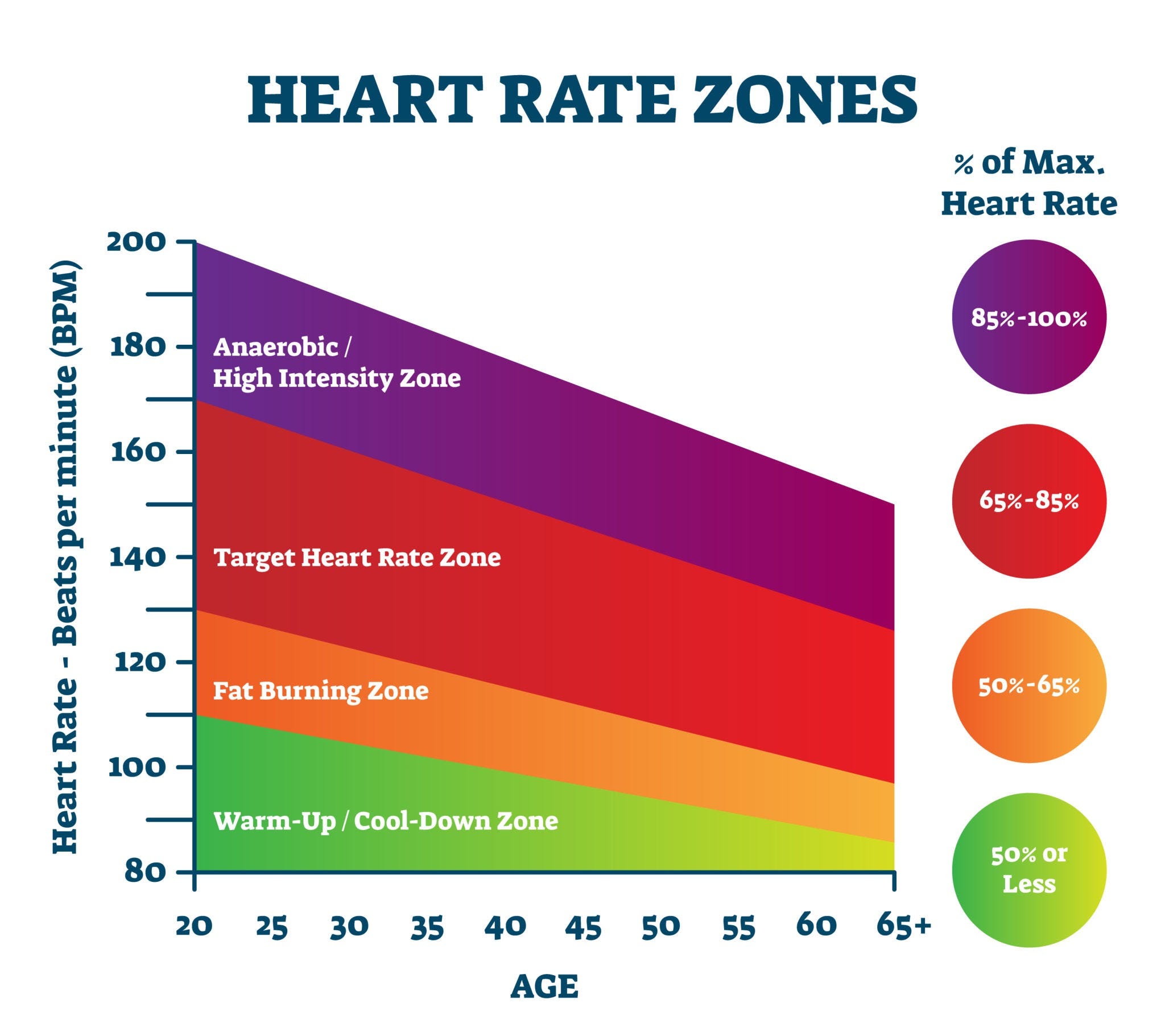
There is an inverse relationship between training intensity and duration. As intensity increases (indicated by a higher heart rate), the sustainable duration of the exercise decreases. Conversely, lower-intensity efforts allow for extended duration.
Now when we look at the Heart Rate Zones, the duration of training in relation to intensity should make sense
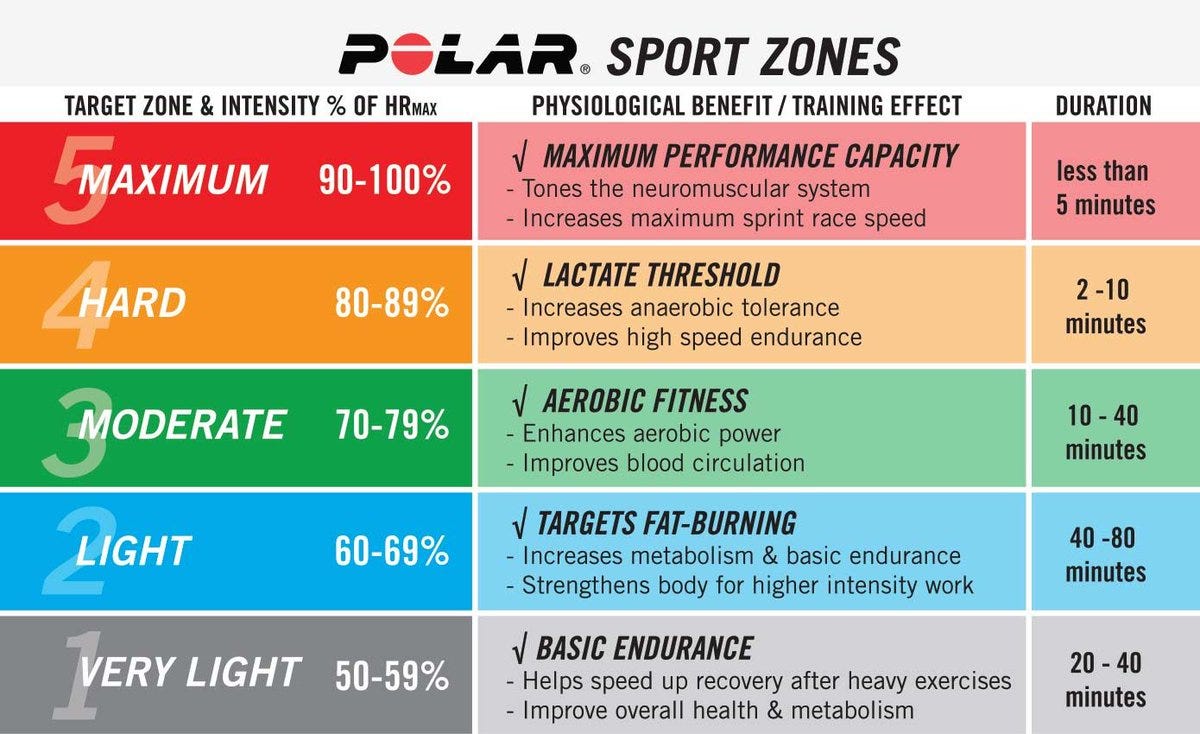
One important detail is the difference in Physiological Response between Untrained vs. Trained Individuals
Often I share this chart and people comment that their heart rate quickly spikes to zone 4 or 5.
You are UNFIT.
Untrained Response: Individuals new to exercise often experience a rapid spike in heart rate, quickly escalating into Zones 4 or 5 (Anaerobic/Maximum effort) even with moderate speed and intensity. This is a normal physiological response to a lack of cardiac efficiency.
The Trained Response: As fitness improves, the heart becomes more efficient (increased stroke volume), allowing the individual to maintain lower heart rate zones for longer periods. Consequently, heart rate zones become more distinct and useful tools for programming as the athlete becomes more cardiovascularly fit.
How to Determine of Maximum Heart Rate (MHR)
To utilize heart rate zones effectively, one must first establish a baseline Maximum Heart Rate (MHR). The standard formula for estimating this is:
MHR = 220 - Age
Example Calculation:
For a 20-year-old individual:
220 - 20 = 200 BPM (Beats Per Minute
Limitations of the Formula:
While the “220 minus Age” formula serves as a functional starting point for the general population, it is not absolute.
For Highly Fit Individuals, they’ll defy the formula: Trained athletes may possess a functional max heart rate that exceeds the formula’s prediction.
Fit Older Populations will also function like younger people: Older individuals with a history of fitness may also be able to safely achieve heart rates higher than the formula suggests.
Again, its general, its not dogmatic
Accuracy in Biometric Monitoring, AKA measuring your heart rate
If you are going to use ZONE training, you need precise measuring of your heart rate.
The most accurate device is a Chest Strap Monitor: These devices utilize electrocardiography (electrical signals from the heart) and are considered the gold standard for accuracy.
Optical Sensors are okay but not reliable (Watches/Rings): Wrist-based and ring devices use a very long word, photoplethysmography (light sensors) to estimate pulse. While convenient, they often lag during high-intensity intervals and lack the precision of a chest strap.
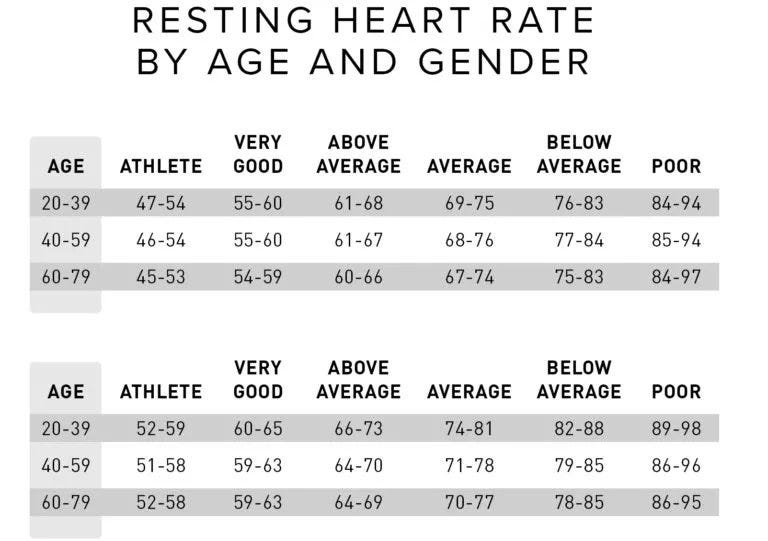
Side Note-Whats a GOOD Resting Heart Rate?
There is abundant data on what a good resting heart rate is.
The fitter you are, the lower your resting heart rate will. People with great cardiovascular fitness will tend to have a resting HR between 40-50
Part 5-How to Do Cardio Workouts
Let us talk no more Cardio science, and instead look at how to do GOOD Cardio Workouts
We have covered the biophysics, intensity assessment, and heart rate mechanics, and now we can apply this to actual workouts.
A Key Principle: Cyclical, Gait based movement
For practically all forms of cardiovascular training, the most effective modalities are cyclical, repetitive, gait-based activities. Meaning movement that is repetitive, based on the gait cycle, and your body can do over and over again.
The Ideal Modalities: Running, jogging, cycling, rowing, rucking, and jump rope. Swimming if its available to you.
For Anaerobics, you can sometimes do alternative movements, but these should be done intelligently
Examples such as sledge hammers, medicine ball slams, battle ropes, or weight lifting movements done for high reps.
The issue with doing this is while these workouts can be fun, they are difficult to measure objectively, harder to progress systematically, and often carry a higher risk of injury due to fatigue-induced form breakdown.
Training Zones, how Much, and For How Long?
Zone 2: Low Intensity Steady State (LISS)
Target Intensity: 60–69% of Maximum Heart Rate
Duration: 30–120 minutes (Minimum 30 mins for adaptation)
Frequency: Can be performed daily; high frequency is safe.
Zone 2 is the unglamorous but essential “base” work. This includes walking, rucking, or easy cycling.
Physiological Focus:
This is pure aerobic conditioning. It builds capillary density and improves mitochondrial efficiency (the ability to use fat for fuel). It places minimal stress on the Central Nervous System (CNS) and does not interfere with muscle hypertrophy or strength gains.
You should be able to hold a conversation comfortably, (the Talk Test) though you might prefer not to. If you are gasping for air, you have exited Zone 2.
Zone 3: Moderate Intensity Steady State (MISS)
Target Intensity: 70–79% of Maximum Heart Rate
Duration: 10–60 minutes (potentially longer for endurance athletes)
Frequency: 2–3 times per week (requires recovery).
Zone 3 represents “Aerobic Power.” This is what most people consider a true workout because the intensity is high enough to cause perceptible fatigue. This includes jogging, running at a moderate pace, or vigorous cycling. Or anything other cyclical modality.
Physiological Focus:
This zone enhances blood circulation and aerobic power. However, because it generates fatigue, it must be programmed strategically. Unlike Zone 2, you cannot do this every day without potentially impacting your recovery for weightlifting or other activities. The athletes that do LOTs of Zone 3 require years of training to build their capacity for this.
Zone 4: The Lactate Threshold
Target Intensity: 80–89% of Maximum Heart Rate
Duration: 2–10 minutes per interval (Total volume varies)
Frequency: 1–2 times per week maximum.
Zone 4 is often described as “comfortably hard.” Here, you are working right at your anaerobic threshold. This is the point where your body produces lactate (a metabolic byproduct) faster than it can clear it.
The best example of this would be running a mile (or potentially 1.5 miles) as fast as you can. Conversation is no longer possible beyond a few broken words. You are focused entirely on maintaining the pace.
Physiological Focus:
Anaerobic Tolerance: Training here teaches the body to buffer acidity, delaying the “burn” in future workouts.
High-Speed Endurance: This improves your ability to sustain high-output efforts (like a 5k race pace or a combat sport round).
Zone 5: Maximum Effort (”The Red Zone”)
Target Intensity: 90–100% of Maximum Heart Rate
Duration: Less than 5 minutes (usually 5–60 second bursts)
Frequency: 1 time per week (Very high CNS fatigue).
Zone 5 is the domain of High Intensity Interval Training (HIIT) and sprinting. This is maximal exertion where the cardiovascular system is pushed to its absolute limit. You cannot talk and are giving it your all.
Physiological Focus:
Zone 5 is all about maxing out your anaerobic capacity and recruiting the fast-twitch (Type II) muscle fibers. It pushes your VO2 Max to its limits. This kind of training cannot be done daily. At most you can do it twice a week.
Because this intensity is unsustainable, it is almost always done in intervals (e.g., 10 seconds of sprinting followed by 60 seconds of rest). If you can sustain the effort for more than 2 minutes continuously, you are likely not in Zone 5.
HOW Much Cardio? Volume and Frequency: Quantifying the Work
For the purposes of longevity and systemic health, cardiovascular training is highly dose-dependent.
Because there is no concrete definition or target of what “optimal” health objectively means, there is no blanket recommendation for cardio that satisfies EVERYONE
We know objectively that fitter people live longer, and that endurance training is good for us, but there is no magic number to reveal. Anything is better than nothing, and more tends to be better than less. Unlike weight training, where excessive volume can quickly lead to injury or central nervous system burnout, the body has a very high ceiling for aerobic work. For heart health, more is generally better.
My Recommendation is simple; do however much cardio YOU need to have a low resting heat rate and healthy blood pressure
Maybe all that requires is two HIIT workouts twice a week. Or maybe it requires much more. I have no idea what your state of health is, or your fitness goals. If you already have good numbers for both of these, then cardio becomes a question of
HOW fit you want to become.
If your goal is to run marathons, you will need far more cardio than someone who only wants to run a fast mile. Both people will be fit, but trying to argue who is more healthy becomes incoherent.
Customize your cardio to YOUR needs
According to the most current science by the American Heart Association, the range of Weekly Cardio is as follows
75-300+ Cumulative Minutes Weekly
How is the range that big?
Because it divides cardio into two categories.
If you do only lower intensity Cardio (Zone 2), the recommendation is 150-300 minutes per week
This is walking, rucking, easy biking, maybe slow jogging. Overall you simply need to get in as many minutes as you can
The challenge is the time to do this.
OR If you do Higher Intensity Cardio (Zone 3-4-5), The recommendation is 75-150 minutes
This is the more practical recommendation.
The Best Cardio Plan for the Busy Man or Women
The 75 minute minimum can be divided into
One HIIT workout of 15-20 minutes (use an airbike)
Two moderate Intensity workouts, of 30 minutes (airbike or treadmill, jog/run or walk on a steep incline)
This is probably the best Bare Minimum Training plan that anyone can do.
Another simple Model is the 30 minutes Daily
This can be a mix of zone 2, zone 3, HIIT plus zone 2…all the matters is doing SOMETHING for 30 minutes each day, as consistently as possible. Do this 5-7 days a week and its largely impossible to NOT be in great cardiovascular shape, even if there is no real organization to the workouts.
What about ONLY doing HIIT workouts?
The question often comes up of why not do HIIT and nothing but HIIT.
Research has shown that High Intensity Interval training can have the same benefits of longer duration aerobic exercise, but the effects plateau quickly
While HIIT is very beneficial and you SHOULD do it, by itself it will plateau. This might not be an issue if you dont do anything that requires moving around beyond 10-20 minutes, but if you want fatigue resistance strength and longer duration stamina, you need to train for longer.
Read all about HIIT here
A Primer on High Intensity Interval Training

I am in the midst of writing a very in-depth article on Cardiovascular Training, and the article got so long that including another section on HIIT would have made it a 30 minute reading experience.
En Summa
Cardio is the fundamental to holistic health in the human organism. You need to energy efficiency, vascular health, and overall longevity. To age well, you need a mix of intensities rather than just one. A practical weekly baseline consists of one max-effort HIIT session (Zone 5) for anaerobic power, combined with two moderate 30-minute sessions (Zone 3) and as much Zone 2 work as possible to build a robust, fatigue-resistant engine.
Do your cardio.