

What are the difference between a NOOB lifter versus an experienced one?
One difference is knowledge of supportive Lifting Gear and proper footwear.
Im talking about things like
-Lifting belt
-Lifting straps
-Wrist Wraps
-Flat and Stable Shoes
-Using a note taking app (or literal notebook) to record their workouts and track progress
Training with Intention and Intelligence separates the novice lifter from the experienced Disciple of Iron.
I have advocated for supportive gear for years, and we shall go through each of these one by one and cover why they make major difference in your workout quality and results’
2026 is weeks away, and I am opening up physique and fat loss coaching spots for the new year.
Your biology is the only asset that truly matters. Work with my team and we will build a system that pays dividends for the rest of your life.
What is supportive gear?
Supportive gear generically refer to any kind of equipment that assissts with your joints and muscles in lifting. It can extend your training lifespan, protect and prevent injury, and overall makes for better workouts.
1. A Lifting belt (also my gym bag)
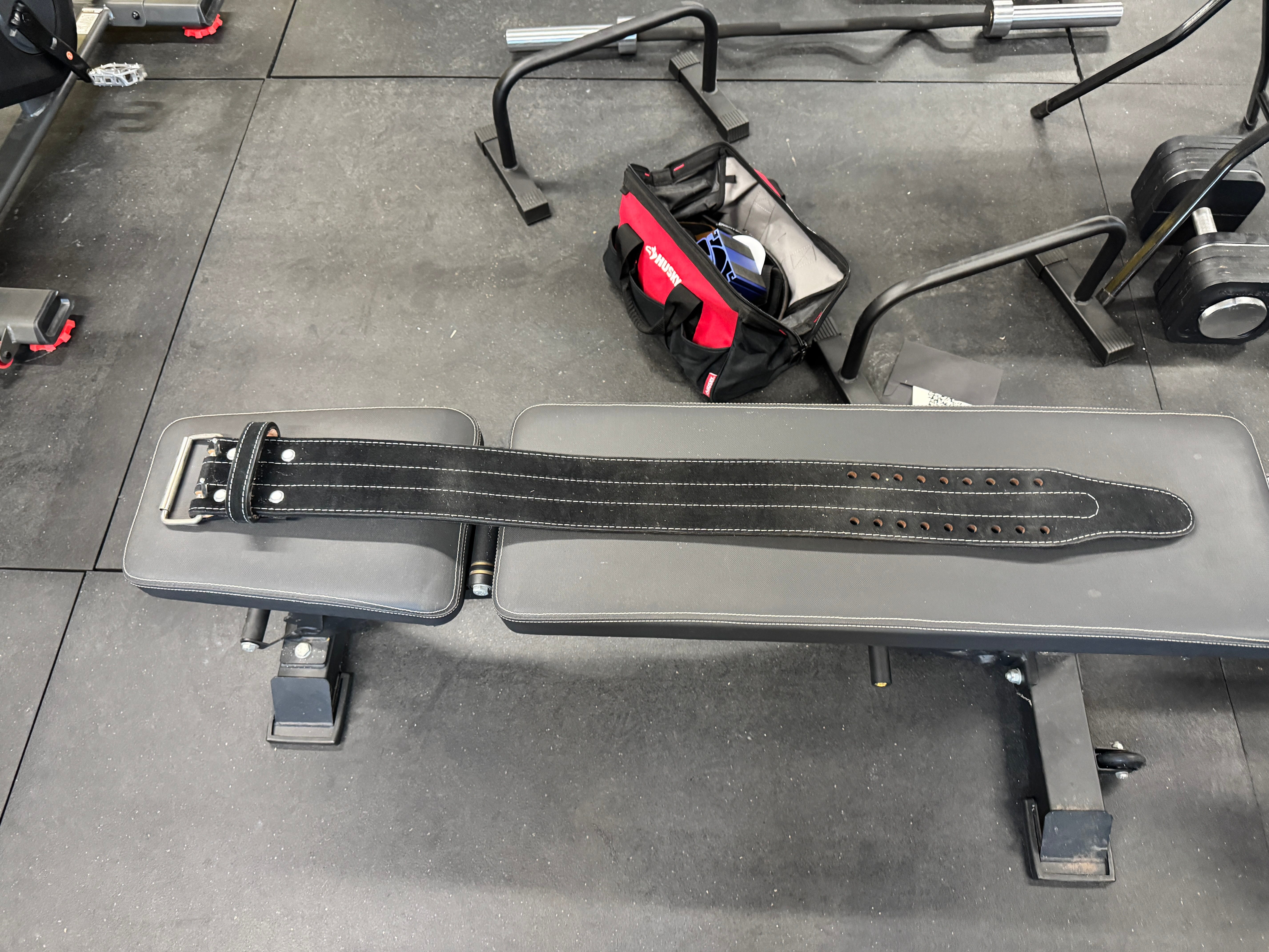
A belt enables you to brace your core harder, maintain intra-abdominal pressure on every rep, and can protect your back from injury.
A belt is an external cue for proper technique, to maintain a neutral spine, and gets you mentally into the zone of focus.
A traditional belt is the same diameter all the way around, and can be worn on any heavy compound movement, whether its bench press, deadlifts, squats, shoulder press, or any variation thereof.
When you get to your working sets, especially with weights in the 80% of 1RM range and above, put the belt on.
There are a variety of belt materials. For powerlifting they are made from thick leather and are very stiff.
Some lifters prefer velcro belts, and these are popular with some strongmen.
Bodybuilding belts are usually tapered in front. Some people prefer this, others do not.
There is not “one size fits all belt”.
Id suggest working out at a hardcore lifting gym, which often have used belts available for members. Try them on, see what you like, and take it from there.
You can use a lifting belt your first year in the gym
You do NOT need to hit any kind of strength metric to use a belt. A beginner could hypothetically use one on their very first day of lifting.
And of course, A belt is NOT a substitute for having a weak core. Its to enhance your strength by improving core stability, not hold back your gut and be a crutch for never training abs or legs. Do not be the fat older boomer man who trains upper body 5 days a week, is 30% bodyfat, and wears a belt 24/7.
2. Lifting straps

These will CHANGE YOUR LIFE.
Grip should never be an inhibitor in your workouts. I do not care about the weak boi online brigade that says straps make your grip weak. They do not. They do the OPPOSITE. They make you STRONGER
Your back muscles are much larger and stronger than your hands will ever be. Getting bigger and stronger muscles and increasing neurological drive to your muscles will also have the effect of making your hands STRONGER, because the brain is the master controller for strength.
This is why every strongman competitor uses STRAPS in training. So do professional bodybuilders, natural and enhanced. So do powerlifters. They’d laugh at you if you told them “no straps!”
Additionally, if you have beat up hands and are older, using straps is an orthopedic no brainer
My dad for example is 70 years old. He’s had carpal tunnel surgeries, a broken elbow, and worked with his hands for years. His hands are beat up. They’ve probably got some arthritis. Maybe you are similar.
Using straps spares his hands from excess overload stress. They enable better muscle engagement and alignment. He has better workouts now that he uses straps.
What straps should you get?
There are two choices here
The first is Versa Grips. Versa grips provide a degree of wrist stabilization and use a patented sticky grip that wrap around a handle. They can work for pulling AND pressing exercises. Most people love them and they are a great choice.
There are various knockoff companies, but I suggest going with the original. Vera Grip Pros are what I recommend. You can use code Alexander for 10% off
The second is fabric straps. These can be made from leather, cotton, or polyester. Ive tried them all, and prefer leather or cotton. These types of straps are made to wrap around bar tight, and they’ve been around for decades. These are often preferred by lifters who do a lot of deadlifting, farmers walks, and heavy pulls. Theres no one company I can point to for purchase for these.
For Cotton straps I like the ones I recently got from Barbarian fitness.
3. Wrist Wraps
Whats the difference between straps and wraps? Straps go around the bar and are primarily for pulling.
Wraps go around the WRIST and are primarily for Pressing. They stabilize the ulna and radial bones in wrist and provide more even distribution of loading.
Anyone can use wrist wraps, and I recommend them especially for women and men who have thinner wrists and are more prone to wrist aggravation.
I also recommend them for older lifters for lifting longevity.
I also recommend them if you’ve had a wrist injury in the past, and want to avoid aggravation.
Ive used wraps from Elitefts, SBD, Granite, and a few others. I will shout out barbarian again, their HD wraps are my most current pair.
Wraps are simple product in theory, but straps vary immensely in fabric thickness, length, and elasticity.
A man who is a Super heavy weight 500lb bench presser with bearpaws for hands is going to need a thicker, heavier pair of wraps than a 130lb 40 year old mom.
For women, I suggest 60cm wraps and “normal” strength.
For men, I suggest 80cm wrist wraps, and “normal” strength.
If you are pushing BIG weights on your chest and shoulder compound exercises over 300lbs routinely, then you’d want to consider a heavier wrap and learning how to Cast wrap.
4. Flat and Stable Shoes
I wrote an article on this a few years ago.
the TL;DR version is this: Your body is evolved to move with barefeet, not in heavily padded shoes.
Especially when you are lifting, which is a flat foot, stable activity, you want flat, stable shoes.
Running shoes are the opposite of this. Do not lift in running shoes.
You have many choices for flat shoes now. All the major companies make, as well as many small brands.
I recommend Xeros. I wear the Prios. They are by far my most favorite minimalist shoes out of all the various brands Ive tried.
You can see me wearing them in my various lifting tutorial videos Ive made.
What Shoes Should You Wear When Lifting?

The question of "what shoes to workout in?" is a recurrent one.
5. A Logbook (any Logbook)
Training with intention and strategy requires organization. Which requires data tracking. You can use phone notes, an app, a notebook, use SOMETHING.
I dont have any app referral for this one. My longtime preference has been to use the note taking app in my phone, and a paper composition book.

6. A Gym Bag
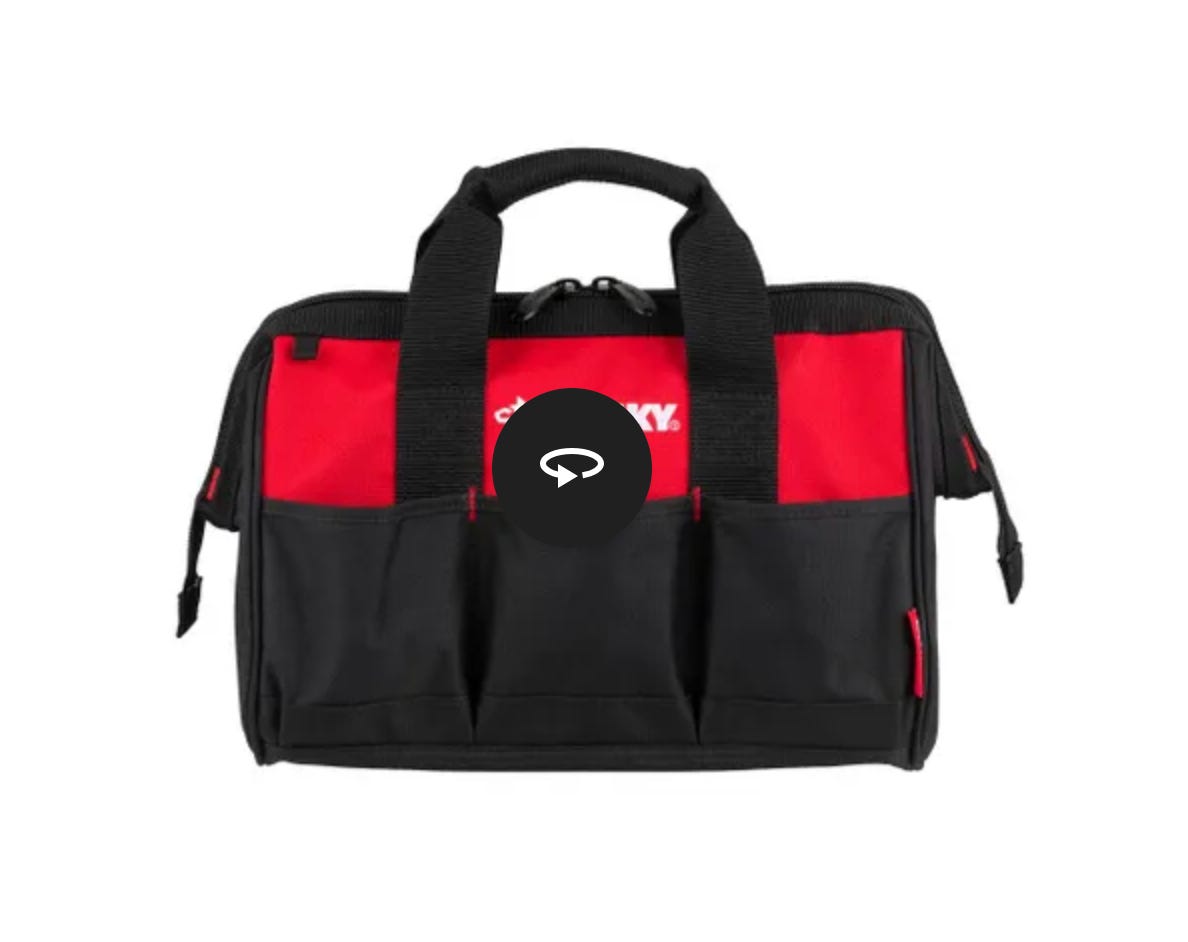
I use a Husky tool bag as a gym bag. Its sturdier, its red, brightly colored, easier to spot, and its easy to remember to bring.
No deep observations on gym bags. They are utilitarian, use what works for you.
In Summary
Utilize supportive lifting equipment, maximize the intensity and quality of your workouts, and keep records to maintain progress and momentum.
As an aside to the article: some aspiring lifters choose not to use any other supporting gear with the claim that they are "cheats." But NO ONE should ever not use a belt. It is not just support, it's use actually strengthens the core. The belt is resistance training for the core as you brace against it.
What about padded lifting gloves? Some of us have very boney hands, especially the thumb bone at the palm. Without padding, it is excruciatingly painful. Although, I should mention that I have small hands and most gloves have big fingers and wrists. That's another thing I have to consider. Do you have any recommendations?