

This post was brought to you by this mornings Neurovolt and dunkin donuts coffe
I started calling myself a Broscientist years ago when I saw the “Science and Evidence” crowd turn obnoxious.
“Wheres your STUDY??” became their constant refrain.
The study says this
The study says that
I didnt think any of these people were scientific thinkers. They simply wanted to be dogmatic know it alls, in a field where the body of historical evidence and observing natural phenomenon has existed for thousands of years, and in a domain where the human body is complex dynamic system.
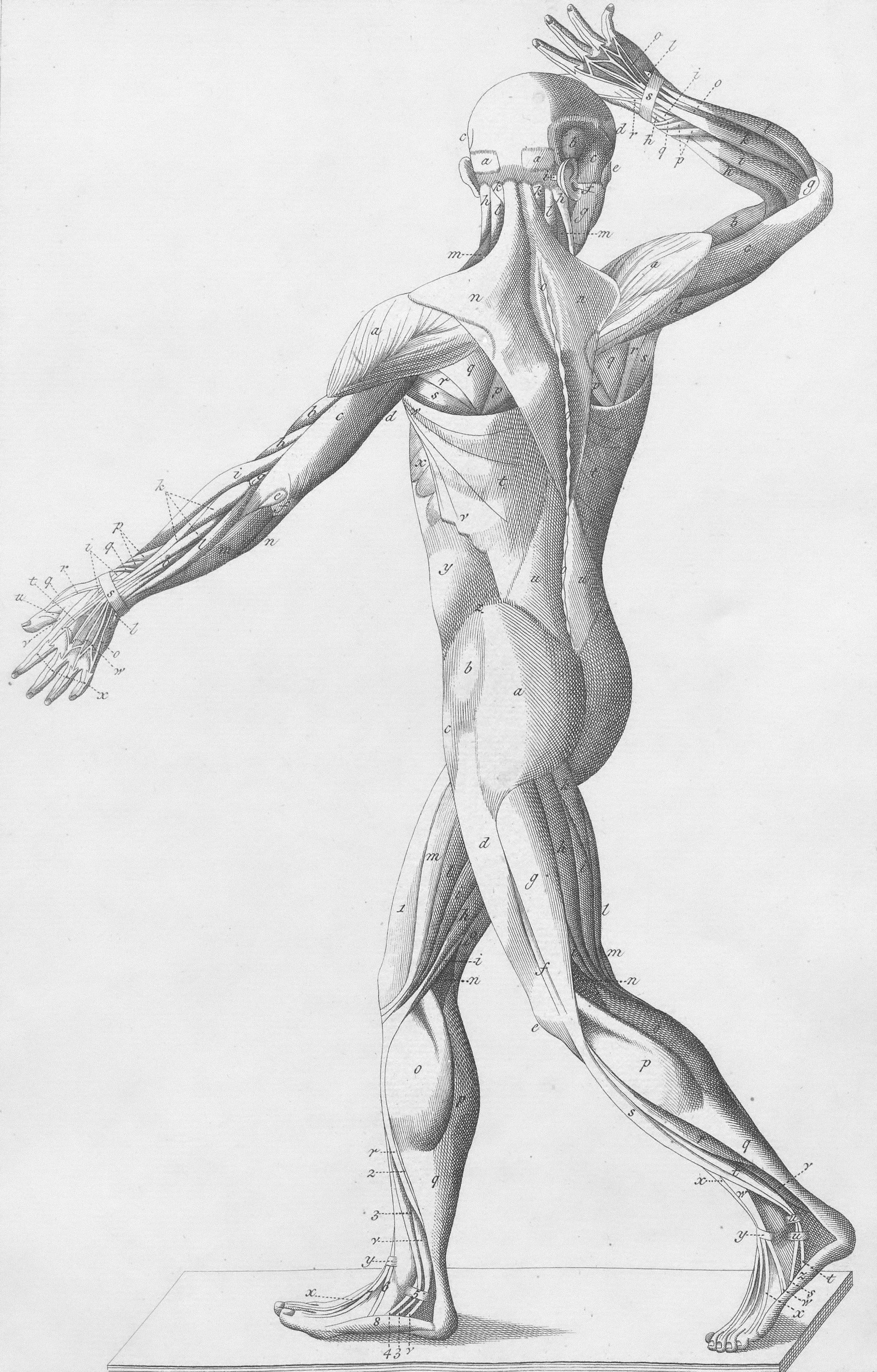
Exercise science has an epistemological problem
I think part of this is the fault of academia, and the illusion that “exercise scientists” are intellectually rigorous. Exercise science is considered a joke field to go into (so has fitness for a long time). Im a personal trainer, so its the pot calling the kettle black right now.
What are the issues though with exercise science, and whole “science and evidence based crowd?
In no particular order.
1. The Ergodicity Problem (The N=1 Dilemma)
Big words I know, but its the only word that suits what Im trying to describe.
In statistics, a system is “ergodic” if the average behavior of a group perfectly predicts the behavior of a single individual over time.
It might take time, but it will eventually happen.
However, human biology is non-ergodic. The behavior or adaptation of ONE individual does not predict the others. In fact the behavior of the group varies considerably, and the more people you add into the group, the more different behaviors/adaptation outcomes you get.
If you get enough people together, some trends DO emerge, no question there. But its still a way range, and its not a perfect standard distribution either.
Attempts to find “optimal” then are innately doomed to fail. At best you can elucidate principles, but making declarations over things like sets and reps is plainly stupid.
2. The Epistemological Wall of Blinding
And on that note, the obession with STUDIES.
Fitness studies are TERRIBLE by study standards.
Why?
Some context: in pharmacology, the gold standard is a double-blind, randomized placebo-controlled trial.
In these studies, the patient doesn’t know if they got the drug or the sugar pill, and the researcher handing it to them doesn’t know either.
No bias.
In Exercise science, this is fundamentally impossible.
EVERY study is “biased”.
You cannot blind a human to the fact that they are doing a heavy set of squats to failure. Or high reps. Or 5 sets instead of 1. Or slow reps versus fast. Or training legs once a week versus 2x. etc etc etc
They always know what the intervention is. And you also cannot blind the researcher or the coach administering the protocol.
Because both parties are aware of who is in the experimental group and who is in the control group, this psychological variable of belief instantly contaminates the data.
If the experimental group believes they are doing a novel, cutting-edge protocol, their sympathetic arousal is higher, their intent is sharper, and their motor unit recruitment increases.
If the experimental group BELIEVES they are on steroids, they will respond MORE to training and get correspondingly higher strength increases.
The psychological vector is impossible to ignore and remove
3. And there is no Control Group, because how could there be?
Who exactly constitutes a “control group” in an exercise study?
The “Dont train at all” Control: If the control group is sedentary, the study merely proves that moving your body produces more adaptation than sitting on a couch. This is biologically obvious and practically useless. Yes, exercise works, no shit really?
The “Standard Care” Control: If the control group does a so called generic 3x10 routine while the experimental group does a complex undulating periodization model, the control subjects inevitably realize they are in the “boring” group. They are doing 3x10. They can count.
This triggers a nocebo effect, a drop in enthusiasm and central drive, which could artificially depress their results and makes the experimental protocol look superior.
And going further
4. There is Biological Flux (The Heraclitus Principle)
“No man ever steps in the same river twice, for it’s not the same river and he’s not the same man.”
You never wake up in the same body twice. Think about that. Every exercise/fitness experience youve ever done has left some neurological/genomic/epigenetic memory in some form. Even if its only a metal memory.
But a true scientific experiment by conventional thinking requires controlling the independent variables to test a dependent variable.
But then in a human, the variables are constantly shifting:
prior training experiene
prior BELIEFS about training
past and current mindset
plus things like
Circadian rhythm fluctuations
Systemic inflammation and prior central nervous system (CNS) fatigue
hydration and glycogen levels
Psychological allostatic load (stress)
This is the reality of being human, there are no baseline starting conditions to ever be replicated. As such you CANNOT ever double blind yourself, or run two experiments and compare results with neutrality. The former will influence the latter. Your training is ALWAYS biased, your body is always biased. You never wake up in the same body twice.
But what about if you’ve NEVER trained?
5. Now we have the “Novice” Noise Effect
A massive portion of exercise science literature is conducted on untrained or moderately trained college-aged males (because they are the easiest subjects for university researchers to recruit).
Thats fine, but in untrained populations, the signal-to-noise ratio is completely skewed.
Because the stimulus is novel, and humans are adaptive organisms (an organism by definition is an adaptive system) we find out that everything works.
So how do you extract the efficacy of a specific variable (like rest periods or volume load) when the subject’s body is adapting simply because they picked up a weight?
To find a strong signal/protocol, you’d need some kind of training system run thousands of times across many many novices, and then compare it, rougly, with other systems, and then you might find a protocol worth following.
-To date, the best protocol thats been innovated on is simple 3x5 or 5x5 barbell training. The Starting Strength novice program is probably the most proven in the world.
5. The Personality and Belief Variable
You also cannot separate the psychological from the psychological. If someone believes a new high-intensity protocol is the “secret” to growth, or a high volume protocol, they will psychologically arouse their sympathetic nervous system more effectively. They are more engaged with training. They probably even stimulate a greater GROWTH response.
This heightened and excited state drives stronger neural drive, higher motor unit recruitment, and ultimately, better results. The belief literally changes the biochemical output and adaptations.
This is why I say that PERSONALITY is the overlooked dynamic in training results. We can assess skeletons and muscles, but what do you ENJOY. Enjoyment is probably anabolic.
En Summa: Science is a Compass, its not a Map
If we accept that true, blinded exercise science is impossible on the individual level, what are we left with?
We have heuristics. AKA principles,
Progressive overload/stress exposure is required for continual adaptation.
The body follows Specific Adaptation to Imposed Demands (SAID principle).
For strength and muscle gains, we need some mechanical tension (aka lifting weights)
Beyond that, the actual application, like manipulating volume, frequency, intensity, understanding biomechanics, its not science by itself
Its the engineering of the human body, and the art of application, and the science of biology, and all of that together leads to experience and outcomes.
And the beauty of this, despite the complexity, is that the practice of training CAN be simple in practice. Its self discovery and creation of self knowledge that never ends.
Excellent points and highly original thank you