

This is educational content. Unless noted, compounds mentioned aren’t FDA-approved to diagnose, treat, cure, or prevent disease. Study references are for context only. This is not medical advice or a recommendation to use anything.
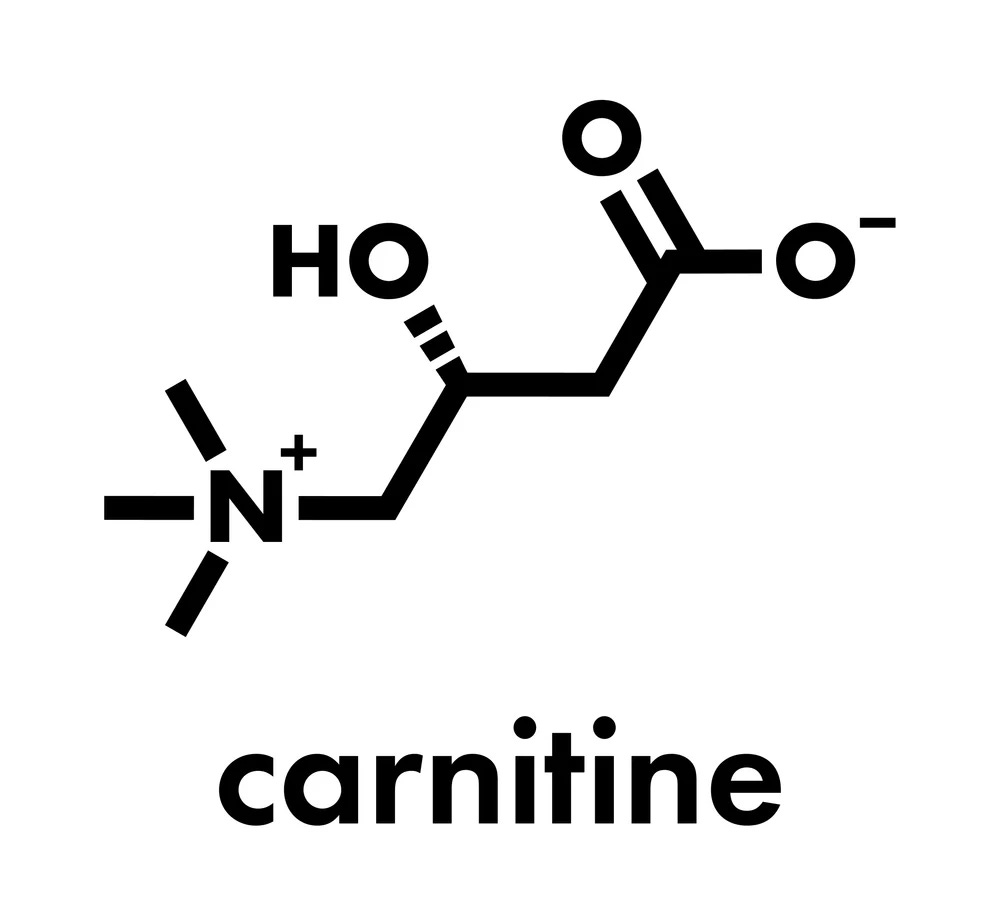
Years ago when I worked for John meadows, he would often recommend injectable Carnitine while dieting.
“works great for fat loss”.
I didnt know what it was at the time. I saw it work for clients who were dieting, but this was in a bodybuilding context.
As I discovered, its technically a small molecule, not a peptide though, made from lysine and methionine (although its not an amino acid itself, but an ammonium).
Not knowing anything about injecting, I elected to just try the oral version. This was around 2014. The oral version (Acetyl L Carnitine) can be had in capsule or liquid form. I would have the liquid form, around 3 grams at a time.
As I discovered, it did have a fat burning and energizing effect. But with some downsides
-you needed 3-5 grams (if using the liquid version)
-it tended to cause diarrhea
-your sweat would smell somewhat fishy
-it would increase Trimethylamine N-oxide (TMAO) a metabolite produced by gut bacteria when breaking L-Carnitine. Elevated TMAO levels have been associated with an increased risk of cardiovascular disease in some studies, though the evidence is not conclusive.
I would use it on and off over the years. I always noticed it had a positive effect on endurance when doing intense cardio, and I liked how I felt. But I also sweated a lot, my sweat smelled different, and needing to rush the bathroom gets tiresome.
That said, it also wasnt something I found essential in any way.
I wouldnt think much about it util 2021, when I rediscovered Carnitine during my wifes struggles with infertility, and us researching what nutrients were essential to reproductive health.
This was surprising, as I learned it did far far more than just “fat burning”.
To learn the origin story, we will rewind back to 1905 St. Petersburg, where two Russians were cooking up something juicy.
A Molecule Hiding in Beef Broth
Carnitine comes from culinary beginnings, specifically a boiled beef broth. In 1905, Russian scientists Vladimir Gulewitsch and R. Krimberg were simmering down muscle extracts, not for taste but for chemistry.1
Out of that broth, they pulled a crystalline substance that didn’t neatly fit into the categories of their day. It wasn’t a protein or a sugar; it was something in between, carrying its own peculiar identity.
This is a common occurrence in researching peptides, discoveries are made in the in-between space, as biology rarely works in absolutes. All the most interesting molecules live at the edges of definition, slipping between categories.
Back to the story, the compound was named carnitine, borrowing from carnis, the Latin for flesh, because it seemed to belong to muscle itself. Logical to say the least.v
Today, carnitine is often described as a spinoff of lysine and methionine (basic building blocks your body uses to make proteins). It’s classed as a conditionally essential nutrient…mostly made endogenously, but sometimes needed from outside. Its not a peptide, but a quaternary ammonium. Basically an organic molecule with carbon and an NH+ salt group attached to it. Again, doesnt quite fit into peptide or amino classification.
The human body produces its own Carnitine daily, but this is dependent on protein intake. Roughly 95% of the body’s carnitine is stashed in heart and skeletal muscle, where it has a role in fatty acid transport to mitochondria.1 A sliver floats in the blood, and the leftovers get dumped out in urine.
The story does not end there though.
Carnitine as a transport molecule
By the middle of the twentieth century, as the field of bioenergetics took shape, carnitine returned to the conversation. Scientists were beginning to see that metabolism was not just about producing energy but about controlling the movement of fuels within the body.
Glucose could slip into mitochondria with relative ease, but fatty acids were another matter. Fat is the body’s most concentrated form of energy, a biochemical vault holding immense reserves. But those reserves are useless if they cannot be unlocked.
The mitochondria, where fuel is converted into ATP (primary energy currency of the cell), are sealed behind a double membrane, and long-chain fatty acids cannot cross that border unaided. What was missing was a shuttle system.
Carnitine turned out to be that shuttle. It couples to fatty acids, escorts them across the mitochondrial barrier through a relay of specialized enzymes, and then releases them inside, where they can be burned cleanly for energy. 2
Without carnitine, fat stays locked outside the furnace, piling up in tissues but never delivering its power. With carnitine, fat becomes fuel, but at scale.
Remove carnitine, and you will have carnitine deficiency syndrome. Muscle weakness, organ weakness, brain inflammation, the effects are catastrophic. Malnourished populations with low protein intake will have stunted growth and brains.
Carnitine was realized to be essential to health and metabolism.3 Without carnitine, long-chain fats wait outside the mitochondrial furnace. With it, they cross the membrane, hit beta-oxidation, and spin ATP.
The Transport in Three Gates
This is where we can get granular in how Carnitine works. Feel free to skip over this part, but I think its worth while to break down. Carnitine doesn’t work alone, it’s part of a larger three stage system.4
CPT1: The Doorman
On the outer mitochondrial membrane sits a receptor, CPT1, carnitine palmitoyltransferase 1. Its job is simple but absolute: fatty acids can’t enter the mitochondria as-is. CPT1 links them to carnitine, creating an acyl-carnitine that’s cleared for boarding. Without CPT1, the shuttle never even gets its passenger.
CACT: The Ferryman
Next comes the carnitine-acylcarnitine translocase (CACT), buried in the inner membrane. Think of it as a ferry service. CPT1 loads the fatty acid onto carnitine, but CACT is the only boat that can carry it across the double barrier. It moves acyl-carnitine in and free carnitine out, keeping the cycle turning. It balances the molecular back and forth.
CPT2: The Customs Agent
Once inside, CPT2 (carnitine palmitoyltransferase 2) strips the fatty acid off the carnitine and hands it back to coenzyme A (CoA). Now, the fatty acid is ready to be oxidized in the beta-oxidation pathway, feeding acetyl-CoA into the Krebs cycle, and ultimately spinning up ATP. The carnitine is released, recycled, and ready to shuttle the next load.
Scientific interest picked up
Once the three-gate relay CPT1, CACT, CPT2 was worked out, Carnitine became much more interesting to scientists. What had once been a strange crystal in beef broth was suddenly being spoken of as a missing nutrient. It was clearly essential for life, especially in cardiovascular and muscle tissue, where energy turnover is constant. Researchers even gave it a temporary title: vitamin BT.
But here’s the thing: the body can synthesize carnitine from lysine and methionine. That meant it wasn’t a “true” vitamin in the textbook sense, but neither was it dispensable.
The interest in carnitine became therapeutic “what can we use this for?”
Trials began in clinics where energy metabolism had broken down, from muscle weakness to cardiac fatigue.
By the 1960s, carnitine had migrated from biochemistry textbooks into hospital wards and eventually training camps. Cardiologists were running trials in patients with angina and heart failure, hoping that boosting carnitine could ease the energy bottleneck in the starving heart muscle.
Studies backed the intuition. Trials in heart failure patients showed small but real shifts: stronger ejection fractions, bigger stroke volumes, and lower stress markers like BNP. Post-heart attack, carnitine sometimes blunted the damage.
Patients also saw less remodeling, fewer arrhythmias, even whispers of lower mortality in meta-analyses. In coronary disease, it cut oxidative stress, nudged HDL upward, and gave the heart muscle a cleaner fuel stream. 5
At the same time, coaches and sports scientists were looking at the same data through a different lens: if carnitine could unlock fat reserves, maybe it could extend endurance, spare glycogen, and delay fatigue.
Studies confirm that carnitine nudges the body to pull more from fat stores, builds a buffer so heavy effort doesn’t sting as hard, and trims lactate a notch. It’s like adding a sliver of extra runway before burnout.
The catch is context, training status, workout intensity, timing, and dose all decide whether you feel it. its useful, but not miraculous.6 Carnitine is an interesting example of medicine and athletics having simultaneous overlap in research. Usually its one or the other, but in this case, they converged. Once the safety of Carnitine was established, the experiments grew in number.
Athletes in Italy, Germany, and the Soviet Union were among the first to experiment. Carnitine injections were used in attempts to improve cardiovascular performance in long distance runners. It was never anabolic in the way steroids were, but it promised something subtler: more efficient engines, longer burns, better recovery. The 1980s were the start of the “scientific training,” movement and awareness around PEDS. Carnitine managed to be both legal to use, effective, and was medically supported.
In clinics, it was tested as a therapeutic adjunct for heart disease. In gyms and tracks, it was marketed, sometimes quietly, sometimes boldly, as the “athlete’s molecule.”
Supplement Era Takes Off
By the 1990s, carnitine had slipped the lab coat and started showing up on store shelves. What began as an injectable compound in hospitals and locker rooms became a powder in tubs and capsules in health shops.
The language shifted too. No longer “vitamin BT,” it was now marketed as a fat-burner, an endurance booster, even a nootropic. This was the supplement boom era, when everything with a biochemical hint of promise got bottled and sold.
By the early 2000s, carnitine had become a supplement aisle staple. You can easily find it next to whey protein and multivitamins.
If there’s one cultural lane where carnitine has had outsized impact, it’s weight loss. It became a regular ingredient in fat-burner blends, thermogenic pills, and metabolism boosters. The logic was simple:
Carnitine is the shuttle that unlocks fat, so more carnitine should mean more fat burned.
Does it Though?
While carnitine is beloved in the fitness world, its benefits for fat loss are never 100% conclusive. It clearly does something, but to what degree?
In clinical settings, results are mixed. Some trials show benefits, others don’t. A 2020 meta-analysis8 that pulled together 37 randomized controlled trials with more than 2,000 participants found that L-carnitine does produce modest effects: on average, people lost about 1.2 kilograms of body weight and around 2 kilograms of fat mass.
The effect was most noticeable in adults with overweight or obesity, and seemed to plateau at about 2,000 mg per day. But the same review noted no real impact on waist size or body fat percentage. In other words, the changes are measurable, but far from dramatic.
Others trials show little to no effect in healthy adults for fat loss. But fat loss trials are notoriously error laden, and fat loss itself depends on dieting, not just taking a molecule.
Carnitine goes beyond fat loss however
The Heart Trials
The earliest medical spotlight was on cardiology. If the heart is a muscle that never stops, then a molecule that unlocks fat — its preferred fuel — made perfect sense. In the 1970s and 80s, trials gave carnitine to patients after heart attacks or in chronic heart failure.
Some studies reported fewer arrhythmias, less angina, and small improvements in ejection fraction. Others showed little effect. The pattern was similar to fat loss; sometimes it helped, sometimes not. Still, carnitine became part of the therapeutic conversation in heart disease. 9
Metabolic Medicine
Next came diabetes and insulin resistance. Researchers noticed that when fatty acid oxidation falters, glucose control worsens. Carnitine supplementation was tested in people with type 2 diabetes, obesity, and nonalcoholic fatty liver disease. Meta-analyses suggest modest improvements: lower fasting glucose, reduced insulin resistance, slight drops in HbA1c. Not a cure, but enough for clinicians to keep carnitine in the toolbox of metabolic tweaks. 10
The Nervous System
Acetyl-L-carnitine (carnitine’s brain-crossing cousin) has shown potential in dementia studies. Some trials saw sharper memory and steadier daily function, others only brief slow-downs in decline. Again, not overwhelming, but strong enough to keep researchers interested. 11
In neuropathy — whether from diabetes, HIV drugs, or chemotherapy — ALCAR has shown more consistent promise, sometimes easing nerve pain and improving sensation. The effect is not universal, but the pattern is the same: a shuttle molecule hinting at broader repair. 12
Reproduction and Fertility
Carnitine’s role in reproductive health has been most overlooked. Sperm cells are loaded with mitochondria, and motility depends on clean fuel. Studies found that supplemental L-carnitine and ALCAR improved sperm movement and, in some cases, morphology (shape and structure).13
In women with PCOS, trials pairing carnitine with ovulation drugs reported higher ovulation rates, thicker endometrial linings, and more pregnancies. It didn’t work for everyone, but it reinforced a theme: where energy is the bottleneck, carnitine sometimes makes a difference. 14
Across heart, metabolism, brain, and fertility, the pattern holds: carnitine rarely has a WOW effect, but it nudges the system.
A Summary of Benefits
The research on Carnitine has never stopped, and at this point it has a long list of potential benefits for supplementation. Emphasis on potential
Upregulate androgen receptor density in muscle tissue. This means more androgen receptors are available to bind testosterone, amplifying its anabolic and fat-burning effects
Accelerates Fat Burning/Oxidation. L-Carnitine is a key player in fat metabolism. It acts as a shuttle, transporting long-chain fatty acids into mitochondria (the cell’s energy powerhouses), where they are oxidized (burned) to produce energy
Has an energy boosting effect. L-Carnitine increases the availability of energy substrates for mitochondria, leading to greater ATP (energy currency) production. This is particularly noticeable during prolonged exercise or in states of low energy.
Can help with blood sugar regulation. The mitochondrial improvement and fatty acid metabolism helps to stabilize blood sugar levels, particularly in diabetics.
Reproductive Health
Carnitine is of great interest for both Men and Women looking to improve their reproductive health
For Men
Improves perm motility by providing energy substrates (via fatty acid oxidation) to sperm mitochondria, which is critical for their motility and fertilization capacity
Improves sperm morphology (shape) and, in some cases, increased sperm concentration, potentially by supporting overall testicular health and spermatogenesis
Reduces Oxidative Stress in Sperm, by neutralizing reactive oxygen species (ROS) that can damage sperm DNA, membranes, and proteins, which is a common cause of male infertility
Supports Mitochondrial, by facilitiating the transport of long-chain fatty acids into mitochondria for ATP production, which is vital for sperm energy needs during maturation and fertilization, potentially improving overall sperm quality.
For Women
Improves Egg Quality. In oocytes (egg cells), carnitine may enhance mitochondrial efficiency and reduce oxidative damage, which is crucial for egg maturation and embryo development.
Protects Eggs from Oxidative Damage. By acting as an antioxidant, carnitine may protect egg cells from ROS-induced damage, which can accumulate with age or due to environmental factors, potentially improving egg viability.
Supports Follicular Development. Carnitine might influence follicular fluid composition, providing energy and antioxidant support to developing eggs
DOSAGE
How much carnitine should be used when supplementing? This is where the form makes a difference
For ORAL carnitine, the bioavailablity is only about 20%. Meaning youre only going to absorb 1/5 of the amount you ingest.
For that reason the suggest dosages are typically between 500 mg to 3,000 mg per day are effective and safe for general use in adults. This breaks down to absorbing about 100-600mg.
However, the injectable form has 100% absorption. The required dosage is much less, at around 200-600mg daily.
Methods of Use
Oral Supplements
The default is capsules or powders, usually labeled as L-carnitine, acetyl-L-carnitine (ALCAR), or L-carnitine tartrate. Doses range from a few hundred milligrams to several grams per day. It’s the most accessible form, but again the bioavailability is 1/5th of the injectable.
To get enough carnitine from oral capsules, you need at least 1-3 grams a day. ALCAR is the most studied oral form, and most often recommended.
Injectables
Injectable Carnitine has 100% bioavailability, and it must be injected intramuscular, and is known for being uncomfortable injection, but its most effective delivery by far.
Injectable Carnitine is widely available as a research chemical
IV Drips
Longevity clinics and dialysis centers sometimes deliver carnitine intravenously. For dialysis patients, it’s a way to replace losses that the kidneys can’t conserve. For the longevity crowd, its often marketed as “mitochondrial enhancement” often stacked with NAD+ or glutathione in boutique drip bars.
Combined With GLPs
Amongst my broscience enthusiast community, carnitine is often stacked with GLPs. Its popular for its energizing effects, and people swearing it keeps fat loss at a steady clip. This is all anecdotal of course
In Summary
Carnitine is interesting to say the least, and personally speaking, its one of my personal favorite small molecules. I believe its earned its spot in the Broscience canon.
For those in the lab coat lane chasing purity, I point people to Elite Research USA — use affiliate code 10AJAC for 10% off.
Reference:
1. L-Carnitine | Linus Pauling Institute | Oregon State University. 23 Apr. 2014, https://lpi.oregonstate.edu/mic/dietary-factors/L-carnitine.
2. Office of Dietary Supplements - Carnitine. https://ods.od.nih.gov/factsheets/Carnitine-HealthProfessional/. Accessed 21 Sep. 2025.
3. Disorders of the Mitochondrial Carnitine Shuttle - https://ommbid.mhmedical.com/content.aspx?bookid=2709§ionid=225087568#:~:text=The%20carnitine%20shuttle%20represents%20a,%2DCoA’s%20for%20%CE%B2%2Doxidation.
4. Longo, Nicola, et al. “CARNITINE TRANSPORT AND FATTY ACID OXIDATION.” Biochimica et Biophysica Acta, vol. 1863, no. 10, Oct. 2016, pp. 2422–35. PubMed Central, https://doi.org/10.1016/j.bbamcr.2016.01.023.
5. Elantary, Ramy, and Samar Othman. “Role of L-Carnitine in Cardiovascular Health: Literature Review.” Cureus, vol. 16, no. 9, p. e70279. PubMed Central, https://doi.org/10.7759/cureus.70279. Accessed 21 Sep. 2025.
6. Research, Institute of Medicine (US) Committee on Military Nutrition, and Bernadette M. Marriott. “The Role of Carnitine in Enhancing Physical Performance.” Food Components to Enhance Performance: An Evaluation of Potential Performance-Enhancing Food Components for Operational Rations, National Academies Press (US), 1994. www.ncbi.nlm.nih.gov, https://www.ncbi.nlm.nih.gov/books/NBK209052/.
7. Lin, Xi, et al. “Carnitine.” Advances in Nutrition, vol. 15, no. 12, Dec. 2024, p. 100336. ScienceDirect, https://doi.org/10.1016/j.advnut.2024.100336.
8. Talenezhad, Nasir, et al. “Effects of L-Carnitine Supplementation on Weight Loss and Body Composition: A Systematic Review and Meta-Analysis of 37 Randomized Controlled Clinical Trials with Dose-Response Analysis.” Clinical Nutrition ESPEN, vol. 37, Jun. 2020, pp. 9–23. PubMed, https://doi.org/10.1016/j.clnesp.2020.03.008.
9. L-Carnitine in the Secondary Prevention of Cardiovascular Disease-https://www.mayoclinicproceedings.org/article/s0025-6196(13)00127-4/fulltext
10. Fathizadeh, Hadis, et al. “The Effects of L-Carnitine Supplementation on Glycemic Control: A Systematic Review and Meta-Analysis of Randomized Controlled Trials.” EXCLI Journal, vol. 18, Aug. 2019, pp. 631–43. PubMed Central, https://doi.org/10.17179/excli2019-1447.
11. Pennisi, Manuela, et al. “Acetyl-L-Carnitine in Dementia and Other Cognitive Disorders: A Critical Update.” Nutrients, vol. 12, no. 5, May 2020, p. 1389. PubMed Central, https://doi.org/10.3390/nu12051389.
12. Chiechio, Santina, et al. “Acetyl-L-Carnitine in Neuropathic Pain.” CNS Drugs, vol. 21, no. 1, Dec. 2007, pp. 31–38. Springer Link, https://doi.org/10.2165/00023210-200721001-00005.
13. Mateus, Filipa G., et al. “L-Carnitine and Male Fertility: Is Supplementation Beneficial?” Journal of Clinical Medicine, vol. 12, no. 18, Sep. 2023, p. 5796. PubMed Central, https://doi.org/10.3390/jcm12185796.
14. Abu-Zaid, Ahmed, et al. “Effect of L-Carnitine Supplementation on Fertility Outcomes among Patients with Polycystic Ovary Syndrome: A Systematic Review and Dose-Response Meta-Analysis of Randomized Clinical Trials.” Obstetrics & Gynecology Science, vol. 68, no. 4, Jul. 2025, pp. 260–72. PubMed Central, https://doi.org/10.5468/ogs.24272.
That was a great write up. I've been using ALCAR on and off since the early 2000s. I love it's focusing, mood effects and it's subtle positive effects on the body.
I tried Propionyl-L-Carnitine (PLCAR) for a while and found it to be amazing for strength and athletic performance. Do you have any experience with PLCAR? Thanks!