

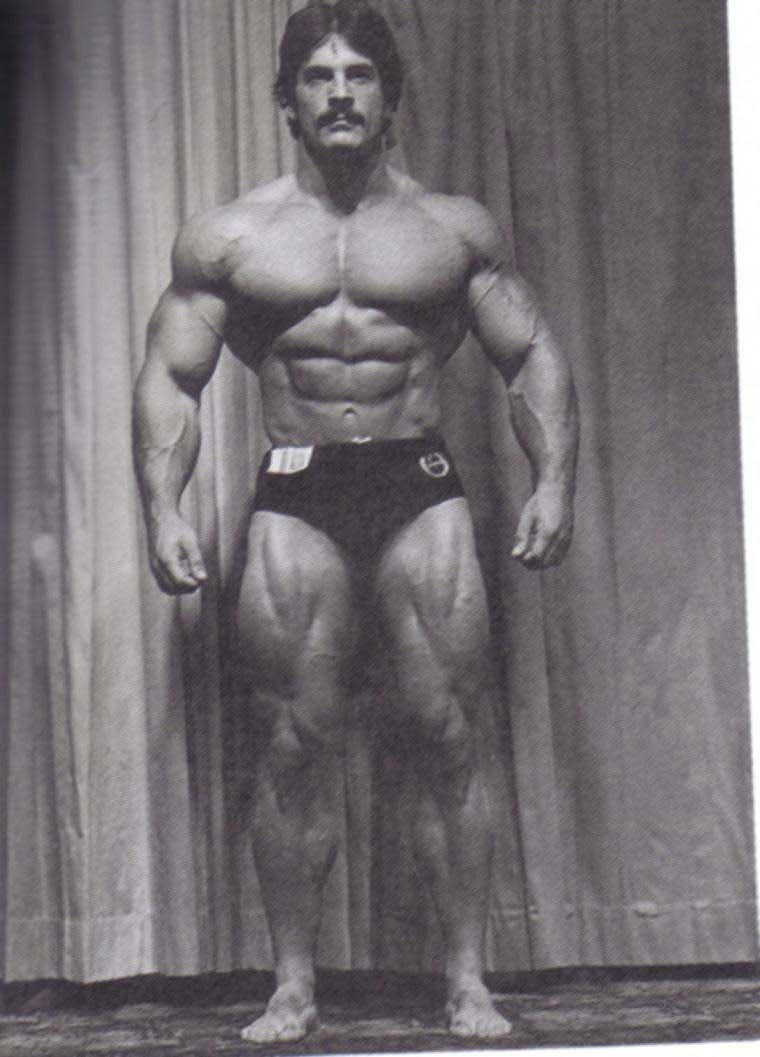
Mike Mentzer’s Recommendations On Diets, Macros, Calories, Muscle Gain, and Fat Loss
Mentzer's Well Balanced Nutrition Philosophy While Mentzer is famous for his training philosophy, his views on nutrition are often overlooked. While his training philosophy of Heavy Duty was considered avant garde and even revolutionary, his approach towards nutrition would probably be considered boring in comparison. This is probably why his nutrition teachings are forgotten, as there is nothing sexy about them. Mike did not believe in supplements, he did not endorse protein powder even. He did not believe in extreme diets, crash diets, or propose any esoteric theories for muscle gain or for fat loss. While he was not always 100% accurate in his nutrition beliefs (his protein recommendations were a bit low, and carbohydrate recommendations quite high), his overall mindset was surprisingly relaxed. Let's start with his Core Premise.
A Well Balanced Diet Initially, Mentzer started as a young bro: he read muscle magazines, he believed that he needed protein supplements and various other products to help build muscle, and he bought many products (this was in the late 1960s and early 1970). Over time though, he realized…he was being lied to. Mentzer saw that he was wasting his money, and when he later went to college and intensely studied human biology, he realized diet was SIMPLE.
The Human organism seeks homeostasis
The maintenance of homeostasis is integral for survival. In light of this, the body requires a well balanced diet, consisting of the essential macronutrients, protein, fat, and carbohydrates. Mike might have hated the fitness establishment for its promotion of high volume training, but he trusted the Scientific and medical establishments as being largely unbiased. And his defense, he was not entirely wrong in this. Scientific and medical evidence has demonstrated conclusively that a well-balanced diet that provides a full spectrum of nutrients is key to human health.
The first priority for the human organism is to be HEALTHY
The first priority for a bodybuilder, or any athlete, is to be healthy. How do we eat to be healthy? Simple, we eat a Well balanced diet. Based on the scientific evidence, humans are omnivorous. We require protein, fat, and carbohydrates. These 3 foods provide the body with all the necessary nutrients and calories it needs. The body only uses nutrients up to its needs, and excess is not used, it is stored as fat. And we dont want to be fat of course, we want to be lean and muscular. Mentzer’s recommendations were not much different from most “Bro” recommendations: To best maintain our weight a well balanced diet should consist of whole foods, which we can consume over multiple meals each day. Mike himself ate 3-4 meals daily. He used a model of four basic food groups: cereals and grains, fruits and vegetables, meat, fish and poultry, and milk and dairy products.
If you are surprised and were expecting something more extreme, I am sorry to disappoint you
Mentzer on Macros Mike did make some mistakes in nutrition, most of all on protein. Mike was very trusting of institutional medicine, and he followed the RDA recommendation of 0.8 grams of protein per kilogram. For a 90kg man (200lbs), this would be only 72 grams of protein. While this is enough to not lose muscle, its certainly not enough to support hard training. And the RDA recommendation itself has increased since the 1980s to 1 gram per kilo of bodyweight.
Do NOT follow Mentzer’s Recommendations for Protein Since the time Mentzer studied human nutrition in college, decades of nutrition research have been done. Optimal protein intake for muscle growth is DOUBLE his recommendation 1.6 grams per kilogram. Or 0.8 grams per lb of bodyweight. Not per kilo, per pound Other research suggests even higher intakes can be beneficial, around 2.2 grams per kilo of weight
This is where the 1 gram of protein per lb of weight heuristic comes from
And it is what I recommend you follow.
Mentzer on carbohydrates Mentzer recommended up to 60% of daily calorie intake from carbohydrates. While this is quite high, it was also in the context of a calorie controlled diet of whole foods. Mike was not suggesting to eat sugar and high fructose corn syrup. He suggested cereal grains, fruits, and vegetables. Mike made a great point that is forgotten about today in the era of Keto, Carnivore, and Low carb dieting: →Glucose is the primary fuel of muscle, and carbohydrate intake is protein sparing. We need sufficient carbohydrate intake for muscular performance, and muscular recovery, as well as overall bodily nourishment. If your goal is to gain muscle mass, you NEED carbohydrates. Attempting to train high intensity and being carb depleted is not anabolic. Mike was not keen on low carb diets. While they were necessary for fat loss, he did consider them suboptimal for performance, and likely to lead to binging if followed long term. They were for short term dieting, not a long term model. While I dont recommend eating 60% of your calories from carbs (unless your physical activity is very high), I concur with the point that carbohydrates are not something to be feared, and that they are conducive to health and performance. Again, health requires balance. Mentzer on Fat Intake Mentzer thought low-fat was key for cardiovascular health (we now know this to be false), and was firmly in the mainstream camp of his era with suggesting low overall fat intake in the diet. He also recommended keeping saturated fat intake low. His suggested macro split was the following. 60% Carbohydrates 25% Protein 15% Fat Mike shows his age in this one, as both science and historical do NOT support this today. Recent research has indicated that low fat diets are actually WORSE for muscle growth, and that “balanced” diets with relative equal caloric intake from all 3 macronutrients are best. There is also the fallacy of the Lipid hypothesis and associating healthy fat intake with adverse cardiovascular health
The Macro split I recommend is as follows
40% Carbohydrates 30% Protein
30% fat Understand this is a general guideline, not an unbreakable formula. The “best” diets generally workout to around 33/33/33, give or take a few percentage points. Mentzer on Diet and Muscle Gain It is very popular to say “Nutrition is 80% of bodybuilding”, but Mike disagreed.
He made a relevant point: The body only grows muscle BECAUSE of exercise. If there is no intense resistance training, there is no muscle growth, period. So we should consider training before diet. When it comes to gaining muscle, we must first be certain our training is producing results. Muscle strength increasing over time is a sign of positive changes occurring inside the muscles.
When a muscle becomes progressively stronger, it undergoes an increase in the thickness and density of the contractile filament tissues within the muscle belly.
To support this growth process, we need sufficient energy and protein intake. Assuming productive training is happening, we then need a calorie surplus. Mike did not support the idea of growing at maintenance level calories. He made the point that consuming calories at maintenance levels only maintains existing mass but doesn't promote significant muscle growth. For growth, you need a surplus, the question is how much? Firstly you needed to know your maintenance calories. This was accomplished by keeping a food journal for 5 days, adding up the calories from everything you ate, and dividing by 5. That would give you your average daily intake.
Assuming your weight was stable, you had determined maintenance calories.
To Add Muscle, you need to exceed Maintenance (A Calorie Surplus)
One interesting teaching concept that Mentzer often used was the caloric value of muscle tissue. A pound of muscle at that time was estimated to contain about 600 calories (we know today its closer to 800-1000). So gaining 30lbs of muscle in say 1 year would only require 30x600=18,000 calories extra calories a year Divided by 365=49/50 extra calories per day
But this does NOT work in reality
Muscle growth is not perfectly linear with calorie intake, the conversion of calories in muscle is not 1:1. His recommendations then for muscle gain were far more typical
To gain muscle, consume 300-500 calories over maintenance per day
A 300-500 Calorie Daily Surplus
This surplus should be in the form of increased carbohydrates. Consuming a calorie surplus in the form of protein he considered wasteful. This is not 100% aligned with current science, but its not entirely wrong either. Once you get to 1 gram per lb of bodyweight, you have maxed out the muscle building benefits of protein.
The most current scientific recommendation for protein intake is 1.6 grams per kilogram of bodyweight, with up 2.2 grams per kilogram being the limit for muscle gain benefit
Nothing bad happens if you consume more of course, but for a calorie surplus, carbohydrates will be more beneficial for energy levels.
Mentzer strongly warned against getting fat
While muscle gain requires a calorie surplus, he did NOT want people getting excessively fat. This excess fat must be lost during the dieting process and requires both a longer diet and increases the likelihood of muscle loss. Once your bodyfat rises above the mid teens, you should cease your “bulking”. Rather than keep gaining weight continuously, maintain this elevated bodyweight at your new maintenance level, and train to become continuously stronger. For the advanced bodybuilder, muscle gains are slow, and you must spend periods of time at a heavier weight to solidify those strength gains and turn them into muscle.
On Supplements
Mike did not recommend any. Seriously. He did not use protein powder, although he also did not say not to use.
The reality is that Mike simply ate real food. Yes, he used steroids. No one is claiming Mentzer was natural. But everyone used steroids in competitive bodybuilding, that era was no different to today. Mentzer considered supplements to be relevant only the context of medical need. Otherwise your diet should provide all necessary nutrients.
But is this true today?
Soil depletion is real, as is the decline of micronutrients. However Mentzer does make a good point; real food is ALWAYS the basis of a healthy diet
And relative to bodybuilding, there is NO supplement in the world that matches the power of exogenous hormones (steroids). There is nothing you can take that will make you grow faster. You can eat protein, eat carbohydrates, eat in a surplus. But you grow because of training. Training is what turns on the growth mechanism. Muscle is an adaptation. And by Mentzer's estimate, Heavy Duty training was the most scientific way to ensure muscle growth.
Mentzer’s ire towards supplements explains the Bodybuilding words animosity towards him. He did not promote Weider principles, advocated for LESS time in the gym, and flat out refused to promote any supplement, protein powder or otherwise. So despite his popularity and star power, he wasn't an effective marketer for anything but his ideas and brand. Thankfully he left behind a large body of work, and left behind an intellectual legacy that has only strengthened since he passed away.
On Dieting for Fat Loss
This might surprise people most of all;
Mentzer was firmly a “Calories in, Calories Out” proponent.
Decades before the concept of “If It Fits Your Macros” would emerge, Mentzer routinely ate 200 grams of carbs while dieting. He said he would have pancakes, bread, even ice cream sometimes.
How was this possible?
HE COUNTED CALORIES For the body to metabolize stored fat, an energy deficit was required. It was that simple. Mentzer also recognized that while fat loss by itself could be accomplished through diet, it was the muscle gaining process and resistance training that changed physiology and metabolism. His perspective lines up exactly with the research today showing that resistance training + dieting is more effective for permanent fat loss than diet alone. He recommended building strength and muscle mass through a weight training program before starting a calorie-restricted diet for long-term weight loss. Do this in reverse, and you risk muscle loss and rebound. Mentzer would diet on 2,000 calories or less daily to get into contest shape. He stayed active by walking frequently (there is no record of him running or doing any kind of interval cardio, he only described himself as being active throughout the day) His protein intake was never high either This is NOT fully recommendable today Most people would lose muscle on low protein intake like Mike, But at the same time, Mentzer did prove
A) Deficits WORK
B) provided your macros are correctly proportioned, higher carbs can be consumed (provided fat intake is low)
C) Slow and steady fat loss works
To follow a fat loss diet, you again MUST know your maintenance calories
In Mikes own words "Reducing body fat can be done safely (without losing muscle), simply, methodically and in a predictable fashion so that the individual achieves his goal on a predetermined date. The process begins by establishing one's present maintenance level of calories. This can be accomplished by keeping a five-day food diary wherein you record everything you eat, including the quantity, for that period. At the end of each day, sit down with a good calorie-counting book and tally the total calories for that day. On the fifth day, take the five daily totals, add them up for a grand total, divide by five, and you'll have your daily average calorie intake. If you didn't gain or lose weight over that five day period, your daily average calorie intake will also represent your daily maintenance level of calories. Once you've established your daily maintenance level of calories, reduce your food intake so that you are 500 calories below maintenance. Since there are 3500 calories in a pound of fat, a 500 calorie daily deficit will lead invariably to a loss of one pound of fat a week. Over a period of time, as you continue to lose weight, your maintenance level of calories will go down, and weight loss will slow down or come to a halt. When this happens, reduce your calories another 500 or so and the weight-fat loss will proceed."
Mentzer did not crash diet
By never becoming too fat, a fat loss diet should typically last around 12-16 weeks, yielding about 12-16lbs of fat loss. If 12 weeks of dieting is not enough time for someone to get to single digit bodyfat or near to it (say 10%) , then you are far too fat. You need major diet and lifestyle change, and bodybuilding competition is out of the picture entirely.
If you Diet is Well Balanced, Fat Loss should not be an immense struggle
If you are eating multiple meals a day with whole foods, it is simple to weigh/measure your food and reduce calories. There is no benefit to crash diets, your weight will rebound and the problem repeats itself. Fat loss should be methodical, decreasing calories intelligently to maintain 1lb lost per week, while not dieting too quickly and risking muscle mass loss. The one thing Mentzer does NOT mention is refeeds. Im not sure he ever utilized them. His carbohydrate intake was high enough that he probably did not need to. I would recommend periodic refeeds when dieting, these can be every 7 to 10 to 14 days. Refeeds are 1 or 2 days of HIGH CARB, low fat, moderate protein eating to replenish glycogen stores, temporarily elevate metabolism, and mitigate metabolic slowdown and muscle loss.
In Summary
1. Maintain a balanced ratio of calories from protein, fats, and carbs, with slightly more emphasis on protein.
2. Eat 3-4 times daily, with well balanced meals consisting of whole foods.
3. Calorie control is real. If high calorie, high carbohydrate foods lead to uncontrolled eating, do not eat them. Being healthy requires discipline.
4. Proper high-intensity training is the primary requirement for stimulating muscle growth, with nutrition playing a secondary role.
5. To promote muscle growth, one must consume nutrients and calories above their daily maintenance level. 300-500 calories should be your daily surplus
6. Muscle mass and strength increases have a reciprocal relationship and should reinforce each other, facilitating further growth stimulation.
7. Fat loss requires a deficit. Calculate maintenance, and enforce a 500 calorie deficit daily to reliably lose 1lb of fat per week. Always be resistance training while dieting.
8. Record your diet, record training, and use data and logic to guide your decision making with diet, not emotion.