

I made the suggestion recently in my Broscience Channel for someone to try cluster sets in the training
They immediately asked “Whats that?”
I realized that clusters sets are still a fringe training strategy, despite being around for 20 years.
So lets discuss
Cluster training is a method of doing multiple sets of low reps, never training to failure, and keep each set fast and explosive.
Basically you do sets of 2-5 reps, but A LOT of sets. The weights are anywhere from 70-85% of your 1 rep max.
Why do this? The primary reason is for POWER
With athletes, power development is often a primary goal.
power=force x velocity
In a traditional set done close to failure, there is a drop in power as the bar speed slows down. In a set of 10 reps, the first 5 reps are the fastest reps with the most power, while the last 5 reps have a decline in power output.
While this is excellent for hypertrophy and even absolute strength, it’s NOT beneficial for speed/power production.
To be fast, you must train fast.
To get around, the idea arose of cutting the reps in half on a set, and doubling the number of sets. This basically reveres the set rep scheme.
Examples
Instead of doing 3 sets of 5 reps, you reverse this, and do 5 sets of 3 reps.
3x5—>5x3
This reduces the fatigue on each set (the final 2 hard reps you are no longer doing obviously), while also allowing you to use the same heavy weight
Another example, the traditional 3 sets of 8-10 reps. We reverse it, and it becomes 8-10 sets of 3 reps. This allows you to use heavier weights, get the same amount of volume in total reps, and you never train to failure.
3x8-10—>8-10x3
Another example, the common bodybuilding scheme of 4 sets 8x12
We reverse it, and it becomes 8 sets of 5 reps. This allows you to use heavier weights, get the same amount of volume in total reps, and you never train to failure.
4x8-12—>8x5
Another example, doing 2 sets of 6-10 reps
We reverse it, and it becomes 6-10 sets of 2 reps. This allows you to use heavier weights, get the same amount of volume in total reps, and you never train to failure.
2x6-10—>6-10x2
Does this work? YES IT DOES
There has been legitimately good research on cluster set style training the past 10+ years. While I could list over a dozen papers, this one I think is the best example for supporting the strategy
Greater Gains in Strength and Power With Intraset Rest Intervals in Hypertrophic Training
This study started with two groups of trainees. There were 11 in each group, and all of them had athletic backgrounds and lifting experience. They were not noobs.
The first group did traditional hypertrophy training for their compound lifts, doing 4 sets of 10 reps for their big lifts, and resting 2 minutes in between.
The second group did cluster training for their compound lifts, doing 8 sets of 5 reps (double the sets, half the reps), and rest for only 1 minute between sets.
Both groups did the same exercises, in the same order order. They followed the exact 4 day per week schedule, using the same intensity of weights, and the same total volume.
Assistance lifts (isolation exercises) were done in both groups at three sets of 10 with one and a half minutes rest.
This is a great example of science doing an exercise study as best it can be done. You cannot account for genetics, but you can control for the variables in the program to make a comparison.
Week 1 the compound movements were doing at 65% (of 1 rep max), Week 2 at 70%, Week 3 at 75%, and Week 4 was a deload. This was repeated three times for a total 12 weeks.
At the end of the 12 weeks, the outcomes of size, strength, and power were measured.
Results
After 12 weeks, there was no significant difference between the two groups in lean mass gained or total weight gain. Both groups gained about 4lbs, with about half of that being lean body mass.
-These results are typical for experienced natural lifters, and very good for a 12 week program. If we extrapolate the program into 1 year of training, 4-5lbs of lean mass gain would be fantastic.
With strength and power, the cluster program came out slightly ahead.
Bench Press 1RM
Cluster: +13.7%
Traditional: +9.2%
Back Squat 1RM
Cluster: +51.1%
Traditional: +43.1%
Bench Press Power
Cluster: +15.0%
Traditional: +6.1%
Back Squat Power
Cluster: +46.9%
Traditional: +36.8%
Vertical Jump Power
Cluster: +11.1%
Traditional: +7.2%
While these differences are not disproportionate, they are real. Cluster training had the slight but real edge in strength and power development. And to be fair, this also means that traditional hypertrophy training builds power as well.
Cluster sets do the following
Promoted increased adaptation in power (Rate of Force Development)
Promoted increased adaptation in strength (maximal weight lifted)
Result in similar lean mass gains
Now you may be looking at the numbers above and thinking that the differences in adaptations are still small, and is cluster training really worth doing. This is only one study after all, and while there are other studies looking at cluster training with similar results, these are not revolutionary or insane differences. Would they keep replicating long term? Maybe or maybe not, thats all speculation
There is ONE major advantage though to cluster training
It makes you less SORE than regular hypertrophy training. As anyone who ever has done compound movements close to failure can attest, there is a real fatigue factor that can happen, and it lasts a few days. The day after leg day, you are not going to be fresh to sprint or run around typically.
This is where cluster training shines.
If you are a recreational athlete, or simply an above-average-Joe who loves to train but finds the soreness and fatigue factor a drag at times, cluster training can be invigorating and a great training style.
The caveat is that you cannot do this for every muscle (based on research it did not work well for smaller muscles) and it also makes training take a very long time if you were to do it for every exercise.
It works best on 1-2 compound movements per session that can be done explosively and using percentages to determine weight.
Each month, your weights will increase. You will feel yourself getting stronger and stronger, while also avoiding the fatigue and burnout people normally experience when using the barbell and training close to failure.
Can you explain “percentages”?
Percentages means the weight you are using relative to your 1 rep maximum.
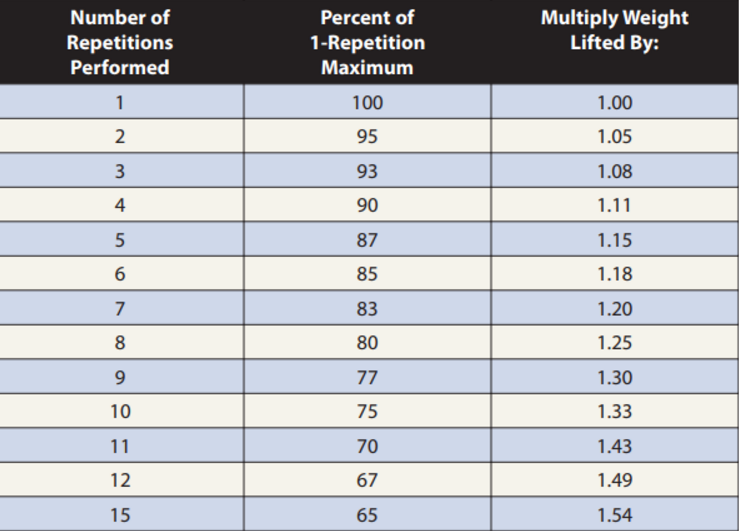
With clusters, you are not using random weight, you are using weights that are based on your estimated 1 rep maximum. The weights will typically be in the 70-85% range.
A Simple cluster program would look like something like this
10x2-3 on your main lift with 70% of your estimated 1 rep max. This will seem very light, but you will be adding weight each week.
For squats and deadlifts, I suggest triples.
For deadlifts, doubles.
Every week, add 5lbs.
Do this for 8 weeks, or until you plateau and can no longer be explosive with the 10x3.
Retest your 1 Rep Max
Your 1RM will have gone up
Another example of a percentage based cluster program would look like something like this
Month 1: do 8 sets of 5 reps at 75%
Month 2: do 7 sets of 4 reps at 80%
Month 3: do 6 sets of 3 reps at 85%
Repeat the training cycle, increase your work weights by 5-10lbs for all percentages.
Cluster sets work best for intermediate lifters that have 1 rep maxes in the first place. If you are total beginner to lifting, you are better starting off with a simple linear strength program and adding weight to the bar every week.
Here is an example of a Cluster Set Workout Schedule using 8x5
Day 1: Squat Day
8x5 Squat or Front Squat
Leg Extensions-2 sets of 15-20 reps to positive failure
45 Degree weighted Hyperextension-2 sets of 10-15 reps
Seated or Lying Leg Curl-4 sets 8-15 rep range
Seated Calf Raises-4 set of 10-15 reps, straight sets. Rest 1-2 minutes between sets.
Standing Calf Raises-4 set of 6-10 reps, straight sets. Rest 1-2 minutes between sets.
Day 2: Bench Press Day
8x5 Incline Or Flat Bench
Incline or Flat DBChest Press (depending on first exercise)-2 straight sets to 6-15 rep range
Decline Cable Crossovers-2 straight sets to 8-15 rep range.
Seated DB Shoulder Press, or any machine shoulder press of your choice-2 sets 8-12 rep range
Lateral Raises-3 sets 8-12 rep range
Lying Tricep Extensions or Cable Pushdowns-3 sets 8-12 rep range
Day 3: Deadlift Day
8x5 Romanian Deadlift
Chinups-2 sets to positive failure
1-Arm DB Rows or T-bar Rows-3 sets 8-12 rep range
Bodyweight Inverted Row-2 sets to positive failure
DB Bicep Curls-4 sets 8-12 rep range