

These two question are recurrent ones
“Can you build muscle with only bodyweight?”
“What do you think of bodyweight training?”
The Greeks were the Calisthenic Pioneers in History
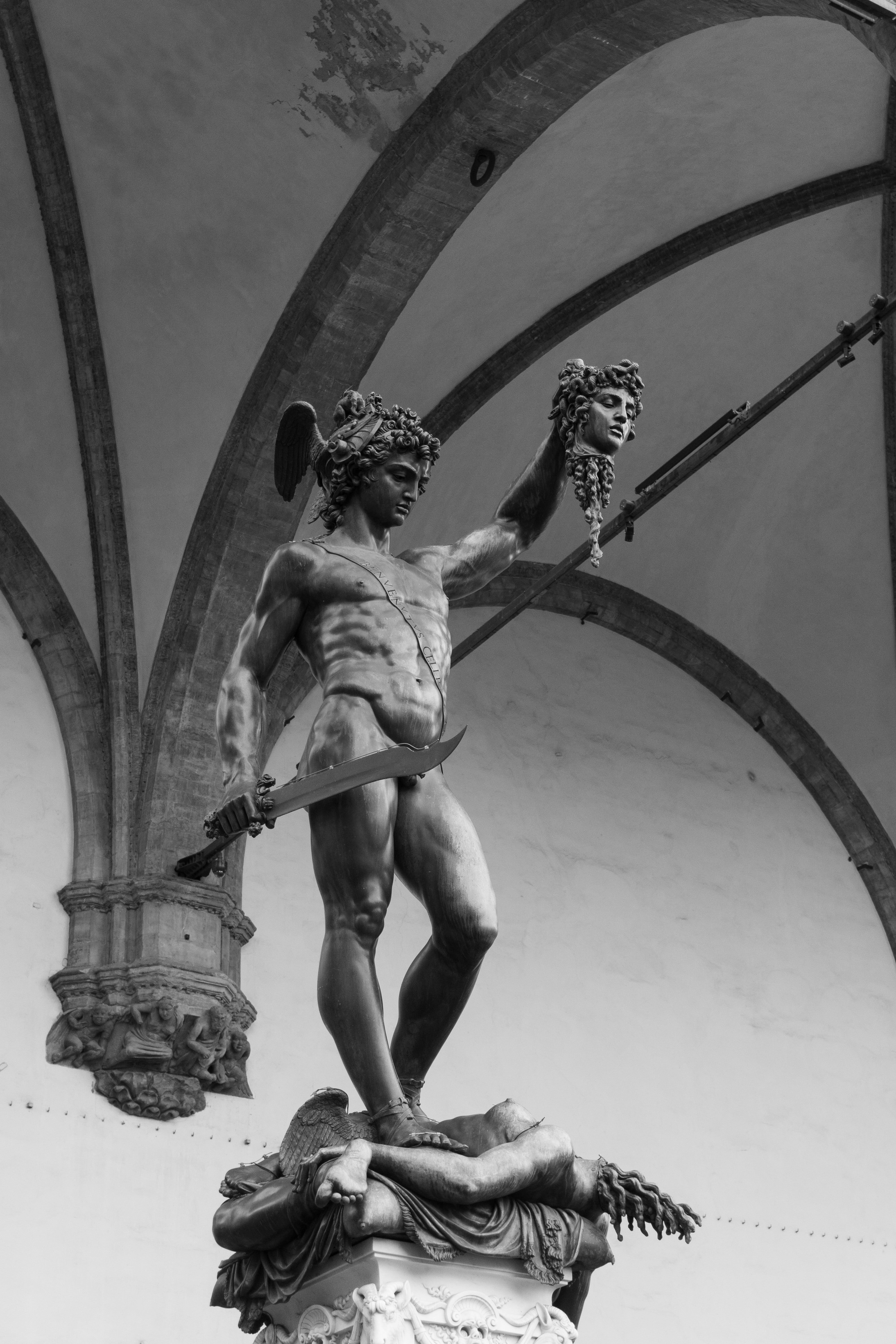
Let’s cut to the chase on this one and make some concrete points, while dispelling possible misconceptions.
YES, you can definitely build muscle with bodyweight. In fact, relative bodyweight strength (how strong you are at basic BW exercises) is the most direct indicator that you’ve built muscle, strength, and improved bodycomposition.
NO, you are very likely NOT going to get the same results that you would get if you used a COMBINED approach with both free weights and bodyweight training.
NO, just because you watched the Olympics and the preselected elite level Olympic gymnasts were really jacked does NOT mean you are EVER going to look like that simply from using your bodyweight. Comparing yourself to a 5’3 Chinese man who’s been training since age 6 is stupid.
YES, you can achieve fairly significant results with only bodyweight training, but bodyweight training STILL requires some usage of equipment.
YES, bodyweight exercises need to be part of your program if you want to be bigger, leaner, stronger, faster, and more athletic.
NO, bodyweight strength and free weight strength are not mutually exclusive Both complement each other, and you can do both of them at the same time
Points aside, there are some very obvious benefits to bodyweight training that are worth listing.
Why should you use your bodyweight?
A number of reasons:
It develops kinesthetic intelligence—mastering your bodyweight with basic movement is an excellent way to improve overall athleticism
It gives you the strength and muscle base for external loads—Getting strong at bodyweight movements gets you stronger at lifting weights, and vice versa. Rather than think you should do only one or the other, do BOTH and enjoy the synergistic effect
Exercises can be done almost anywhere—Free weights require a gym of some kind, and machines take up space. With your body though, you are your own machine. So even if you are traveling, or have limited space, you can still perform a bodyweight workout routine and maintain your results.
Results come FAST—Bodyweight exercises can noticeably improve week to week, and this makes training them very encouraging for new trainees
Bodyweight Basics
1. Squats
These get called air squats now, but before crossfit they were simply known as bodyweight squats. You do these with the arms across the chest, or to challenge yourself and build your upper back strength, behind the head.
Standard: I advise everyone to be able to 100 reps in a row of bodyweight squats.
Variation-Hindu Squats (Baithaks)
These are the version done with your heels coming up, and are done in a rhythmic fashion. I love these and believe they are a core exercise for maintaining life long strength and joint health. Aim to do 5 sets of 20
2. Lunges
Proper lunges are done with forward step to roughly 90 degrees, hands on the hips, and a fluid step through to the other leg. Along with forward lunges, you also have:
Reverse lunges: which are a harder variation stepping backwards.
Lateral lunges: which work the inner thighs and require you are able to perform hip extension59.
Crossover lunges: crossing behind the front leg, also called a curtsy lunge.
You should be able to perform ALL of these, easily, for 10 reps each leg, without batting an eye
Standard: My strength standard is 100 reps of forward lunges, 50 per leg, done continuously.
3. Pushups
Also called press-ups in the UK. Pushups have been existence for likely hundreds of thousands of years. You use your chest, shoulders, arms to push yourself up. There are hundreds of pushups variations, but the beginners version is the stand moderate grip, elbows tucked, chest down, chest up pushups.
Standard: For men, I advise being able to perform 50 pushups in a row. For women, the goal is 20.
Variation-Judo Pushup (Dands)
Also called a Divebomber, another great and ancient exercise. Aim for 25 in one set
4. Dips
If you’ve got bad shoulder health, you may not be able to do dips. This does not mean dips are bad for your shoulders, rather it means your shoulders are not ready for dips. Dips can be progressed with weight, but the basic version is done on parallel bars, chin tucked to the chest, slight forward lean, lowering the body, pressing up through the shoulders, chest, triceps.
Standard: The strength standard to aim for with dips is 20 reps.
5. Pullups
Tried and proven a billion times over. Pullups are overhand grip, chinups are underhand grip. You should be able to do BOTh equally. Again, there are many many variations, but the standard over or underhand grip is the place to start. Many find chinups easier, occasionally some people with long arms may like pullups more. I like to do my pullups and chins on angled bars because it is more joint friendly
Standard: The strength standard to aim for is 12 chinups, and 12 pullups. This means 12 reps done in ONE set. If you want to go for the elite standards, work up to doing 20 reps.
6. Inverted rows (sometimes called reverse pushups)
Inverted rows are best done with suspension trainers (TRX) or rings, but you can also do them in a squat rack or smith machine with the bar. A wide grip works the upper back, a neutral grip works back, and an underhand grip engages lats and forearms. I find neutral grip to be the most effective version for overall rhomboid, traps, and teres major and minor muscle. Ideally you do them with your feet elevated to about knee height, and use rings or a TRX.
One of the extra benefits about these is if you do them with elevated feet, you actually get isometric work for the spinal erectors, glutes, and hamstrings. Its good “posterior core” exercise in that regard.
If you cannot manage these at all with your feet up, put your feet flat on the floor, bend your knees, and use your legs to assist you. You can also walk your body back to make them easier as well.
There is a variation for every level
Standard: Aim to do 20 in one set, and cross multiple sets. Start with sets of 5 if necessary
7. Planks
The basic hold yourself up blank gets bastardized constantly. If you do a plank properly, your glutes are squeezed, your lower abs engaged, your forearms arms pressing into the floor, and you do not collapse the body at any point. One you can can hold a plank 2 minutes, you can progress to harder variations like side planks, rolling planks, star planks, stability balls planks, 1 arm planks, contralateral planks, weighted planks, and many many others
8. Situps and Crunches
Guess what, situps and crunches work, and always have worked, and always will work93. A situp is what is sounds like, you bring your body all the way up. A crunch, you are only flexing the rectus abdominis, and not fully bring up the torso9
Ideally you move onto harder variations of these exercise, either done with weights, or done on an angle. My personal favorite is stability ball crunches, and weighted incline situps
Standard: Being able to do 20 crunches and 20 situps in a set and across multiple sets is a reasonable goal.
9. Leg Raises
A harder abdominal movement generally than situps and crunches. With these, you can can support the lower back with hands, and you are using the lower abs and the obliques to raise and lower the legs. Generally I limit these to sets of 15 reps. If you can do more than that, then you do variations like flutter kicks, hip raises, or the hanging leg raise variations.
10. Single Leg Squats
Single Squats refer to bulgarian split squats, regular split squats and skater squats113.
Bulgarian rear foot elevated split squat: These are done by elevated the back foot. These are difficult, but incredibly effective for strength, power, mass, and endurance. I’d consider them equal to back squats. Work up to doing sets of 20 reps with bodyweight, then adding weight. Of the three movement, the bulgarian is the most loadable exercise.
Regular split squats: you prop your front foot up on a low box. You might consider these lunges, but the they feel different because of the low elevation. Great movement for balance and stability.
Skater squats: are done by touching down the back foot, or even the back knee. These are a true single leg exercise, the back leg is not helping you AT ALL. Work up to doing sets of 10. Great movement for quads, glutes, and hamstrings.
Note on Pistol Squats: While Pistols are very “cool” to be able to do, they also are very hard on all the joints, they’ve never been proven to transfer much to most sports, and from a functional standpoint, there is no real need to be able to do them. If you can and you want to, AWESOME, but don’t feel like you’re missing out on some spectacular athletic secret because you dont train them. Depending on your height and body structure, you might never able to do one anyways
They are not an essential movement by any means
11. 45 degree hyperextension
I LOVE this machine. Done correctly, these can train your hamstrings, glutes, and spinal erectors, and they can be for high reps, and done weighted
If you cross the arms in front the chest, they work hams and glutes
Put the arms behind the head, they work glutes and spinal erectors
Generally, I have people start with their arms in front of them, and have them perform sets of 10-20. Try to work up to doing 50 reps in ONE set, and being able to do two sets of 30-40 reps back to back. As you get stronger, you can done them with the hands behind the head, and eventually progress to holding weight either in front of you (glute/ham emphasi), or across the shoulders (glutes and spinal erectors). This movement is a great muscle builder, and can build your deadlift as well.
12. Crawling
Crawling builds core strength, conditioning, shoulder health, coordination, and it can absolutely knock you on your ass if you are not prepared for it.
There are many different ways to crawl-bear crawls (butt up in the air), spider crawls (legs and arms out wide as you can), crab walks (a reverse crawl basically), alligator crawls (opposite arm opposite leg moving) cheetah crawls (basically sprinting with hands and knees) and many many others
All of these are challenging. I’d start out doing them for 20 yards, and then gradually increase distance
If you can get good at crawling, I guarantee you will notice a difference in overall athleticism
Advanced Exercises
These movements are best considered SKILLS. They are hard, and they require a base level of strength
13. L-Sits
These are advanced, as you need to be able to hold an isometric dip, have the ab strength to bring your knees up, and hold it there to make the exercise effective. You should be able to do leg raises on the floor before attempting these. These can be done between benches, boxes, or on dip bars. These are an excellent lower ab exercise, and also work the arms and core as a unit. Start with short sets of 5 seconds, and work up to doing 3-5 sets of 10-20 reps.
14. Hanging Leg Raise
Ideally done with straight legs. These are HARD, you need to be able to hang from the pullup bar, and even if you use straps it still takes a ton of lat strength. Not a novice exercise by any means. Done properly, you pull your legs ALL the way up and “show your ass” on every single rep, to quite Jeff Cavallari of Athlean-X
Work on leg raises and L-sits first before attempting these. When you do them, start with low reps sets with perfectly controlled form.
15. Ab Wheel Roll Out
To do these properly, you start with a SOLID grip on the ab wheel, shoulders pulled down, and you lead with the HIPS first.
When you hit hip extension, then you roll out as far as you can CONTROL, with zero low back pressure or collapse. You then SMOOTHLY roll back in in one motion.
These require arm and lat strength, so if you’re upper body is weak, you’re probably not going to do them correctly. I suggest starting with 3-5 sets of 5-10 reps
16. Jump Squats and Jump Lunges
If you don’t know how to land, you are not allowed to jump. Most people have no ability to move explosively, and anything remotely explosive can lead to injury. If you cannot easily do bodyweight squats and lunges, do not try the jumping versions. You must learn how to land softly, absorb and recoil force, and use that to rebound.
Jump can be done for:
3-5 reps for maximal power
5-12 reps for hypertrophy, strength, and power endurance
10-20+ reps for strength endurance and hypertrophy
The less reps you do, the more all out explosive you will be
17. Nordic Leg Curl
These are hard as hell.
They are basically a modified glute ham raise, done by hooking your ankles underneath something stable, padding your knees, and then eccentrically controlling your body as you fall forward (and you will fall), and then performing a combo of hamstring flexion and hip extension to pull yourself back up.
You’ll need to give yourself a boost by pushing off the ground. Be forewarned, I’ve had clients do ONE and then immediately cramp up. They are brutally hard. When you can do sets of 10 reps, you’ll have injury proof hamstrings.
18. Glute Ham Raise
If you have access to one of these, you should try using it.
I do NOT consider the Glute ham raise to be an essential exercise, but it is a useful one (albeit one that requres a very large piece of equipment to do).
There are many many many ways to modify and adjust this exercise depending on the effect you want to create. Much like the Nordic curl, the first time you go to do these, expect to not be able to do one.
19. Weighted Pullups and Chin-ups
Do not attempt these until you can do MULTIPLE double digit set of both pullups and chin-ups.
Done weighted, you can build a very impressive back, and weighted pullups and chin-ups are an arm builder as well. You need to treat these almost like a barbell exercise; best done for low to moderate reps, with adequate rest between sets.
I suggest starting with 3 sets of 3-6 reps, and adding weight in small increments
Do not overdo the volume, weighted pullups and chinups are harder on the shoulders and biceps tendons.
20. Ring Pushups
I consider these a top 5 chest builder. Done properly they are something of a hybrid between a fly and a pushup. They are HARD, they create enormous amounts of tension in the pecs, front delt, and triceps, and they are build your strength handling DBs. I’d suggest doing these in sets of 5-15.
If you can elevate the feet and do them weighted, do so.
If you do them weighted, you can eliminate the need of doing much else for chest other than dips
21. Ring Dips
Admittingly, I cannot do these at all because of an old shoulder injury. Some people find them excellent for muscle building, but if you’ve got long arms, they are going to challenge your shoulder stability more than anything else. I’d prefer people NOT doing these weighted due to the instability factor. Aim for sets of 5-10 if you have access to rings and do them.
22. Muscle Up
I show off sometimes whenever I go to a gym that has a straight bar by busting out clapping muscle ups (it is what it sounds like. You pull yourself up, let go of the bar and clap, and then grab it again on the way down)
Now that I’ve stroked my ego, I’ll also say I really do NOT consider muscle-ups to be muscle builders
Rather, they are a power movement that require tremendous pulling and pressing strength
You MUST be able to do pullups and dips with ease to have any shot at doing these.
Note that they are very hard on the shoulders. If you do them, they are best done at the beginning of a workout as a priming exercise
I know Crossfit does them for reps, but that is a rotator cuff waiting to happen in my professional opinion (and that does happen constantly)
23. Back Bridge and Neck Bridge
These are HARD. And if your spine and shoulders are fucked up, they are not happening. I can do neck bridges, but I’d snap my spine in half attempting a back bridge. Be very very careful if you attempt these.
Back bridges: best done against a wall, and you’d only be holding the position for a few seconds at a time, gradually building up
Neck bridges: pad the floor, and use your hands to help you. Over time, you’ll be able to support your own weight add some muscle to your neck
Aim for 2-3 sets of 30-60 seconds for each movement
Summary
This is 20+ different exercises, plus variations, and ALL of them build muscle, strength, and athleticism. The more of these you can perform, the more fit you will be. Start with the fundamentals, and then progress into the harder exercises. This can all be done as part of a free weight program. Bodyweight training and weights are not mutually exclusive at all246.
I know someone’s going to ask why don’t I have a bodyweight only program.
Answer-I do not ever limit myself to only using ONE tool to train. And because its boring. Even the calisthenics guys get into lifting eventually.
A hybrid approach is superior and I can deliver clients far faster results than insisting on only using ONE training modality.
That said, if you want a relative strength focused, calisthenics based (with free weights), but also barbell free program
Invest in Bar Zero Program
And if you want CUSTOM programming, diet, lifestyle, supplements, and a 1on1 experience dedicated to transforming your body and delivering concrete outcomes