

This should honestly be an ebook, or a 1 hour youtube video, but I wanted to release it for free because its been on my hard drive and I 100% believe it is the best guide in existence on deadlifting
Why Deadlifts?
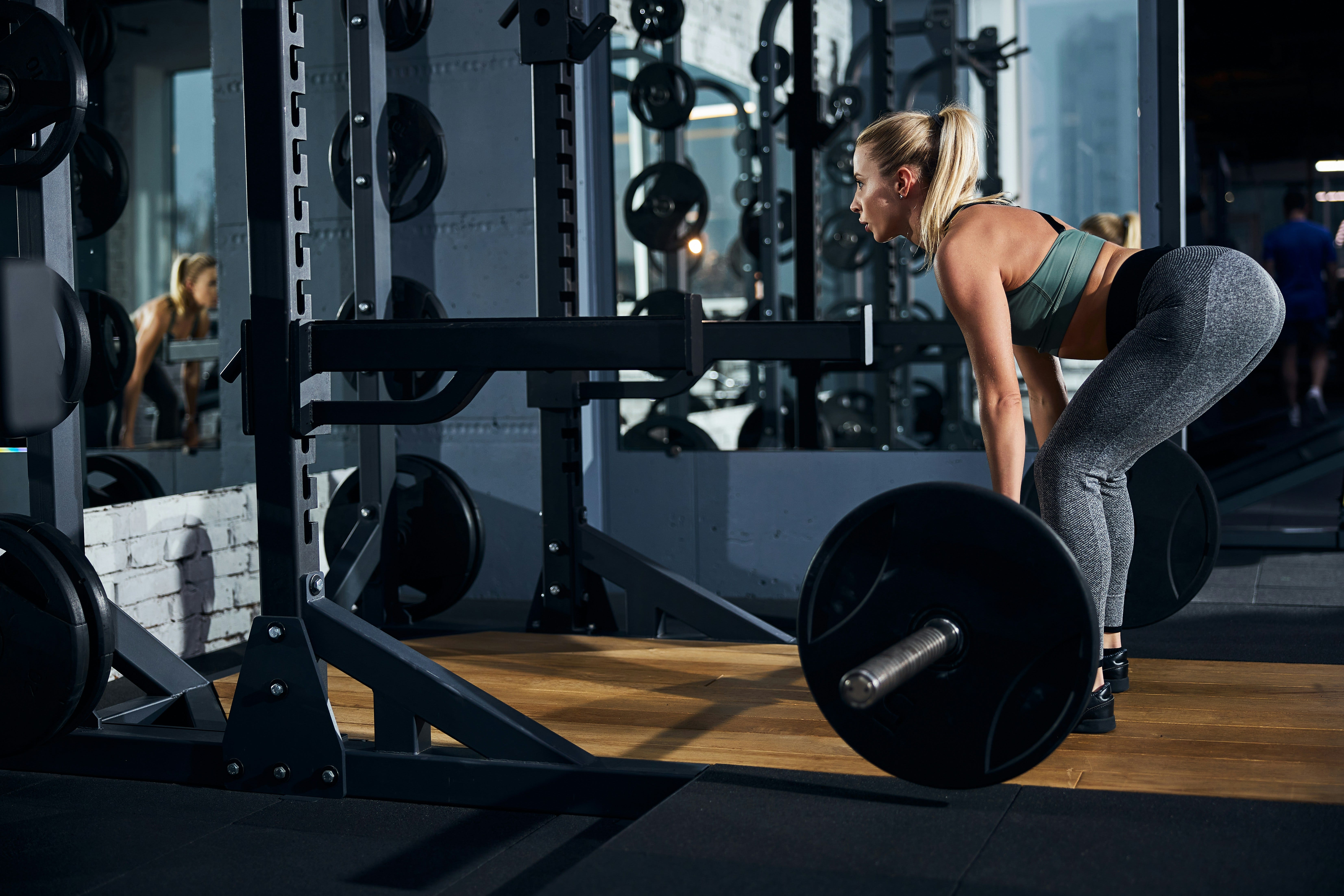
The Deadlift is the lift that the internet has a love affair over. It’s not big squatting, it’s not big bench pressing, its deadlifting.
Honestly, I believe it’s because the deadlift is the most SIMPLE of the three “big lifts”.
Squatting, most people cannot squat.
Benching, most people cannot bench.
Deadlifting? It simply looks like a person picking up something heavy from the ground. It looks “basic”.
Is the deadlift basic?
YES, it honestly is. Its arguably the most simple and fundamental movement you can do in the gym.
Does that make it EASY?
NO. Most people in fact struggle with deadlifting.
But it does make it worth doing, no question about that.
In the fitness world, there is an occasional “chicken and egg” argument over whether the deadlift or the squat is the more foundational movement.
I consider the deadlift the most fundamental of human movements, more so than even the squat. On the continuum of human development, the deadlift, is the the ability to “bend the hips”, for which technical term is hip extension.
OR, as it popularly called in the fitness world, the Hip Hinge.
The Hip Hinge is the umbrella term that refers to ALL forms of deadlifting, not just the barbell. And the hip hinge comes before the “squat” pattern, which is hip and knee bend together.
A deadlift is taking the body from a “bent” position to a standing position. The gravity of this, no pun intended, cannot be overstated.
The ability to stand upright under your own power, that is a critical milestone in physical development for humans.
Motor Development 101
To interact and navigate your environment, you must be able to MOVE. Humans are incredibly versatile at moving and possess a range of movement skills that other animals do not. To be a healthy and well functioning human, you must be able to move well.
As such, there is a developmental continuum of motor coordination, that starts the instant you are born. Meaning that movement is actually learned in a very predictable ORDER. It begins with your vision and hearing, and the muscles that hold up the head. This is why a baby turning its head is a big deal. What is happening is the the cervical and spinal muscles are developing.
Your ability to move follows a continuum-grasping objects, holding up your head, turning your head, bearing weight on your arms, extending your spine, rolling from your back to your stomach, bearing weight on the legs, and so on and forth.
The critical point to understand is that your body develops in stages.
The adage of “you cannot run until you can walk, you cannot walk until you can crawl” is is true.
Relative to the deadlift, there is a critical milestone that occurs, and it is why the deadlift is the “foundation” lift.
Before you can walk, you must be able to STAND.
For those of you have that kids, you know that a baby being able to support weight on its legs in a standing position came BEFORE it was was ever walking.
If you watch babies at this stage of development, you’ll see that they don’t immediately squat to stand up.
They need help.
What they do is pull themselves up, and the parents help them often, and they do a squat and hip bend to get themselves to a standing position.
From a standing position they eventually progress to taking stepps and walking. Standing by itself requires immense coordination and alignment of the skeleton against gravity.
Crawling requires locomotion of all four limbs, it strengthens the core muscles immensely, and it gets the hip flexors working the can pull the legs forward. It also reinforces the spinal alignment.
(Unfortunately, the vast majority of adults lose the ability to crawl. This is not good, as it indicates that you no longer have the musculoskeletal “suppleness” for athletic movement, and your body is likely excessively stiff. But crawling is another subject for another time)
If you combine crawling with standing, they eventually start to try walking.
If you watch a baby learning to walk, they also do not take normal steps either. Those inner thigh muscles and core are not yet built. They take pitter patter steps, with their feet splayed out, and they lose their balance a lot.
It’s only when they are able to stand up easily after a lot of hip bending and dragging themselves up, that do they begin to squat up and down readily.
Therein lies the major difference.
The deadlift is the ability to stand up AGAINST gravity.
The squat is the ability to descend TOWARDS gravity, and then Ascend against it.
Being able stand up straights happens before you can squat back down again. This requires strong hips and core, which is what the deadlift builds.
Build your deadlift strength, and you’ll be strong for a lifetime.
Hip Hinging does NOT only mean barbell Deadlifts
I wanted to put this section FIRST in this guide, because for whatever reason, people often believe that barbell deadlifts from the floor are the ONLY way to deadlift. This is entirely false. Hip Hinging can be trained MANY ways with every kind of implement.
Some people do NOT have the biomechanical structure to deadlift from the floor. This does not mean they cannot still deadlift though. To understand this, let’s go through the primary goals of deadlift training, and they different exercises.
For Maximal Strength
Maximal strength means you are lifting as heavy weights as possible. This is is training in the 1-5 rep range. Typically you’ll do anywhere from 2-5 working sets, depending on how heavy you go.
What deadlift variations are available to you?
Rack Pull or Block Pull Deadlifts (deadlifts where the bar is elevated)
Any of those 4-5 variations can be used to train the deadlift heavy.
Trying to determine which one works best for yourself requires proper assessment and experimentation, but do KNOW that you have options.
For Submaximal Strength and Muscle
This is the 6-10 rep range. In this range, you’ll usually be doing 2-5 working sets. At this range, you are building size and strength equally. This does not mean these deadlifts are “easy” at all, but they are variations that work MUCH better than the “off the floor” deadlifts for building mass along with the strength gains.
For Mass Building and Strength Endurance
This is the 8-15+ and beyond rep range. In this range you’ll probably be doing 3-5 working sets. These are deadlifts where the focus is muscle gain and endurance strength gains. Understand that these are not “weak” deadlifts that don’t build “real” strength. They are simply versions that typically use less loading, and can be more specific in where they build muscle. Higher reps does not mean “light and easy” weight at all.
As you can see, you have MANY deadlift options available to you besides the barbell. Don’t confine yourself to narrow minded thinking that there is only ONE way to do anything in training.
Assessing the Biomechanics of the Deadlift
There are 4 things happening in the deadlift with the major muscle and joints of the body.
1. Back Extension
Your back muscles are worked to keep your spine from flexing, and this requires anti-extension strength. In an absolutely ideal, perfect technique deadlift, the back muscles work isometrically, and the glutes and hamstrings do all the work.
In reality though, there is often a degree of flexion and extension in the back, and if you are deadlifting heavy, your upper back can be worked HARD to fully straighten out. Even if you maintain a straight spine, the back muscles still have a tremendous amount of force running through them that they have to resist.
2. Hip Extension
Your hip started in flexed position, and then extend forward into a standing position. From a biomechanics perspective, the primary movers in hip extension are the glutes and the hamstrings. The back muscles are worked isometrically.
For a “perfect” deadlift, the movement should be felt in the glutes and hams. This requires that your back strength match/exceed your hip strength though, which is something most people are deficient in. If your back is weak, deadlifts will ALWAYS feel like a back exercise
3. Knee extension
The deadlift does not really work the quads all the much, but they do take some measure of thigh strength.
With proper deadlift technique, there is “press” into the floor that is often equated to the drive of a leg press.
If you have weak quads and cannot press hard through your feet, this can alter your deadlift and result in the familiar “Catback” back bend technique that I warn about.
4. Grip and arm strength
I’m grouping these two together.
Holding onto the bar takes grip strength, and the easiest way to improve grip is to training arms, especially your biceps and forearms.
If we take the above and pare it down, we end up with the following
Isometric Muscles-Grip, Back.
Primary Movers-Glutes, hamstrings, and quads, with glutes and hams being the more critical of the three overall.
Overall Movement = Leveraging Hip extension strength against the loaded barbell.
A Simple 5 Step Process for Proper Deadlift Technique
Having covered the biomechanical aspects, let’s get into the practical coaching tips of performing the lift itself. I follow the Starting Strength Model for deadlift performance.
Technique can be made complicated, or be made simple. I generally keep most barbell lifts down to 5 cues or less; the approach, the setup, the initiation, the rep, the finish. If you learn a lift in sequential stages, its very easy to engrain proper technique.
1. Stand with the Bar over your midfoot
Stand with the feet directly under the shoulders, approach the bar, and align the bar over the middle of the foot. This should be about 1 inch away from the ankles.
2. Grip the bar
Bend Over from the waist, and grab the barbell shoulder width with both hands, using a monkey grip (wrap the thumb around the bar) and grab the bar HARD. Do not grip it softly
3. Shins to Bar
Bring your hips closer to the bar by bringing your shins in contact with the bar, this will get your hips in the proper alignment to pull. When you do this, you’ll want to start flexing your glutes
Note-DO NOT bring the bar to you, bend your knees towards the bar. The barbell should NEVER move.
4. Breath right, Chest High
Before you go to pull, Breathe deep and get your chest up as much as possible. If you were looking in a mirror, you would be tilt your chest up so you could see it. This should straighten your back out into a neutral, braced alignment. This will require you to lengthen your arms, and it will pull your body into a wedge against the weight of the bar.
5. Stand up with the bar
Drive your hips forward and heels down, dragging the bar up the front of your body. It should literally feel as if you are Standing up with the bar in your hands, not yanking weight off the floor and falling forward or backwards. This should be a violent movement of maximal explosiveness
There are your cues. There many like them, and they are not very original, but they work, and if you do all them, you are probably lifting with decent technique.
Extreme Technique Deconstruction
This is the hyper detailed breakdown of deadlift technique. This is probably redundant to include, but I want to leave no doubt to how proper deadlifts are performed.
- The deadlift starts with your APPROACH to the bar. You do not simply grab the bar and pick it up. You mentally and physically orient yourself and approach it with intention and a defined Setup
- The barbell should be placed evenly before you, not at any kind of angle. You should be facing the bar with upright posture and symmetrical positioning. You should already be mentally engaged with the lift before you ever do it
- When you approach the bar, you take two small steps to position your body so it is essentially directly underneath you
- The barbell should be directly over the midfoot. If you bend your knees slightly forward, your shins should make contact with it
- Your foot stance is either at shoulder width, or slightly inside of it. DO NOT STAND WITH YOUR FEET OUTSIDE YOUR SHOULDERS. The only time you do this is a sumo deadlift, a sumo deadlift is perform at roughly double your shoulder width. That is a somewhat different pattern, and were not talking about it here.
- Your feet are positioned relatively forward facing, and some external rotation is allowable. About 30 degrees at maximum
- Your spine is neutral and kept upright this entire time, Posture should be pristine, with your spine/pelvis in an anatomically neutral position. This means your pelvis and ribcage are parallel with each other in alignment
- Take a deep breath, and then you will initiate into hip extension, this means your ass extend backwards, rotating forward in the hip socket, YOU DO NOT BEND IN YOUR SPINE TO REACH THE BAR
- Your arms should feel “long” in the socket. You NEVER deadlift with bent arms, EVER
- To grip the bar, you begin by extending your hips back behind you
- Hip extension is glutes and hamstrings. AGAIN DO NOT CONCEPTUALIZE THE DEADLIFT AS BENDING FORWARD WITH YOUR BACK. IT IT AN ASS SHIFT. Imagine your were slowly trying to make contact with an imaginary wall behind you
- The deadlift is a hip driven lift and you will mentally internalize it as such. I will say this 20 more times so you remember it
- Your gaze should be looking straight ahead, not down or up. Your neck is neutral
- As you extend your hips back, you allow for slight forward knee bend, this brings your chins in contact with the bar
- As you extend your hips back, you keep your CHEST forward facing. You do not tilt your chest/pecs towards the floor. If you do, you are not doing a proper conventional deadlift.
- DO NOT bend your spine. Your back stays neutral. You do NOT round your back towards the bar.
- Your hands will make contact with the bar. You grip it evenly with both hands, with either a mixed grip or double overhand
- Upon gripping the bar, you will use your lats, grip, and posterior chain to WEDGE yourself against the weight. This means you pull on the bar slightly, removing the “slack” from it, and you create a counterforce contraction against the weight, BEFORE you ever lift it
- You should be able to move the bar slightly simply by lat retraction. If you cannot do this, your form is not optimal yet. This means by squeezing your lats, you have so much tension you can slightly lift the bar off the ground. If you cannot do this, you lack lat muscle and muscular innervation.
- As you wedge yourself into the bar and against gravity, you are maximizing internal stability. You will release your air, take another deep breath, and maintain that isometric stability throughout the entire body. You are not “relaxed” when you deadlift
- You weight should be centrated in the middle of the foot this whole time, Not back on your heels
- Having wedged yourself against the weight, you’ll initiate the pull by HIP ACTION. That means your hips come forward. Imagine your ass coming forward to meeting the bar, and you pull the bar off the ground to meet your hips
- The barbell should not clink against the plates. If that happens, you did not sufficiently take the “slack” out the barb in your preparation
- You do not jerk the bar upward with the arms
- You do not jerk the bar upwards with the head
- You do not jerk the bar upward with the back
- You do not go “catback” and immediately go into kyphosis in the upper back
- You do not lose your neutral spine position, PERIOD.
- A deadlift pull happens in two parts
- The first part is the hip initiation that breaks the bar from the floor. Your hamstring and glute and back strength all determine this
- As the bar passes the knees, you are working the glutes and back now, as they have to align with each other
- As you stand up with the bar, the force circulates from the glutes, into the floor, into the bar, and terminates when you align the spine with the pelvis
- A “perfect” deadlift will feel as though the stress/pressure is evenly distributed along the entire posterior chain. You will not feel it in any one area
- Upon standing up fully with the barbell, you DO NOT do the excessive “lean back”. You will herniate a disc doing that. When I see people doing that I know the day will come when their spine says fuck you and herniates, and they won’t know why. Do not do that.
- If you cannot fully lock out your hips and bring them into contact with the bar, the weight is too heavy.
- Upon standing up fully, you lower the barbell quickly, but not with a total loss of control.
Assessing the Deadlift further, Back Strength Versus Hip Strength
Aside from the conceptualization though, you also have the strength demands of the lift itself. I divide this into two aspects:
Back Strength
Hip Strength
The deadlift SHOULD primarily work the muscles of the hips, BUT for the vast majority of people, their back strength is both the dominating and limiting factor, and their hip strength is the dominating and limiting factor.
How does that make any sense?
I shall explain further.
The deadlift Strength Continuum.
Total Beginner - Limited Back and Limited Hip Strength
In this first scenario, you have someone that has a weak back, and even weaker hips. Their hips are so weak in fact, that when they go to deadlift, these muscles are paltry in their contribution. Because of this, the body uses the spine as the primary mover. This is NOT good technique at all, as it puts the spine into a very strained position, but when you have zero ass muscle, your body doesn’t have much choice, something has to lift the weight.
This means that the back dominates the movement. Subsequently, the deadlift feels like a back exercise, and their is limited glute recruitment.
Solution
For this individual, they’d need to refrain from heavy deadlifting for awhile, and perform activation and basic compound movements for their back, hips, and legs before I’d have them start deadlifting. You take a Muscle first, strength second approach. This approach would last at least three months. Once they have requisite back and hip strength, then I’d introduce them to the barbell.
Strong Back - Weak Hips
Here is what there is what you might call “Functional Irony”. In some cases, usually men, you’ll have guys that DO train their back, but they don’t deadlift. They might squat and work quads, but their posterior chain (glutes and hams) is comparatively weak compared to their quads and back. So when they go to deadlift, they run into a similar problem of the total beginners, the deadlift feels like a back movements, and often it’s the low back doing the work.
The back is dominating the movement, but not because the back is weak. It’s because their back extensor strength is stronger their their hip extensor strength.
Solution
Strengthen the hips through light to moderate deadlifts and hip extension work before trying to pull heavy. Romanian deadlift, stiff leg deadlifts, and kettlebell swings would all work, along with goodmornings and low back extensions. You might want to do some direct glute work as well with bands and hip thrusts.
Once the glutes and hams are stronger, than you could move towards maximal pulling.
Weak Back, Strong Hips
This is very common with women, but I see it with men as well. For women, it generally in the case of training the living hell out of their legs, which results in very strong glutes, hams, and quads, but then totally neglecting their back. This results in a lower body that overpower their upper body. So their HIPS can move the weight, but their back cannot handle the load.
Subsequently, they end up with SI joint issues, low back pain, and/or their deadlift gets totally stuck. Your ass is writing checks that your back cannot cash.
Additionally, you have gentleman that get really into deadlifting, but they never do much else for their back other than pullups and chinups. Subsequently, the whole middle of their back is lacking muscles.
Solution
Musclework for the back in the form of rows, rows, some low back extensor work, and more rows. I cannot emphasize rowing enough. Seated rows, DB rows, machine rows, banded rows, all the rows. Add in an extra 12 sets a week of rowing, and your back strength will catch up with your hips in short order.
-If you take something of a powerlifting mindset, and deadlift heavy, then the deadlift is going to be a back movement.
Primary reason being, it’s going to be your BACK that is most heavily fatigued and worked by deadlifting.
Strong Back, Strong Hips
This is the optimal scenario. In this situation, your back and hips are relatively equal, and you can focus on adding weight and maintaining whatever your training program is for continual improvements. At this stage, you’ll have more than likely customized your program, and you’ll be able to effectively autoregulat your own training.
12 Most Common Deadlift Mistakes
1. Standing too far away from the bar
The bar should be over the midfoot. If its farther away you run into the issue of the bending way too far forward to pick up the weight, which throws off your leverages immensely and turns the movement into an awkward low back lift
2. Not gripping the bar firmly
If you don’t grab the bar with a firm grip, and its loose in your hands, you are not going to be able to properly wedge your body into position.
3. Not Taking the slack out the bar before pulling.
There is is space between the bar and the plates. If you “jerk” the bar to start the pull, and the weights clank against the bar, you did NOT build up tension before starting the deadlift and did not generate leverage at all.
4. Staring at the floor, or cranking the neck to look up
Both of these will throw off your alignment. Cranking upward puts pressure on the thoracic, while looking down makes your upper back round. Look straight ahead and keep your gaze neutral while pulling
5. Trying to “hitch” the weight
Deadlifting is basically a butt movement. It’s not an upper back movement where you try to wrench the weight up by yanking it upwards with your back. The deadlift should be done as one movement of the hips straightening out, do not get the back up the thighs, stop, and then try to hyperextend the lower back and “hitch” the weight by trying to hip thrust against it and hyperextend the spine. Aside from not being smooth technique, this is a perfect setup for injury in the lumbar discs
6. Not enough warm up sets
You cannot just slap plates on the bar and pull. The deadlift can be a high risk lift, and if your warm up sets are sloppy, so too will be your working reps
7. Not internalizing the movement
You need to engrain what good technique FEELS like, not what it looks like. This is true competence. You should be able to deadlift perfectly even if you were blind
8. ONLY deadlifting with the barbell
You can deadlift with barbells, bands, cables, dumbbells, trapbars, and kettlebells. There are many ways of training the hip hinge pattern, and the barbell is not the end all be all. Especially when you are first learning how to train properly, you want to learn what hip extension feels like with EVERY kind of implement.
9. Trying to squat the weight
The deadlift IS NOT A SQUAT. IT IS HIP EXTENSION, NOT DESCENSION. If you are trying to squat the weight while deadlifting, you are completely backwards as to what proper technique is
10. Running shoes
NEVER DEADLIFT IN RUNNING SHOES. You want to be barefoot or in the most minimal shoe possible. Cushioning completely fucks with your ability to propriocept and generate force. Watching people lift in thick shoes makes my eyes bleed
11. Only deadlifting heavy
You know you can do the movement for more than one rep right? The deadlift is like any other lift, building strength with reps increases the amount of WEIGHT you can use, because MUSCLE is being built, and muscle MOVES weight
12. Hyperextending the rib cage when breathing
If you are deadlifting maximally, you do “hold” your breath, but this is done by expanding your lungs fully, locking in your ribcage with your pelvis, and having a neutral spine. It is not puffing your chest up and bugging out your eyes then flinging yourself down to the bar. Your breathing should align your ribs over your pelvis and keep them from flaring.
A Common Question: Are deadlifts for your legs, or for your back?
The answer is both. Deadlifts can be a back exercise, or a leg exercise.Deadlifts are a total body movement, and it depends on how you perform them.
To determine how YOU should perform deadlifts, there are three different approaches to follow.
The Trifecta of Deadlift Directives
1. Deadlifting for Maximal strength - This will be a powerlifting mindset.
- This is what most people are familiar with. You want to your 1RM to go up, and improving your deadlift will prioritize that goal
- You’ll likely have a deadlift day, in which you train the lift in a manner that addresses your strength and weakness.
- You train the deadlift heavy most the time, in the 70-90% range. Your reps will be from 1-5, with the occasional higher rep set depending on the program.
- You may group squats and deadlifts together. This can be a viable strategy if your legs and hips are of comparable development, in which case it can be complementary to pair them up. This also drops training down to 3 days weekly is necessary, or even 2 days if you are truly time constrained
2. Deadlifting for glutes and hamstrings
- For this scenario, you’ll do deadlifts on your leg day, or on your glute/ham day if you train quads on their day (predicated by following a bodypart split)
- You’ll deadlift with moderate intensity, in the 60-80% range. Your reps and overall volume can be higher as a result. I’d recommend 5-10 reps per set if your focus is on hypertrophy of the glutes and hams
- You’ll use stiff leg deadlifts (deadlifts with almost straight legs), and Romanian deadlifts (deadlifts with maximal hip extension). Stiff legs are my preferred movement for hamstrings, while Romanians are more glute dominant
- You can use barbells, DBs, kettlebells, cables, and whatever other implements you want to utilize.
3. Deadlifting for back development
- Snatch grip deadlifts, block deadlifts, and rack pulls will be your go to exercises.
- My suggested method would be to rotate lifts weekly. This will keep progress continuous, and the exercises are all complementary to each other
- To emphasize back development, you want to emphasize the upper 2/3 of the movement, and perform variations that place the stress primarily on the back versus the hips
- Intensity can vary, but the 70-80% range will be best for strength and hypertrophy. Total volume will be low to moderate. The lighter you go, the more overall reps and sets you can do
- Reps work best in the 5-8 range if doing multiple sets
- If training rest pause style, two straight sets, one set higher reps, one set lower reps, this can be an effective strategy as well
- When deadlifting for back development, make use of straps and a belt. They are not mandatory, but they are helpful. The focus is building back muscle, not give your grip or lower back a workout.
Summation
Deadlifting, like all other exercises, it is context dependent. The version you perform is relative to your goals, and there is no perfect exercise or program.
Is the Deadlift Truly A Back Movement?
If your back is WEAK, then the deadlift is going to feel like a BACK exercise.
But, this is not generally a good thing, as the primary movers on the deadlift are the hamstrings and glutes. While the deadlift heavily works the back, the muscles that it is more directly targeting in terms of functionality is your butt and the backs of the thighs.
This said however, the deadlift CAN be performed as a back exercise, and often this. So how do we reconcile that with what I said?
You can think of it this way:
IF your glutes/hams are strong enough to support your spine, THEN you can perform the deadlift with “back emphasis”, and your spine will be protected.
But if your glutes/hams are not strong enough to support your spine, then performing the deadlift with “back emphasis” will lead to dysfunction and excessive spinal stress.
This begs the question of:
“How do you know when your glutes/hams are strong enough then?”
and probably
“What does it mean to do deadlifts with back emphasis?”
To answer them in order:
1. The way to know if your glutes and hams are strong enough comes down to technique and where you FEEL the movement.
Ideally, when you perform deadlifts it feels like your glutes/hams are doing the major work to get the weight moving, and your back is working hard to stay in a neutral position.
This does NOT mean you don’t feel deadlifts in back at all, you will. But if you were to assign a percentage, deadlifts should be felt 60/40, ass and hams to low back.
To use an example, when I deadlift from the floor, my low back DOES get a bit tired, but the majority of the work I feel is in my hips. I do not finish deadlifts bemoaning how sore my low back is going to feel. My soreness will be glutes and hamstrings, with fatigue in the UPPER back from holding onto the weight.
If you do deadlifts, and you don’t feel your glutes AT ALL, or your low back feels like it’s doing all the work, you are motor pattern dysfunctional. You have trained your body entirely the wrong way, you will get injured, and you need to stop barbell deadlifting and relearn how to move.
2. Assuming you have strong posterior chain development, THEN you can deadlift with back emphasis.
Back emphasis deadlifts tend to resemble stiff legs. The difference in them is that you are MENTALLY conceptualizing the movement as being initiated and terminated with the elevation of the traps and upper back. The deadlifts will look as though you are “leading” with the back, and not quite so much the hips. Understand that this is a very very subtle difference, and to the untrained eye, you’re not going to be able to differentiate.
Simplified Summary
If your ass is strong enough, you can do deadlifts for the purpose of back development. Do them on your back day and emphasize moving the weight with your back when you do them.
If your glutes are not strong enough, do deadlifts as a lower body exercise, on lower body days. On your back days, develop your back with rows, farmers walks, hyperextensions, good mornings and chinups/pullups.
High Rep Deadlifts and Almost Rules of Deadlifting
Some years back, I want to say 2008, I read an article online about performing High Rep Deadlifts as a “Challenge” type workout.
Specifically, the challenge was to deadlift 315 lbs thirty times in 30 minutes.
My deadlift max at the time was about 405, so 315 was about 77% of my 1 Rep max.
I read this workout, and being young and dumb, I thought it sounded badass and manly, so I decided to do it.
It went pretty well right up until the 20 rep mark. I decided I would deadlift single and doubles each minute on the minute. This often abbreviated EMOM. Meaning you do a few reps at the turn of each minute, and then rest the remainder.
The first 10 reps were easy, I got those done fast in a set of 5, 3, and 2. Then another set 4, then 2, then 1, then 5.
At that point though, my low back was getting tired. Your lumbar spine has muscle attached to it of course, but much of the low back is fascial tissue. As I’ve learned over the years, getting your low back muscular requires either heavy weights done sparingly, or very light weights done often. And the lighter weights tend to work better than the heavier. It is very easy to overwork the low back with heavy weights (captain obvious statement right there)
I continued with the reps, but I was FEELING them. My deadlift technique is very precise, so it wasn’t a technical issue of Cat backing the reps. The problem was that my lumbar was fatigued, so even my technical performance was solid, the stress on the muscles was increasing substantially.
Right on rep 27 was when it happened. I came up, and I felt a distinct pop and tear sensation in my lower back, right side. I had severely strained and/or torn my Quadratus Lumborum. The QL is a muscle that makes a triangle shape. It attaches from the top the pelvis to the lumbar spine. It’s the muscle that allows you to wiggle your hips up and down, and also acts a rotator and stabilizer. It’s a very important muscle
I ripped the living hell of my mine, and the pain was immense.
I was absolutely determined to get to 30 reps though, so I did the remaining 3 as one legged deadlifts essentially. The pain gave me an adrenaline rush, so I gutted them out.
Total time-12 minutes. AWESOME
What wasn’t awesome were the 3 months or so I spent staggering around to walk, lie down, get out of my car, and generally do anything. I was in pain for awhile.
And to this day, my right QL still hurts. I cannot do 1-arm DB rows without immense discomfort, and it has NEVER felt the same since. Was it worth it?
Not really honestly.
MORAL OF THE STORY: High rep deadlifts are inherently risky, and if you get injured doing, it’s not going to be a “light” injury.
My own experiences aside, I’ve observed over the years that high rep deadlifts are a “high-cost low reward” exercise. Deadlifting puts immense strain on the back obviously. And unlike squats, the spine is constantly being put under flexion and extension stress on every rep.
In a squat, your spine stays in the place, and its top loaded. It’s a hell of a lot of pressure, but if your technique is solid, the weight is basically a stabilizer for your spinal position.
In the deadlift, it’s the opposite, the weight is in front of you. So on every rep, you’ve got immense stress that starts at the sacrum and travels up the whole length of the spine. The starting position of every rep is a test of anti-flexion strength. There is a reason deadlifts freak people out, they ARE hard on the back after all, and the hip extension position is one that many people commonly injure themselves in.
All this said, this doesn’t mean that you avoid deadlifts. Deadlifts done properly are immensely strengthening, and as I’ve written about in the past, they are the foundational movement pattern to learn and reinforce.
That said, there are some general rules I follow now with deadlifting. I’ve narrowed them down to eight in total.
8 Almost Rules of Deadlifting
1. The Technique is Numero Uno
If your technique is lousy, you are compromised no matter what kind of program you do. You MUST perfect technique Before you ever focus on getting strong. This may sound backward, but its not. If your technique is off, the muscular development of your entire posterior chain will be defective, and the flawed motor pattern you engrain could take months or years to break and change. Learning proper deadlift technique might take many months and a lot of relatively light weights, mobility drills, and corrective work, but it must happen.
2. Always Warm up appropriately
This means different things depending on your age. Typically speaking, the older you get, the more time it takes to your body into an aroused state. That said, regardless of how young or strong you are, you need some type of effective warm up sequence before you go into your working weights. Whether its KB swings, glute work, a few light weight sets, etc, do SOMETHING. Skipping warm ups is a stupid
3. Do not perform more than ONE high rep set with heavy weights
My favorite methods for deadlifts are 5th Set methodology, and what I call Rest-Pause Rule of Two. In 5th set, you do four sets of 2 reps, then one all out set of as many as possible.
In rule of two, you do one high rep set, and then another follow up set of at least half as many reps (10+5, 8+4, 6+3).
The deadlift does NOT take much heavy volume to improve at, and it takes a long time to recover from. If you training is programmed intelligently, one high rep is all you need to make improvements. You also ensure that you never train your deadlift in an excessively tired state where injury could happen
4. Intensity and Frequency are Inverse
Heavy deadlifts are harder on the body and the CNS more than any other exercise. They tire you physically and mentally, and the stronger you get, the greater the fatigue. Because of this, you cannot deadlift “heavy” all the time.
I’ve discovered the strongest powerlifters and strongmen ALL deadlift heavy, but infrequently. Only one or twice a month in some cases.
That might seem crazy, but it’s not. The deadlift takes more than it gives, and relative to the progress you make, you do NOT need to train it heavy that often to make “gains”. One of the most successful powerlifting coaches I know, Swede Burns, his lifters deadlift once every 10 days. And they routinely set PRs and records year after year, making linear strength gains, even the most advanced of them.
Or the most successful powerlifting gym in the world, Westside Barbell, they are another example. Their lifters will often go weeks without deadlifting. They’ll perform the movement only a few times at the end of a training cycle. Westside currently owns hundreds of records in the sport of powerlifting.
In Strongman, the pattern repeats. They deadlift heavy maybe twice a month, the rest of the time focusing on speed with lighter weights, or performing deadlift variations that are not the barbell. My good friend Martin Licis (he just came in 4th at Worlds Strongest Man 2017), he’ll go MONTHS without ever deadlifting heavy. His best in the gym deadlift though is 900 lbs, and he rows 405 lbs for REPS. Somehow not deadlifting every week has hurt his strength gains.
Examples abound, but the point is made. The deadlift is best trained heavy with Infrequent Consistency.
If you deadlift at 80% or above, I suggest training the deadlift once every 9-10 days. If you deadlift below that, in the 70-80% range, you could deadlift once a week max. And if you deadlift lighter than that, THEN you could try higher frequency. But only then.
5. Lower volume work best for strength
Relative to strength development (putting more weight on the bar) it’s been my professional experience and study that Prilepin’s strength chart is deadly accurate with the deadlift.
The heavier the weight gets, the fewer reps you should do, and effective volume skews LOWER, not higher. Even if the volume is the same, it’s better to break it up into multiple sets. 5 sets of 2 @80% works better than 2x5@80%.
You won’t get fatigued nearly as much, your form will be better set to set, and you’ll recover faster. Same for 5x3 versus 3x5, or even 10x2 versus 4x5.
When I started breaking up my client’s deadlifts into smaller sets, everyone got stronger, technique got better, and they enjoyed the workouts more because every rep was explosive and felt strong.
6. The Conventional Deadlift is a Mediocre Musclebuilder
This is almost heretical to say in certain circles, but I know I’m not the only coach with this perspective. The deadlift is an immense strength builder, but the conventional deadlift does NOT build crazy muscle. There is no eccentric component, none of the back muscles are placed into a stretched position, and you cannot perform that much volume at all with the lift. 25 total reps maybe. That is not enough stimulus to grow substantial muscle
People can argue against this, bu I already know what the arguments are. Novices gain muscle because they’ve NEVER trained, so that skews the perception of results. And the mass increases come from other movements like rows and chins. Or squatting.
If you only did rows and chins, you’d have a very muscular back. But if you only did deadlifts, I can guarantee you’d never grow much muscle.
This is easily seen in bodybuilders, many of whom never deadlifts, but have barn-door backs. In contrast, I see guys all the time who have drunk the Starting Strength or 5x5 kool-aid. Three years later, and you’d never be able to tell they lift weights.
7. The conventional deadlift is not the only form of deadlifting
You’ve got Romanian deadlifts stiff leg deadlifts, Kettlebell swings, DB deadlifts, weighted back extensions, glute ham raises, and good morning movements.
While none of these movements are going to be loaded as heavy as conventional deadlifts, they are all arguably superior muscle builders, and they build the muscles that enable your deadlift strength in the first place. This is why off the floor deadlifts are not mandatory in a program. Unless you are a powerlifter, you’ve got a multitude of movements you can perform that train the hip extension pattern and are more effective for hypertrophy (relative to the purpose of the movement).
At the same time, if someone is scared of the conventional deadlift, you’ve got a ton of alternate options for them to perform, and can build them up towards the movement itself.
8. Heavy KB Swings are a phenomenal substitute for the Deadlift
A few years back in 2012, I had about 3 months where I did not deadlift at all. What I did do was double KB swings with two 24KG bells, and heavy “T-handle” swings with 150lbs. I did this about 3 times weekly, and could easily do multiple sets of 10 reps for both movements.
When I went and tested my deadlift, I pull 435 for a shockingly easy rep. I was about 190lbs at the time, and I was pretty pleased with this.
I was surprised though, and started researching KBs further. As I found out, this transfer effect was not an accident. Many KB enthusiasts had discovered that by focusing on heavy KB work, their deadlifting strength rarely went down much at all, or maintained itself with only minimal training. KBs are a “dynamic deadlift” after all. They are an explosive version of the hip extension pattern.
If you love to deadlift, then deadlift. But for the sake of longevity, I’d put my money on heavy KB swings being a more sustainable exercise in the long term. If you maintained the ability to do heavy KB swings with half your bodyweight your whole life, you’d never have to worry about lacking muscle in the posterior chain. And you’d have very very strong hips.
9. Do Not Squat and Deadlift Heavy in the Same Week
Let’s say you deadlift and squat once a week. Your CNS is getting depleted from both. What can you do?
Alternate the intensity. Squat at 70% one week, deadlift at 80%. Next week, reverse them. This will means the volume and reps will be different, but that’s the point. You are modulating the intensity of both.
This also applies if you want to try squatting and deadlifting in the same workout. Do NOT go heavy on both. Do one lift at 80%, the other at 60%. So you are training strength, and training power and technique.
10. If your deadlift is stalled, you Need more Muscle
I’ve had to metaphorically bash people over the head with this one. As I say often, muscle=movement. If you are weak at a movement, build the muscles that do that movement. If your deadlift is stalled, figure out what muscles are weak links, and work the hell out of those until they are no longer a limiting factor.
When training the deadlift, how often do you consider that your spinal extensors may be the limiting factor? And beyond that, how often do you directly train them? The spinal erectors are generally assumed to get worked just from deadlifting, but as anyone who has ever used good mornings or the reverse hyperextension to great effect knows, getting the spinal erectors stronger can have a major impact on bringing up your deadlift.
Some Key Points to Consider with the Spinal Erectors
The ability to maintain a neutral spine while deadlifting, or even a reinforced “rounded” spine position, is dependent almost entirely on how strong your spinal erectors are.
While the glutes are of course emphasized as being the major mover in the deadlift, having underdeveloped spinal erectors will limit your ability to maximize your hip extension. Your back and ass have to match each other.
The spinal erectors are made up almost entirely of slow twitch fiber. These are the muscles that keep your spine lined up — they are made for endurance. Training them with moderate to high reps and sustained time under tension is the most direct strategy for hypertrophy.
For those individuals who cannot deadlift heavy, direct extensor work can be an option for strengthening the back, along with the usual rows and vertical pulls.
For bodybuilders and physique competitors, a well-developed set of spinal extensors can instantly set you apart on the stage.
All that said, how should you go about training them? Read further.
My Top 5 Movements for Direct Spinal Extensor Work
These are my top 5 movements that can be done in any regular commercial gym. I have omitted exercises that require special equipment.
1. Reverse Planks
This movement is an uncommon one, but incredibly effective. I’ll give credit to Jeff Ward of Burn Fitness in Tampa, Florida for turning me on to this movement. Jeff has had numerous disc issues, and he showed me this movement as a way to develop the back extensors without the shear forces that deadlifting puts on the spine.
I put this movement as my number one because it is the most universally “friendly” exercise. Any level of trainee can perform this, and it’s shockingly challenging for even an advanced level lifter.
You can make it harder by propper the feet up on a bench or box as well, and it can be performed bilaterally and unilaterally (with one leg or two legs), and the unilateral version especially will reveal if you have a major strength deficit between your right and left side. The movement is best performed with timed sets, from anywhere between 30 and 90 seconds.
I suggest two to four sets, done at the end of your deadlift or back day.
2. 45-Degree Hyperextensions
An old school standby. For some reason, these seem to have fallen out of favor, but they work very well. They also are always in commercial gyms, which makes it a great tool for those that don’t have the hardcore setup. I prefer starting with higher reps.
Two sets of 20-50 with bodyweight is what I’ll have recreational lifters progress to. Putting your hands behind your head increases the difficulty, and resistance can then be added with a band or plate. Finnish powerlifters will hold a barbell across the shoulders, which also works very well. The single-leg version is a great way to address left/right asymmetry also.
3. Hatfield Back Extension
I picked this up from CJ Murphy of TPS in Boston. This can be done on the GHR or on a regular exercise bench. The movement is deceptively hard, but it targets the mid back extensors better than any other. I like these for two to four sets of 8-15 reps. You could add weight to this, but I feel its best done as a pump movement for reps.
4. Banded Good Mornings
I often use this movement to prepare my novice female clients for deadlifts. Getting their spinal extensors stronger and conditioned makes using the barbell much easier their first time pulling. These can be progressed to however many bands you can reasonably stand on. I’ve gone as high as five sets of 20, but two or three sets of 10-20 reps is more reasonable.
5. Snatch Grip Deadlifts
Most people have never done these, but they are my favorite kind of deadlift and brutally effective at building the upper back, spinal erectors, and glutes. Two to three sets of 5-10 reps work great, and I would not recommend using more than 70% of your deadlift 1RM. Done correctly, you feel these from top to bottom in your spinal erectors and traps. Done incorrectly, you will fuck yourself up.
Sumo Vs Conventional Deadlifting
As you learn the many ways to deadlift, you will no doubt encounter the SUMO deadlift.
The sumo deadlift is a very argued about lift in the fitness world; is it REALLY a deadlift? Is it Easier than conventional deadlifting? Is it better? Is it really a squat?
Many many many articles, posts, and videos have been made about this.
In writing this section, I wanted to clear up some basic questions and give you a firm, non biased understanding:
1. Yes, Sumo Deadlift IS a Deadlift
Meaning it is hip extension movement. . Remember that a “deadlift” movement is biomechanically performing hip extension. Sumo deadlifts are hip extension, albeit with a much wider foot position. Sumo deadlifts are NOT squats. The hips are moving horizontal (back to front), not vertical (downward to upwards)
2. Sumo deadlifts are equally as hard as conventional deadlifts.
In regards to the joint force and torque demands, sumo deadlifts require the same levels of force production. Sometimes people call Sumo cheater deadlifts, but in reality they are equally hard
3. Whether Sumo deadlifting is RIGHT for you depends upon hip structure.
Hip structure can get complicated, but all you really need to determine is test out BOTH versions, and see which one YOU feel naturally stronger out. Does conventional deadlifting feel good, but sumo feels weird on your hips? Don’t do it then. Or vice versa, have conventional deadlifts always felt awkward, but sumo felt natural? Then go with sumo
4. Sumo deadlift is not trained any different from conventional deadlifting.
If you decide to go with sumo over conventional, you don’t need to change your programing in regards to sets and reps. Your supplemental and assistance exercises will change of course, but Sumo deadlifts don’t require different set and rep schemes of any kind. It’s still a heavy deadlift.
Over the past decade training, I’ve found sumo deadlifts to work very well for Women, as women naturally have wide hips than men. They work especially for Tall women with long legs but short torsos. These women often cannot conventional deadlift, but they can pull sumo because it allows them to maintain an upright torso.
With men, “it depends”. I’ve noticed that men who have particularly big hips and thighs, they sometimes favor sumo deadlifting over conventional deadlifting.
Again, this all depends on hip structure though. The only way to determine whether sumo works for you is to try training it with some weight and see what happens.
Some people do not have the hips for it, others do. You don’t know until you try it.
Using the “Sumo” Position to Strengthen you conventional deadlift.
There is ONE movement I’ve found over the years to be astounding in its ability to add pounds to someone’s deadlift
This exercise, done from a “semi-sumo” sort of position, it trains the glutes for explosive hip extension, it strengthens the hamstrings and adductors, and it is uniquely effective in boosting your deadlifting strength.
I’ve used this movement with people and seen them add 40,50,60+ lbs to their deadlift within 6 months. Its magical if you’ve never done it before.
Trap Bar Deadlifts
Oh, we finally get to the Trap bar. I wanted to include a quick rundown on the trap bar, as I do get asked about it fairly frequently.
The trap bar IS a deadlift, and it’s actually the most biomechanically friendly deadlift you can do. It puts far less sheer force on the spine, it works for EVERY kind of bodytype, and it’s easier to recover from.
Your strength on the trap bar deadlift does NOT transfer over to the straight bar. Because the straight bar puts much much much higher demands on the spinal extensors and low back, there is not positive strength transfer between the two. Don’t make the mistake of thinking that your trapbar strength applies to all other deadlifts. It doesn’t
Trap Bars work very well for anyone with back injuries, anyone who is tall and find pulling from the floor awkward, and anyone is a beginner in general. It’s a good strength and size builder that works for practically any level of lifter
If you cannot barbell deadlift for whatever reason, the trap bar is an entirely reasonable substitute and can be used as your main deadlifting movement
Because the trap bar is easier on the spine, higher reps can be done with it. Anywhere from the 1-10 range is entirely effective. You can certainly do more than 10 reps, but make sure you have good reason for doing so.
The AJAC Deadlift PR The Program
If you want to get stronger at the barbell deadlift, you DO need to be doing it in your training, and build a program specifically around it. The following program is not a complete program for your entire body, only for deadlift.
What do I for the rest of the body?
That is up to you. I have written this from a powerlifting modality of training a MOVEMENT, not working muscles.
The program I’ve designed here is for an intermediate lifter, who struggles to break the bar from floor (meaning the first part of the lift is the hardest) and is 10 weeks long. Intermediate meaning they can already pull double bodyweight. If you are not there yet, this program is not advisable for you. It COULD work, but you are likely muscularly weak and would benefit more from a bodybuilding approach
On the majority of the training days, you’ll pull from the floor for triples, doubles, and eventually singles. After deadlifting from the floor, you will pull from a 2 inch deficit. The percentages will increase each week, except for deload weeks.
This program is notable in that you will DELOAD. Meaning you will take periodic breaks from deadlift heavy. You have three deload weeks in this program, during weeks 3,6 and 9. During the deload week in 3 and 6, you will do no deadlifting at all, and instead will do Kettlebell Swings. In week 9, you will take a break completely, and this week is imperative if you to pull a PR. This week allows recovery and supercompensation to happen.
Percentages
Okay, so this program uses PERCENTAGES. Again, this is predicated that you are an intermediate lifter and know what percentages are. If you are entirely baffled by this, this is not for you.
The percentages are based off your CURRENT 1 rep max. Your every day max in fact (EDM). This is not based on how strong you were 5 years ago, how strong you were in college, or how strong you think you are.
If you do not know your 1RM, this is what you do.
You go to the gym, today or tomorrow, you warm up, and then you work up to a 1RM.
THEN, and pay attention, this is mandatory, Then once you have that number, you multiply it by 0.9 (basically you reduce by 10%)
And then you use THAT number as your 1RM reference point for the program.
So for example, If I go to the gym right now and pull 505
505x0.9=454.5, and we round that to 455
“Why do you do that? I am confused”
You do this because this ensures you do not overtrain, it ensures your working weights are done with proper technique, it ensures that neurological hyper adaptation/supercompensation takes place, where your body adapts AHEAD of the stress you are placing it under
And more than anything else, it ensures you don’t train too heavy and try to feed your ego.
I did not make this concept up. It’s a battle tested concept going back thousands of year.
You “practice” with moderately hard stimulus and then raise your threshold of ability for truly intense stimulus/stress/performance
You can do the same thing for the squat and bench press in fact.
It also informs my own training method of Rest-Pause training, and hypertrophy training. Its universally applicable
All that said:
1. Figure out your current max
2. Multiply by 0.9
3. Use that number to calculate the percentages off of
4. DO NOT at any point in the program reset your weights according to a new max because you feel like “testing where you are at”. DO NOT. If you do, you are not following my program, you are following your own irrationality into dumbfuckistan.
5. Once you’ve calculated your 1RM, you should be able to calculate ALL the weights for every week that you will be using. Do this ahead of time and wrote the whole program out
Technique
Remember that technique makes you or breaks you. If your technique is lacking, you are going to create many many many issues for yourself. The deadlift has a low margin of error and is hard on the body. Do not do this program if you are struggling with your technique. Do not do not do not. Technique matters on every single. ALL OF THEM. I don’t care if you are only warming up with the bar, every rep counts
Deficit Deadlifts
These are most easily done simply by standing on a 45lb plate, which should create a 2 inch deficit. Do not use anything higher than 2 inches. If the deficit is slightly less than 2 inches, do not worry about it. Deficit deadlifts force you into a perfect starting positioning and are immensely strengthening on the hamstrings, glutes, and low back. The technique is the same as a regular deadlift, the starting point is the only thing that’s changed. All regular deadlift cues apply
Accessory Exercises
I do not know what your particular weaknesses are, so I had to be generalstic with this. I assume you need stronger glutes, a more muscular back, and probably don’t do enough rows. Like most of the western world, your posterior chain is lacking. For accessory work, I’ve kept all sets and reps in the hypertrophy range. These exercise are done for a pump.
If you want to change the accessory work, you can. If you know that your upper back and middle back is weak, program 2-3 different kinds of horizontal rows after your deadlifts.
If your posture is of particular concern, perform 4 sets each of facepulls and DB shrugs
If you know your lats and arms are weak, program farmers walks and pullups.
If grip is an issue, do bicep and forearm work after your farmers walks.
If low back, glutes, and hamstrings are weak, do leg curls, hip bridges, and hyperextensions.
If your core is particularly weak, do weighted planks, side planks, and 1-arm farmer’s walks.
For my deadlift, I personally always target lower back, as that is my structurally weakest point due to to my body structure. So I do lots of hypers, banded goodmornings, reverse hyperextensions, other movements to target that area.
If you follow this program and select the proper exercises, you SHOULD hit a big PR in week 10. I cannot guarantee this obviously, but it should happen if you are adhere to the program.
The AJAC Deadlift PR The Program
All exercises are listed as sets, then reps
If you cannot do pullups/chinups, apologize to your ancestors. And then substitute them with pulldowns
Accessory work is the SAME every week, Pick from one of the following Options
Option 1 - Generic “My overall back needs muscle”
Chest Supported DB Row 5x8-12
Chinups/Pullups 5x8-12
Seated Wide Grip (pronated) Row 5x8-12
Bodyweight Hyperextension 2x15-30
Option 2 - My upper back and posture need work
Cable Rope Facepull 5x10-15
Meadows DB Shrug w/ 3 second pause 4x8-12
Bent Over DB Rows 5x8-12
Option 3 - My lats and grip are really weak
Stiff Arm lat pulldowns 5x8-12
Chinups 5x8-12
Farmers walk 3x45 seconds
DB Hammer curls 5x8-12
Option 4 - My glutes and hamstrings need work
DB Stiff leg deadlifts 4x15
Stability ball leg curls 4x15
Stability ball hip bridge 4x15
Option 5 - My core is really holding me back
DB Farmers walk 4x30 seconds
Weighted Plank 3x30 seconds
Banded Good morning 2x20
Seated Close grip cable row 5x10
The Deadlift Programming for each week
This DOES NOT CHANGE. You follow it as it is written
Week 1
Deadlift 3x3@80%
Deficit pull 4x2@60%
Chest Supported DB Row 5x8-12
Chinups/Pullups 5x8-12
Seated Wide Grip (pronated) Row 5x8-12
Bodyweight Hyperextension 2x15-30
Week 2
Deadlift 3x3@85%
Deficit Pull 3x3@60%
Week 3 - Deload
Double KB Swings 5x10
Week 4
Warmup, then work up to a Heavy double (MUST be a double, not a single). This must a legitimate and doable double with solid technique.
Deficit Pull, work up to a Heavy triple. Same as the double, this should heavy and hard but still be technically competent
Week 5
Warmup, then work up to a Heavy double (MUST be a double, not a single). Beat your numbers from the prior week, even its only 5lbs
Deficit Pull, work up to a Heavy triple. Beat your numbers from the prior week, even its only 5lbs
Week 6 - Deload Week
Double KB Swings 5x10
Week 7
Deadlift 5x1@90%
Deficit Deadlift 5x2@60%
Week 8
Work up to a heavy single, NOT a 1RM. I repeat, NOT A ONE REP MAX. This should be a HEAVY weight that challenges you and even exceeds your prior 1RM, but should not be an ungodly deadlift weight that takes everything you’ve got. A heavy single, and that is it.
Deficit Deadlift 3x3@65%
Week 9 - Deload - Accessory work only this week
Week 10
PR time, go for broke and pull a new personal record.
Awesome! I struggled with deadlifts for a long time