

I am 37, and pain free
Cue some of you immediately thinking
“OF COURSE YOU ARE PAIN FREE, YOU ARE ONLY 37!!
WAI UNTIL YOUR INSERT-MY-AGE”
Yeah, I get it, 37 is still young. Ive still got lots of decades to eventually be hurting.
But that’s why I’m writing this.
I fundamentally oppose the idea that you need to get older and be in pain
I've been writing a lot lately about the physical decline so many people experience between 35 and 45.
This is not a guaranteed decline because of genetics or a sudden cellular downgrade in function.
Rather, you see the results of 5 to 10 years of being physically inactive compound and how hard it hits people.
As I say often-practically all of this is avoidable there is no reason to be in your late 30s or your 40s and complaining about your knee or your shoulder or your hip or your ankle or your low back, etc etc.
And frankly, there's no reason to be complaining about pain in your 50s, 60s or 70s either.
Imagine being Pain Free at 77
Some of you may think theres NO way thats possible.
But science shows that even at 90 years old, you can be building muscle, this has been known for decades
JAMA-1990 Jun 13;263(22):3029-34.
High-intensity strength training in nonagenarians. Effects on skeletal muscle
M A Fiatarone 1, E C Marks, N D Ryan, C N Meredith, L A Lipsitz, W J Evans
PMID: 2342214
Abstract
Muscle dysfunction and associated mobility impairment, common among the frail elderly, increase the risk of falls, fractures, and functional dependency. We sought to characterize the muscle weakness of the very old and its reversibility through strength training. Ten frail, institutionalized volunteers aged 90 +/- 1 years undertook 8 weeks of high-intensity resistance training. Initially, quadriceps strength was correlated negatively with walking time (r = -.745). Fat-free mass (r = .732) and regional muscle mass (r = .752) were correlated positively with muscle strength. Strength gains averaged 174% +/- 31% (mean +/- SEM) in the 9 subjects who completed training. Midthigh muscle area increased 9.0% +/- 4.5%. Mean tandem gait speed improved 48% after training.
We conclude that high-resistance weight training leads to significant gains in muscle strength, size, and functional mobility among frail residents of nursing homes up to 96 years of age
And then theres endless examples of amazing senior athletes like Lew Hollander doing Iron Mans in their 8th decade
Heres a group of 80 year men running the 100 meter sprint
You can find endless examples of old athletes who are in incredible physical condition and have levels of performance that would be good for even a 30-year-old individual.
I intend to be one of these guys in 40-50 years.
And these are the strategies that I am doing today to make sure it happens
1. Sauna Therapy (Heat-Shock & Vasodilation)
I got turned on to the sauna late in life. I was 31 the first time I used a sauna. It was a birthday present for my wife (she loves to sweat), a 2 person Infrared Sauna.
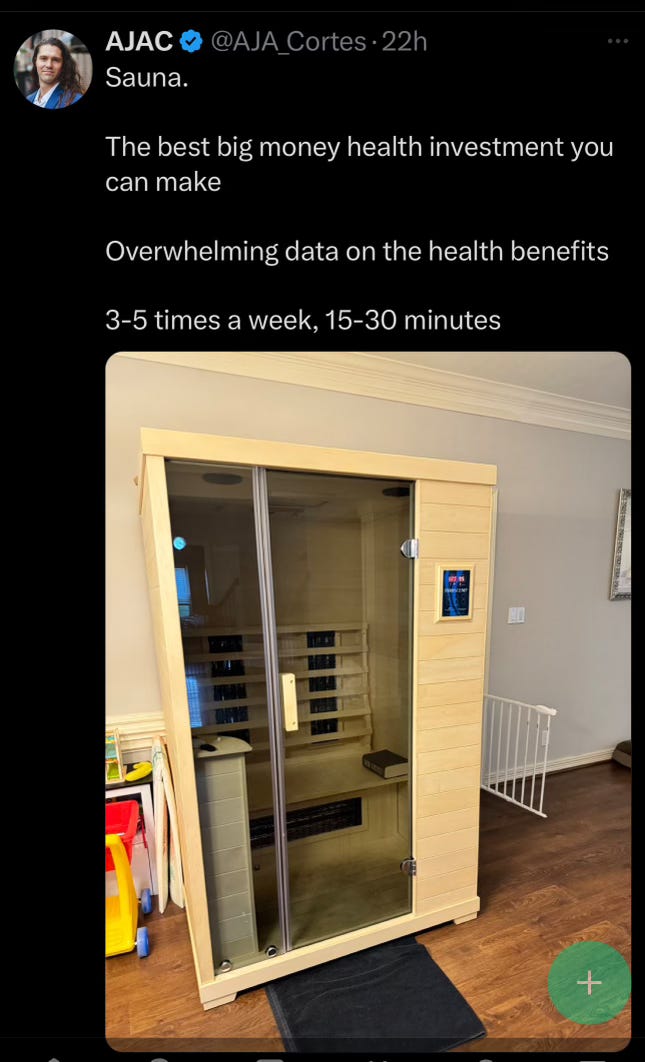
It sounds ridiculous to say it now but I was a huge skeptic. Does sitting in a really hot little box really make a difference?
YES IT DOES.
The first time I got in, I was expecting to simply get sweaty and feel uncomfortable from the heat.
But that’s not what happened. With an infrared sauna you start sweating almost immediately because the heat penetrates directly to the body, and the endorphin release was incredible. I was inside of it for 15 minutes the first time, stepped out soaked with sweat, and felt as though my mind and body has been reset and cleansed.
After that, I was a believer. Ive used it every week the past 6 years.
Regular heat exposure, typically 15–20 minutes at 170°F–195°F in a traditional sauna or Infrared Sauna, done 3–4 times per week, this triggers a potent hormetic response.
Hormetic: a biological phenomenon in which a low-to-moderate dose of an environmental stressor stimulates an adaptive, beneficial response that strengthens an organism, whereas a high dose of the same stressor causes damage or toxicity.
Sitting in a sauna Does detox the body through sweating and internally it upregulates heat-shock proteins (HSPs), which are immune proteins that repair other misfolded cellular proteins, and drive nitric-oxide-mediated vasodilation to flood stiff joints and tendons with oxygenated blood, and turns down chronic pro-inflammatory cytokines, and stimulates endorphins that dull pain signaling.
If you want to keep training hard and consistently as you age, a sauna enables you to do that
MY Sauna is an Infrared Sauna from High Tech Health
I have used both traditional sauna and infrared and I actually prefer the infrared because the heat penetrates more directly into the body and provokes a stronger sweat response.
2. Strength Training Through Full, Controlled Ranges of Motion
I don’t think there’s anything controversial about this strategy. Muscle mass and tendon strength are your primary mechanical armor against joint pain. Lifting weights doesn’t wear out joints like people think.
But lifting with poor mechanics, uncontrolled eccentrics, and weak stabilizing tissues can beat you up.
Resistance training should be done RIGHT
Control the eccentric: Slowing down the lowering phase (2-4 seconds) builds tendon tensile strength and forces muscles to absorb load rather than dumping shear force and compression into ligaments and cartilage. Dont be the guy jerking the weights around
Train to muscular end-range: Use exercises that safely load muscles in their stretched position (like goblet squats, Romanian deadlifts, pushups, chinups). Muscle tissue that is never loaded at its end range loses structural integrity and becomes an injury site the moment you accidentally reach that range of motion or angle in daily life.
3. Daily Low-Intensity Movement (Zone 2 & Walking)
It’s largely impossible to walk too much and move too much daily. The more walking you do, the more your cardiovascular system clears out triglycerides and cholesterol, the better your circulation and the healthier you’re going to be.
Hit a daily step baseline: Aim for 8,000 to 10,000 steps per day, broken up into short bouts after meals or long sitting blocks.
Add Zone 2 conditioning: anywhere 30–90 minutes of steady, nasal-breathing cardio (cycling, incline walking, rucking) 3–4 times a week builds mitochondrial density and capillary networks, and keeps your whole cardiovascular system flowing
High intensity once a week: You don’t need to be doing high-intensity interval workouts every day. A once-a-week session where you push your heart rate to zone 5 and burn out your lungs and muscles with fatigue is excellent.
4. Active Mobility Daily
Motion is lotion. Not all the exercise you do needs to be intense and fatiguing. Daily stretching and engaging all of your major joints is a phenomenal practice, both for soft tissue, connective tissue, and your nervous system.
5. Sleep and Hydration
I’m combining these together because if you don’t sleep well and you don’t hydrate well, you will start hurting fast. Pain perception is amplified by sleep deprivation and tissue dehydration. Even mild dehydration reduces the shock-absorbing viscosity of synovial fluid and intervertebral discs.
Protect deep and REM sleep: Aim for 7.5–8.5 hours in a cool, dark room. Growth hormone release during slow-wave sleep is when collagen synthesis and connective tissue repair actually occur.
Hydrate with electrolytes, especially around sauna sessions: Water alone isn’t enough if you’re sweating heavily in the sauna. Replenishing sodium, potassium, and magnesium maintains intracellular fluid volume, prevents muscle cramping, and keeps fascial layers gliding smoothly over one another instead of binding up.
6. High-Protein, Anti-Inflammatory Nutrition
As you age, there is a phenomenon called anabolic resistance that can happen, where the body becomes less efficient at utilizing dietary amino acids for tissue repair. The way to counteract this, aside from exercise, is to eat a PROTEIN rich diet.
And minimize the foods that can lead to inflammation and insulin resistance.
Anchor meals around whole-food protein: Aim for roughly 1.0 gram of protein per pound of target body weight daily (split across 3–4 feedings of 35–50g each) to trigger maximal leucine-driven muscle and tendon protein synthesis.
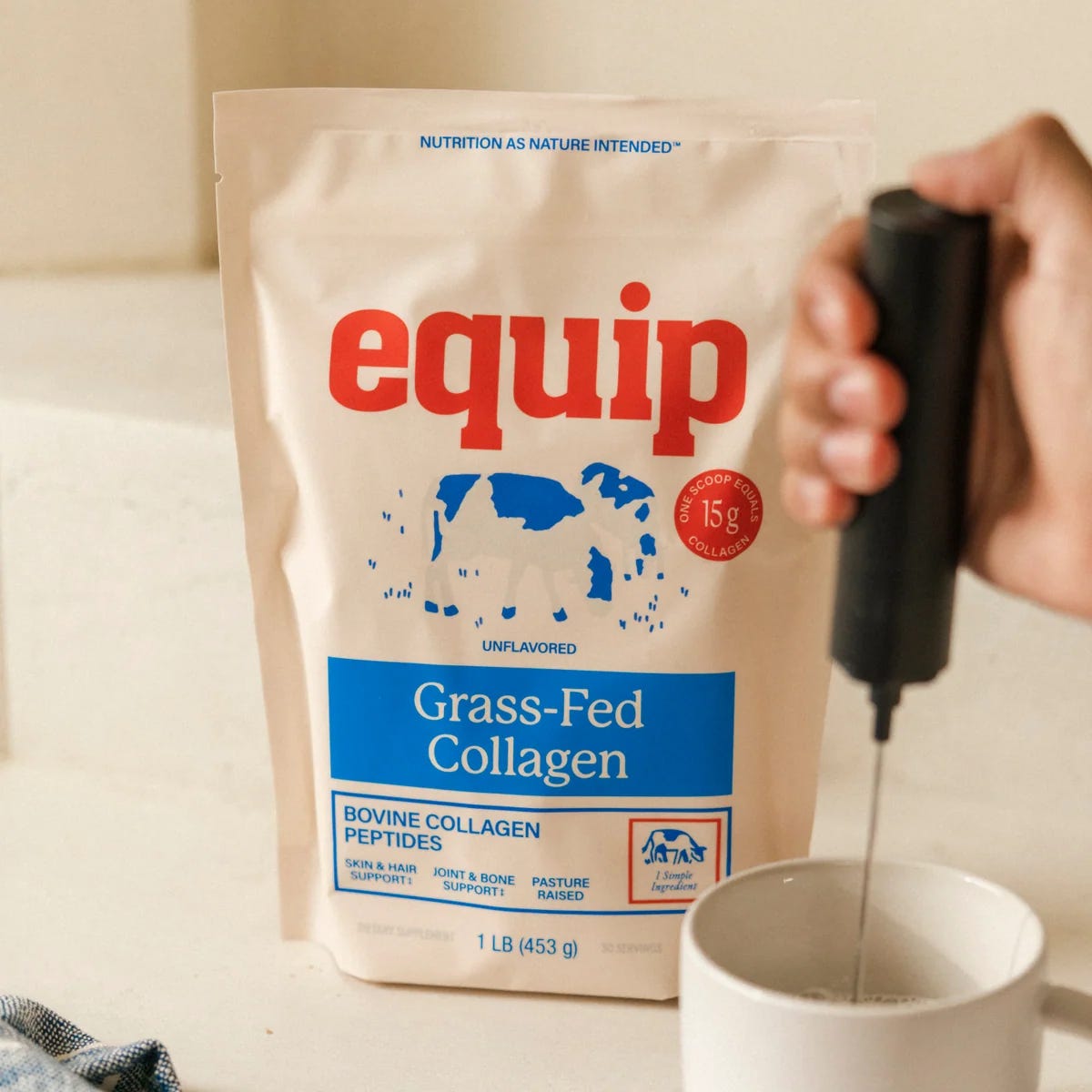
Include glycine and proline-rich sources: Personally I use Collagen powder for this. 10-20 grams every single day
Minimize inflammatory foods: Hopefully you don’t need me to tell you that eating ultra-processed seed oils, refined sugars, and drinking alcohol are a net negative for your health. All of these things are oxidative stressors and interfere with the body’s overall healing powers.

En Summa
Chronic pain is not an inevitable consequence of aging, it’s preventable by investing in your mortal vessel and living to MOVE.
To stay pain-free as you age, you must anchor your routine around six daily and weekly habits:
Use Sauna Therapy
Lift Through Full Ranges of Motion
Walk and Condition Daily
Practice Daily Mobility
Prioritize Sleep and Electrolytes
Eat High-Protein, Anti-Inflammatory Meals
Thanks for reading!! Tomorrow I’ll have a Black Friday List of the best deals on life changing and useful health products.